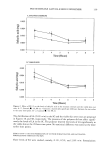
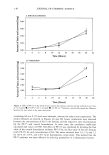
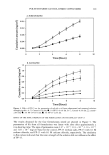
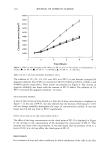
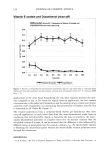
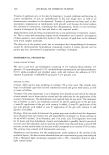
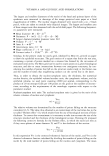
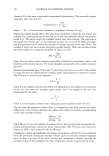
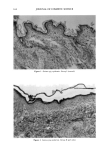
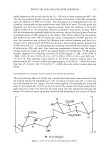
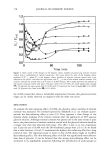
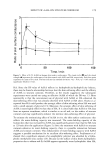
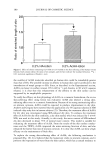
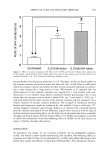
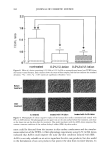
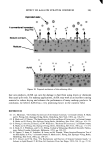
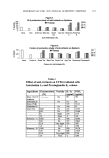
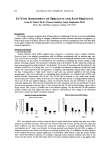
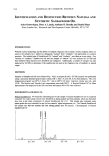
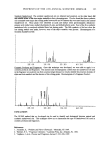
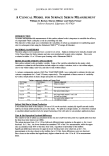
200 JOURNAL OF COSMETIC SCIENCE Fig. 1 Cyclic Tensile Fatigue Apparatus (Schematic) I Stretched Fibertl f/Relaxed Weight iiiiiiiiill' '"'"'"' Iiiiiiii'"ll•l "•Weiiht 40000 35000 30000 25000 20000 15000 10000 5000 0 Fiber Fig. 3 Effect of Oxidation (H202) Fig. 2 Effect of Reduction Characteristic Dr2• Untreated 10% TGA 10% GMTG 10% Cys ! Fig. 4 Effect of Conditioners on Oxidized Hair Characteristic Life (Cycles) 8000 7000 6000 5000 4000 3000 2000 1000 0

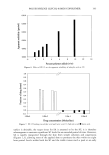
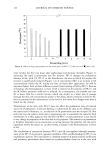
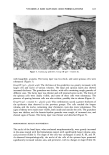
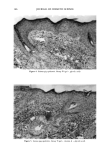
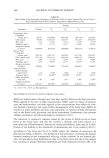
PREPRINTS OF THE 1999 ANNUAL SCIENTIFIC SEMINAR 201 OPTICAL AND FRICTIONAL PROPERTIES OF CATIONIC POLYMERS Wenjun Wu, Joy Alkema and Diana Leder* Union Carbide Corp., Car3,, NC 27511 and *Union Carbide Corp., Bound Brook, IL 08805 Introduction Cationic polymer deposits on skin and hair can be regarded as thin layer coatings. Therefore, optical and frictional properties of polymer films reflect the appearance and feel of treated surfaces. Three objective methods were used to examine gloss, opacity, friction of polymer and polymer/surfactant complex films. A comparative study was undertaken to differentiate cationic polysaccharides, Polyquaternium-10 (cationic hydroxyethyl cellulose) vs. cationic Guar derivatives and their corresponding complexes with sodium dodecyl sulfate (SDS). In addition, surface morphology and topology of the cast films were investigated using Scanning Electron Microscopy (SEM) and Atomic Force Microscopy (AFM). These microscopic techniques reveal interesting morphological characteristics that implicate differences in film optical and frictional properties. Experimental Polyquaternium-10 and cationic Guar samples were obtained from Amerchol Corporation and Rhodia, respectively. The polymers of the same chemical class are differentiated as H, M, L for high, medium, and low molecular weight and cationic substitution. For example, Guar (L/H) denotes relative low molecular weight and high cationic charge. Polymers were dissolved in double deionized water for film preparation. The polymer/surfactant complex gels were prepared by adding SDS to a 1% polymer solution under agitation until the maximum viscosity was obtained. Polymer solutions and the complex gels were drawndown on the Form 3B Leneta chart using a Leneta multi-purpose drawdown bar (both from The Leneta Company). The cast films were dried in a constant temperature and constant humidity room at 72øF and 50% relative humidity. A BYK-Gardner micro-TRI-gloss meter (GB-4520), Hunter Tristimulus Colorimeter (ColorQuest 45/0), and Slip/Peel Tester (Instrumentors SP-101A) were employed for film gloss, opacity, and Coefficient Of Frictional (COF) measurements. The coefficient of friction for polymer over polymer was measured under 250 gram load per the procedure described in ASTM D4518-91. The horizontal sliding speed was set at 6"/min and the measurements were taken at controlled temperature and humidity. The surfaces of the drawdown films were examined in a Hitachi S-570 SEM using an accelerating voltage of 15 KV after depositing a thin Au/Pd conductive coating. Both topographic and phases images were collected on a Digital Instruments D-3000 Nanoscope IIIa AFM in a tapping mode using a 100 •tm silicone cantilever tip operating at -245kHz. Results and Discussions The 2if' gloss reading of films prepared from cationic hydroxy ethyl cellulose (HEC) and Guar polymers and their corresponding complex gels are compared in Figure 1. The control is the black section of 3B Leneta chart. All cationic HEC's formed smooth shiny films. Both cationic Guar films, exhibit lower gloss values. The lower gloss and higher opacity values of cationic Guar, especially Guar (H/H), the high charge, high molecular weight Guar indicate cationic Guar dulls the control substrate. The second Guar sample, Guar (L/H) which is hydroxypropyl Guar hydroxypropyl trimonium chloride showed improved film clarity and gloss. However, it still does not compare to the gloss of cationic HEC films. Comparing to cationic polymers, complex films demonstrate lower gloss suggesting that complexation with SDS decreases the gloss of polymer. The difference between cationic HEC and cationic guar, however, still exists in the polymer/surfactant complex systems. Cationic HEC provides greater clarity and gloss than cationic Guar films in both complex and polymer forms. The data in Figure 1 implies cationic HEC would provide improved hair appearance whether the polymer deposits on hair as a polymer/surfactant complex or as neat polymer. The coefficient of kinetic friction for polymer on polymer is reported in Figure 2. The neat Guar (H/H) film presents lower friction, meaning it slides more easily than cationic HEC films. It is interesting to note that incorporation of SDS reduces friction. Films formed by polymer/surfactant complexes exhibit less friction than the neat polymers. When cationic HEC forms complex with SDS, the friction decreases
Purchased for the exclusive use of nofirst nolast (unknown)
From: SCC Media Library & Resource Center (library.scconline.org)