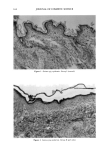
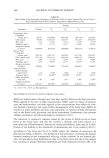
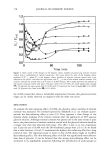
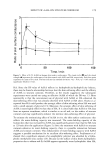
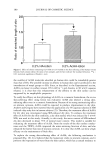
186 JOURNAL OF COSMETIC SCIENCE ROLE OF NUCLEAR HORMONE RECEPTORS IN REGULATING EPIDERMAL DIFFERENTIATION Kenneth Feingold Department of Veterans Affairs Medical Center Nuclear hormone receptors are transcription factors that regulate many cellular functions including cell differentiation and proliferation. Nuclear hormone receptors which heterodimerize with RXR, such as PAR, the vitamin D receptor, and the thyroid hormone receptor have been shown to regulate keratinocyte proliferation and differentiation. In transgenic mice that overexpress either an PAR or RXR dominant negative mutant, epidermal differentiation is abnormal. Peroxisome Proliferator Activated Receptors (PPARs) heterodimerize with RXR. PPARc• is activated by many chemicals including the lipid lowering drug clofibrate and by a variety of fatty acids. We have previously shown that PPARc• activators stimulate epidermal development in fetal skin explants and in utero resulting in the accelerated appearance of mature lameliar membranes in the extracellular spaces of the stratum corneum, a multilayered stratum corneum, and a competent barrier forming earlier in gestation (Hanley et al, JCl 100:705, 1997). Additionally, there is an increase in the activity of 13 glucocerebrosidase and steroid sulfatase, two enzymes required for a normal stratum corneum, and the increased expression of profilaggrin and Ioricrin, two proteins essential for the formation of cornecytes (Hanley et al JCl 100:705, 1997, Komuves et al. J.I.D. 111:429, 1998). Moreover, in cultured human keratinocytes, PPARc• activators increased cornified envelope formation 3-fold, increased involucrin and transglutaminase protein and mRNA levels 2-10 fold, and inhibited DNA synthesis. The aim of the present study was to determine the role of PPAR(• activation in adult epidermis. Topical treatment of several strains of adult mice with PPAR activators resulted in decreased epidermal thickness, coupled with increased expression of involucrin, profilaggrin/filaggrin, and Ioricrin (detected by in situ hybridization and immunohistochmistry). Moreover, topically applied PPAR activators increased apoptosis (as measured by TUNEL assay) while decreasing cell proliferation (detected by BrdU incorporation). Topical treatment with PPAR activators did not disturb baseline epidermal permeability barrier, but resulted in an accelerated recovery of barrier function following acute barrier abrogation by either tape stripping or detergent treatment. To determine whether these effects were due to specific PPAR(• activation, we analyzed keratinocyte gene expression in PPARc• knockout mice, which display focal parakeratosis, suggestive of impaired differentiation. Compared with the wild-type epidermis, involucrin, profilaggrin/filaggrin, and Ioricrin expression (detected by in situ hybridization and immunohistochemistry) were decreased in PPAR-c• knockout mice. Moreover, topical clofibrate treatment did not increase epidermal differentiation in PPAR-c• knockout mice. This study shows that PPAR-c• activation promotes keratinocyte gene expression, enhancing epidermal differentiation and inhibiting proliferation in intact adult skin. Moreover, endogenous activation of PPAR-c• may play a role in the regulation of normal keratinocyte differentiation.

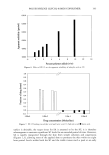
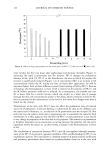
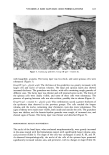
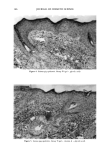
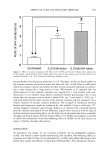
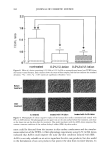
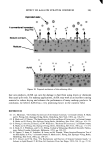
PREPRINTS OF THE 1999 ANNUAL SCIENTIFIC SEMINAR 187 We next examined the effects of PPAR(z activators on hyperproliferative epidermis. Adult male hairless mice were used to analyze the effects of PP^R(z activators (clofibrate or Wy14,643) on hyperproliferative epidermis, induced by either repeated barrier abrogation (sub-acute model) or by essential fatty acid deficiency (chronic model). Topical treatment with PP^R(z activators resulted in a substantial decrease of epidermal hyperplasia in both the sub-acute and in chronic hyperproliferative skin. Hyperproliferative epidermis was characterized by an expansion'of proliferative cells expressing PCN^ and keratin 5. Following topical clofibrate treatment PCN^- and keratin 5-expressing cells were restricted to the basal layer, similar to normal epidermis. In hyperproliferative epidermis, there was decreased expression of involucrin, profilaggrin-filaggrin, and Ioricrin as assayed by in situ hybridization and immunohistochemistry. Following topical clofibrate treatment, cellular staining for these mRN^s and proteins increased towards normal levels. Topically applied PP^R(z activators also increased apoptosis. The present study demonstrates that topical PP^R activators have profound effects on epidermal gene expression in both models of hyperproliferative skin disorders. Treatment with PP^R(z activators resulted in an inhibition of cell proliferation and in promotion of epidermal differentiation, correcting the cutaneous pathology. This study identifies PP^R(z activators as a novel class of potential skin therapeutic agents. /XR is another nuclear hormone receptor that heterodimerizes with RXR. This receptor is activated by oxysterols. In the present study, we determined the effect of oxysterols on human keratinocyte differentiation in culture. mRN^ and protein levels of involucrin (INV) and transglutaminase (TG), protein markers of differentiation, increased 2-3 -fold in keratinocytes incubated in the presence of 25- or 22R- hydroxycholesterol, both under low and high calcium conditions. Furthermore, rates of cornified envelope formation an indicator of terminal differentiation, also increased 2-fold with oxysterol treatment. In contrast, the rate of DN^ synthesis was inhibited approximately 50% by oxysterols. Activity of a TG- or an INV-promoter-luciferase construct transfected into keratinocytes increased approximately 2-3-fold following oxysterol treatment indicating regulation at the level of gene transcription. Finally, we demonstrate the presence of LXR(z and • mRN^ in keratinocytes and show that oxysterols stimulate expression of an LXR response element transfected into keratinocytes. These results indicate that oxysterols induce keratinocyte differentiation and inhibit proliferation by regulating gene expression. Thus, we show here that the activation of two nuclear hormone receptors, PP^R(z and LXR, regulates keratinocyte differentiation and proliferation. Both of these receptors are activated by lipids produced in the epidermis (PP^R(z - fatty acids LXR - oxysterols), thereby allowing locally produced lipid metabolites to regulate keratinocyte growth and differentiation. Furthermore, lipids that activate PP^R(z and/or LXR may be useful as therapeutic agents to improve epidermal function.
Purchased for the exclusive use of nofirst nolast (unknown)
From: SCC Media Library & Resource Center (library.scconline.org)