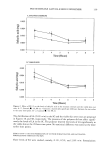
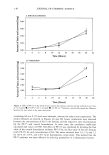
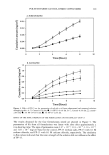
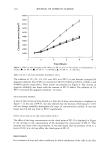
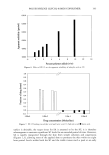
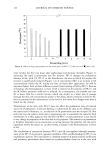
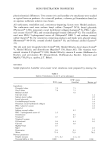
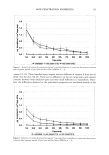
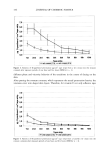
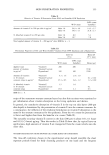
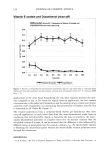
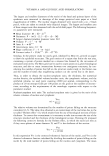
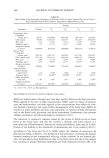
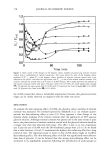
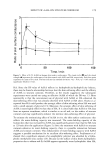
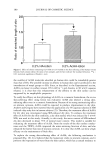
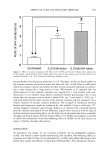
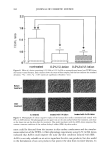
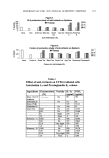
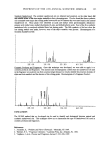
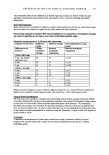
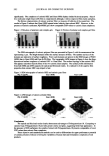
190 JOURNAL OF COSMETIC SCIENCE DEVELOPMENT OF AN IN VITRO METHOD FOR SCREENING ANTI-IRRITANTS Gopa Majmudar, Ph.D., Theresa Smithey, Louis B. Fisher, Ph.D. Mary Kay Holding Company, Dallas, TX 75247 INTRODUCTION: No validated predictive in vitro method is currently available for the evaluation of cutaneous anti- irritants or anti-inflammatory ingredients. The development of an in vitro method for testing unknown anti-irritant ingredients can provide a preliminary estimate of material safety. It is also a fast and economical way to screening anti-irritants prior to testing on humans. We utilized the Mat Tek Epiderm © skin model and a primary culture of keratinocytes to screen a variety of anti-irritants. Epiderm partially mimics human skin morphologically, functionally and biochemically and, therefore, it was possible to test anti-irritants in the product. Applying known irritants like sodium lauryl sulfate, croton oil and UV light to Epiderm or keratinocytes resulted in inhibition of mitochondrial enzyme activity and release of interleukins and prostaglandins •. Cytokines, prostaglandins and MTT conversion assays were conducted for anti- irritant screening following pre-applicafion of anti-irritant or an otherwise potentially irritating formula which also contained an anti-irritant. Anti-irritants such as tea and natural extracts reduced the release of cytokines and prostaglandin and protected mitochondrial enzyme. Clinical data on the effect of tea extracts and natural extracts on SLS and lactic acid irritation showed good agreement with the in vitro tests. MATERIALS AND METHODS: Living skin equivalent: Epiderm from Mat Tek Co, Ashland, MA were utilized to test anti-irritant compounds in the presence of SLS and croton oil, known skin irritants. 1% or 1.5% SLS or 1.5% croton oil in nonionic base were applied on Epiderm with or without anti-irritant test samples, and Epiderm were incubated at 37øC overnight. Epiderm were used for MTT (3-[4,5-dimethylthioazol-2-yl]-2,5-diphenyl tetrazolium bromide) assay. Cell culture and UVB protection study: HaCaT keratinocytes, spontaneously immortalized human keratinocytes, were used. The cells were exposed to different concentrations of each test sample in triplicates. After the initial pretreatment, media were removed and replaced with PBS-glucose. Cells were exposed to 14 mJ/cm 2 UVB irradiation in the absence of test compounds. Following irradiation, the cells were switched back into fresh media containing the same concentration of test compounds as they were exposed to during the pretreatment period. After incubation for 24 hours, the media were collected and used to analyzed inflammatory markers, such as, interleukin l tz (IL-ltz) and prostaglandin (PGE2), by enzyme immunoassay using commercially available kits. RESULTS: We examined the effect of tea and rosemary extracts on two known skin irritants, SLS, croton oil and UVB irradiation. Different tea extracts and rosemary extracts with SLS (figure-1) or croton oil (figure-2) in non- ionic aqueous base were applied on Epiderm. MTT data suggested that rosemary extracts were the most effective at protecting the cells against SLS. Green tea and other tea extracts were less effective than rosemary extracts against SLS on Epiderm (Figure-1). Green tea was the most effective against croton oil (figure-2). Other tea extracts and rosemary extracts were also effective on croton oil.(figure-2). Rosemary extracts and green tea reduced the production of inflammatory mediators, IL-lot and PGE2, in UVB irradiated keratinocytes (table- 1). CONCLUSIONS: In vitro results on the effect of tea extracts and rosemary extracts on SLS showed good agreement with clinical SLS irritation test. Thus, IL-1 tz, PGE 2 and MTT assays in the presence of known irritants can be used for a quick preliminary screening of anti-irritant ingredients. REFERENCES: 1. Muller-Decker, K., Furstenberger, G., Marks, F. Toxicology and Applied Pharmacology, 127, 99 (1994)

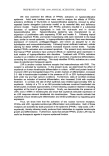
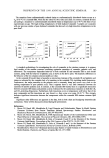
PREPRINTS OF THE 1999 ANNUAL SCIENTIFIC SEMINAR 191 Figure-1 SLS protection study of anti-irritants on Epiderm 250 • 200 •[• MTF assay 150 None SLS Green tea Black tea Ceylon tea Agro tea Rosemagi Rosemagi A B SLS+Antiirritants (%) None Figure-2 Croton oil protection study of anti-irritants on Epiderm Croton oil Green Tea Black Tea Ceylon Tea Agro Tea Rosema•JA RosemaryB Croton oil+ Anti-irritants (%) Table-1 Effect of anti-irritants on UVB irradiated cells Interleukin lcx and Prostaglandin E2 release Ingredients Concentration Toxicity IL-lcx PGE 2 (%) (pg/ml) (pg/ml) None - No UV ........... No 99 781 treatment indomethacin '" No 111 36 , None (UVB) 573 15135 Indomethacin No 544 143• Green"Tea 0.001 No 425 12763 0.01 No 3'77 15568 0.1 Slight 230 2175 1.0 Toxic -4 140 Rosemary-A 0.001 No 400 16'586 0.01 No 357 10043 0.10 Very slight 476 1691 1.0 Toxic -2 1098 , Rosemary- B 0.001 No 490 10118 0.01 No 608 15656 0.10 Very slight 820 3750 1.0 Toxic -2 1206
Purchased for the exclusive use of nofirst nolast (unknown)
From: SCC Media Library & Resource Center (library.scconline.org)