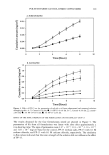
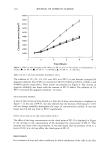
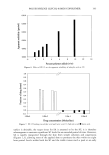
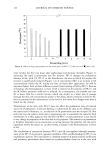
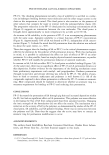
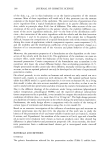
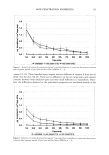
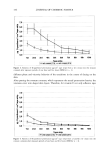
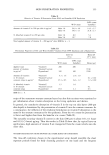
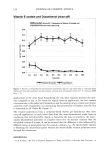
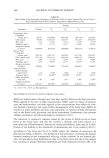
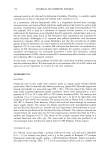
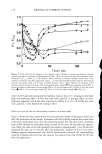
196 JOURNAL OF COSMETIC SCIENCE A CLINICAL MODEL FOR SURFACE SEBUM MEASUREMENT William D. Becker, Sharon Hillmer and Mark Presser Unilever Research, Edgewater, NJ 07020 INTRODUCTION Accurate and reproducible measurement of skin surface sebum levels is important to establish the efiScacy of compounds which could play a role in controlling oily skin. The objective of this study was to determine the variability of sebum accumulation for establishing panel size for subsequent trials using the Sebumeter SM810 Tm (Courage & Khazaka). MATERIALS & METHODS Nineteen subjects were assessed twice a week for six week. Subjects forehead were initially cleaned with Velin Tissue Paper for thirty minutes and sites were marked and located with a template. Sites were evaluated at either 1.5 or 3.0 hours post cleaning with a Sebumeter SM810. RESULTS & DISCUSSION CONCLUSIONS Skin surface sebum levels are highly variable. Some of the variables identified in this study which contribute to sebum levels fluctuations include subject-to-subject variation, visit to visit within subject, site-to-site within-subject and visit, and side-to-side within subject. A variance components analysis (SAS Proc VARCOMP REML) was conducted to estimate the relevant variance componenls for 1.5 and 3.0 hours, respectively. The magnitude of these sources of variability have direct implications in study design and panel size estimations vanante coml•onem esumates ana •,,,are •toots T=l.5 hours T=3.0 hours Variance component 1055.6 4491.3 Subject-to-subject 32.5 67.0 711.6 1047.7 Visit nested within subject 26.7 32.4 113.1 225.6 Side nested within subject 10.6 15.0 1321.8 1263.7 Site nested within subject x visit x side 36.4 35.5 (for half face design) 1389.6 1398.7 Site nested within subject x visit 37.3 37.4 (for full face desil•n) Subject Side Bias in Sebum Production It was found that most of the subjects (14 out of 19) on the test had a statistically significant and sizable side bias in mean sebum production across the study. For split face design studies, it is therefore essential to establish sebum baseline levels for proper balancing of the cells prior to any product application phase. Time & Site Dependent Forehead Differences The relative levels of sebum accumulation in the one and a half hour time point was significantly less than the three hour time interval (p=.0004). The sebum increase from 1.5 to 3.0 hrs followed different kinetic patterns on the upper vs. the lower forehead. In 1.5 hrs., the lower forehead accumulated 70% of the 3 hr. measurement, while the upper sites accumulated only 50% of the three hour total, regardless of proximity to the midline. Significant differences between the upper & lower forehead sites were observed, at the 1.5 hr. measurement at the sites closest to the midline, but at 3.0 hrs. these differences were not observed. Sites closest to the midline had significantly higher sebum levels a the 1.5 hr & 3.0 hr measurement

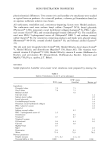
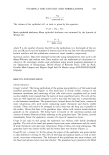
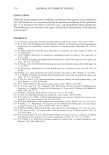
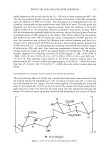
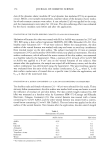
PREPRINTS OF THE 1999 ANNUAL SCIENTIFIC SEMINAR 197 This information indicates that differences in sebum regreasing kinetics are evident within the same individual, and therefore measurement at the same specific site is crucial for obtaining meaningful information. Panel Size Estimation Based on the levels of variability for subject-to-subject sebum production over this six week clinical study, the below tables for estimation of panel size for future studies has been calculated Panel sizes required to achieve 90% test sensitivity for a comparison of treatment change by a test of significance at Type I error level --0.05 (false positive rate). Sebumeter measurements at T=3.0 hours after degreasing Sebumeter Panel Sizes Half-Face Half-F•ce design Two Independent Groups design design Difference to be Within Between Between treatments detected treatment treatments comparison changes comparison (-10%)=20.5 units 3 sites per product 40 45 2 x 301 application area 2 sites 45 51 2 x 313 1 site 61 67 2 x 348 (-20%) = 41 units 3 sites 12 13 2 x 77 2 sites 13 15 2 x 79 1 site 17 19 2 x 88 (-30%) = 61.5 units 3 sites 7 7 2 x 35 2 sites 7 8 2 x 36 1 site 9 10 2 x 40 Studies should be designed to achieve relatively high test sensitivity, (i.e. at least 90% test sensitivity) to minimize the occurrence of false negative results. [test sensitivity = 100 (1-false negative rate)] Clinical Model Establishment The following issues should be considered when performing clinical studies using the Sebumeter SM810. A baseline sebum profile will need to be established (optimally, there should be Sebumeter readings taken at four visits over four weeks), before a product application phase can be initiat•xl. The information obtained in the baseline visits will allow for the proper balancing of the test cells based on right/left side bias, and relative sebum levels. In order to reduce the panel size it is recommended that at least three sites on the forehead (template determined) be monitored using the Sebumeter. Length of study will depend on product mode of action. Conclusion A method for the measurement of skin surface sebum levels using a Sebumeter SM810, has been proposed. The method will provide a means for the clinical measurement of the efficacy of sebum modulating agents.
Purchased for the exclusive use of nofirst nolast (unknown)
From: SCC Media Library & Resource Center (library.scconline.org)