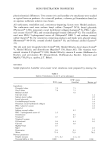
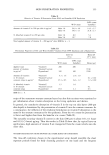
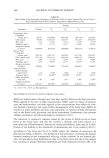
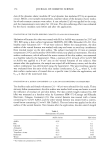
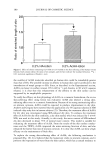
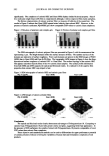
174 JOURNAL OF COSMETIC SCIENCE data of the dynamic elastic modulus (E') and dynamic loss modulus (E") by an operation circuit. Before a test sample measurement, baseline values of the dynamic elastic modu- lus of each stratum corneum were taken. A test solution (2 pl) was applied to the strip, and the measurements were taken for 120 min. The skin-softening effect was evaluated by the elastic modulus ratio before and after the application. EVALUATION OF THE WATER-HOLDING CAPACITY OF AcHA ON HUMAN SKIN Hydration of human skin that was treated with HA or AcHA was measured at 25 øC and 50% RH using a skin surface hygrometer SKICON-200 (lBS, Shizuoka) (20-22). Five healthy male volunteers (26 - 44 yr) were selected. Before the measurement, the skin surface of the ventral forearm was washed with soap and water to avoid any interference from residual matter on the skin surface. The subject was kept for 30 min at constant temperature (25 øC) and humidity (50% RH) without any physical movements. The skin surface conductance, which reflected the water content of the skin surface, was measured as a baseline value by the hygrometer. Then, a portion of 0.2 ml each of 0.2 w/w% HA or AcHA was applied to a 9-cm 2 area on the ventral forearms of test subjects. One minute after the application, the sample was wiped off with beauty cotton, and the skin surface conductance was determined using the hygrometer. The water-holding capacity was evaluated from the ratio of the skin surface conductance, C•/C•_o, where C• is the skin surface conductance of treated skin at a specific time (t) after the application, and C•_ o is that of the nontreated skin. EVALUATION OF A LOTION CONTAINING 0.2% AcHA ON THE SOFTENING OF HUMAN SKIN Ten healthy male and female volunteers (24 - 46 yr) were selected for this study. Thirty minutes before measurement, the skin surface was washed with a soap and water to avoid the influence of residual oil and skin debris. The skin stretch length (induced by 200 hPa) was measured as a baseline value by Cutometer SEM 472 (Courage and Khazaka Electronic, Cologne, Germany) (23). One ventral forearm was treated with a lotion containing 0.2 w/w% AcHA, and the other ventral forearm was treated with a conven- tional lotion containing 0.2 w/w% HA (Table I). The test lotion was applied to the skin surface of the ventral forearm. Ten minutes after the application, the skin stretch length Table I Formulations of Lotions AcHA lotion HA lotion AcHA 0.2* -- HA -- 0.2 Glycerol 5.0 5.0 Antiseptic 0.1 0.1 Citric acid 0.03 0.03 Trisodium citrate 0.12 0.12 Surfactant 0.15 0.05 Water up to 100 up to 100 * All values are presented as w/w%.

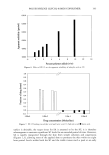
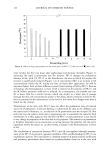
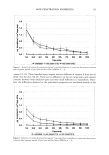
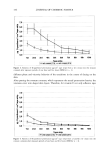
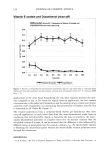
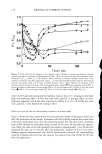
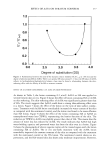
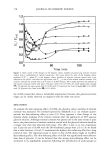
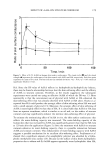
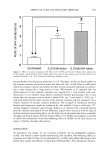
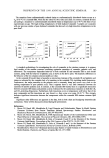
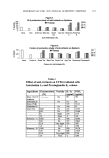
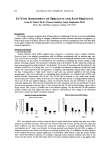
EFFECT OF AcHA ON STRATUM CORNEUM 175 was measured by Cutometer. The skin-softening effect was evaluated by the ratio of skin stretch length before and after the application. EVALUATION OF THE TREATMENT EFFECT OF A LOTION CONTAINING 0.2% AcHA FOR DRY SKIN CONDITION Four healthy male volunteers (26 - 46 yr) were selected for this study. All measurements were done in a room at constant temperature and constant humidity (25øC and 50% RH) Thirty minutes before the measurement, the skin surface of the ventral forearm was washed with soap and water to avoid the influence of residual oil and skin debris. The skin surface conductance and transepidermal water loss (TEWL) (baseline values) were measured by using a SKICON-200 hygrometer and Evaporimeter ER! (Servomeal, Stockholm, Sweden), respectively. Then, artificially dry skin was induced on the ventral forearm with 5 ml of 5 w/w% sodium dodecyl sulfate (SDS) by an Emanuel cup (inner diameter: 24 mm) for 30 min. After the treated region was washed with water and dried with a towel, photographs of silicon negative replica (adhesive silicon polymer) of the skin were taken. The photographs show the skin surface structure induced by SDS before the treatment. One ventral forearm was treated with a lotion containing 0.2 w/w% AcHA once a day and the other ventral forearm was treated with a lotion containing 0.2 w/w% HA (Table I). The treatment was continued for one week. The barrier function and the skin-moisturizing effect were evaluated by the ratios of values of TEWL and the skin conductance before and after the application, respectively. To observe the effect of AcHA on dry skin condition, replicas of the treated region were also taken from each volunteer. From the observation of the replicas obtained from the skin before and after the treatment, the effect of improvement on the volunteer skin was evaluated. RESULTS EFFECT OF AcHA ON DYNAMIC ELASTIC MODULUS OF STRATUM CORNEUM The time course of dynamic elastic modulus of the stratum corneum after the application of water or AcHA is shown in Figure 2. Evidently, the stratum corneum was plasticized rapidly by a 2-pl water application. Then, the dynamic elastic modulus gradually returned to the initial value as water evaporated and slightly exceeded the initial level. The minimum elastic modulus ratio was 0.45 at 20 min, and the recovery time was 60 min. On the other hand, there was a remarkable improvement in the skin-softening effect when the sample was treated with 0.2 w/w% AcHA of which the degree of substitution of acetyl groups (DS) was 2.6 - 3.8. This figure shows that the dynamic elastic modulus ratio of the sample, which was treated with AcHA of which the DS was 3.0 - 3.5, was around 0.3 for 100 min. The results indicate an excellent skin-softening effect for the stratum corneum. Upon the use of AcHA with a DS of 3.8, the modulus ratio returned to 1.0 at 100 min. Figure 3 shows the relationship between the modulus ratio at 100 min and the DS value of AcHA. There was an optimal DS value around 3.3. Figure 4 shows the synergic effect on skin softening of the combination of various humectants. When 0.2 w/w% HA was applied, the recovered value of softness was slightly lower than that of water. Since HA returned to approximately 0.9 at 60 min, HA had a low skin-softening effect. On the other hand, the stratum corneum treated
Purchased for the exclusive use of nofirst nolast (unknown)
From: SCC Media Library & Resource Center (library.scconline.org)