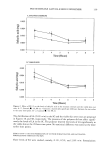
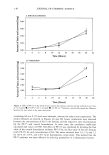
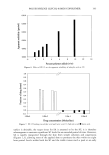
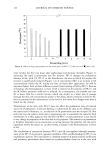
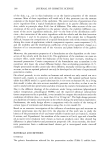
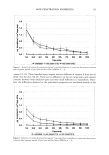
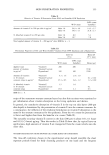
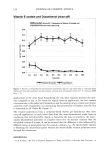
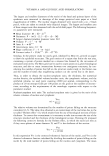
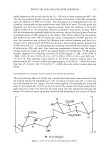
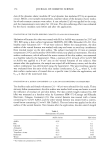
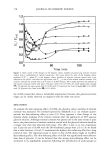
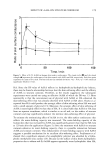
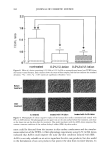
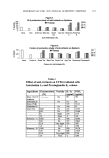
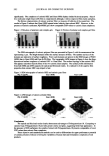
192 JOURNAL OF COSMETIC SCIENCE IN VIVO ASSESSMENT OF IRRITANTS AND ANTI-IRRITANTS Louis B. Fisher, Ph.D., Theresa Smithey, Gopa Majmudar, Ph.D. Mary Kay Holding Company, Dallas, TX 75247 Introduction The average consumer recognizes skin irritation either as a reddening of the skin or as an uncomfortable sensation such as itching, burning or stinging. Published scientific literature describes investigations of both of these forms of irritation. However, the methodology has not been standardized. The work described in this paper modified the available procedures and used them to investigate the potential anti-irritancy of cosmetic ingredients. Methods and Results A. Dermal Reactivity Sodium dodecyl sulfate (SDS), applied under occlusion, is commonly used to induce erythema. However, there is no standard concentration used by different investigators, and the duration may vary from a few hours to overnight. The human eye may not be able to distinguish different levels of relatively mild erythema. For this reason, the Chromameter was introduced to quantirate the relative change in skin redness following irritation. The instrument commonly used is the Minolta CR-200, which has a relatively large measuring aperture (approximately I cm diameter). To be sure of measuring only the treated site, the irritation would have to be larger than lcm 2. If it is smaller, the inclusion of adjacent, normal skin could "dilute" the value obtained by the Chromameter. In addition, this instrument requires direct contact with the skin. Consequently, a "light touch" must be used since any pressure applied to the skin during measurement could cause blanching. In considering these possibilities, we compared the CR-200 with another Minolta Chromameter, the CS-100. The CS-100 can be focused to very small areas, thereby circumventing the "dilution" effect. It also does not contact the skin directly, avoiding potential blanching. Since the CS-100 uses ambient lighting, a lamp was mounted directly onto the instrument to provide a consistent illumination. When several irritated skin sites were measured with the two instruments, the data showed good agreement between them. It also showed that the CS-100 produced higher values with a larger spread. This, in part, is probably due to the different lighting. The fact that the CR-200 produced smaller numbers may also support the ideas of "dilution" and blanching. This change in the instrument allowed us to reduce the degree of irritation required. Botanical Extracts as Anti-irritants Effect of Green Tea on SDS Irritation (Extractl combined with SOS) .• ......................... t40 .............. 40 ....................... ..... I ............. 1. I 1o .............. Fig. 1 Fig. 2 SDS was applied under occlusion using the Haye's patch, which has a smaller area than most of the systems used for this procedure. The patch was removed after only 3 hours, and the skin was rinsed and dried. Erythema was read 24 hours later. Using this technique, a very good correlation between SDS concentration and a* values was obtained. By mixing potential anti-irritants with the SDS, a number of botanicals extracts were found to be effective in reducing erythema (Fig. 1). In addition, the short duration of this method allowed the separate application of anti-irritants either before or after the irritant. Results have varied with different materials for example, Gorgonian extract reduced erythema only when it was mixed with the irritant. On the other hand, Green Tea extract reduced erythema when it was applied after

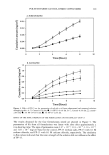
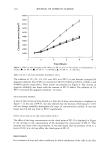
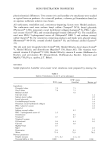
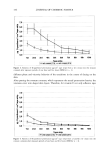
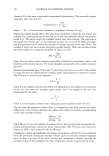
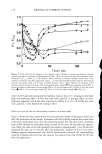
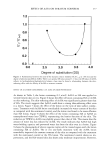
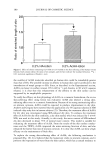
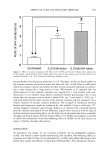
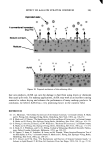
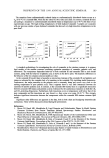
PREPRINTS OF THE 1999 ANNUAL SCIENTIFIC SEMINAR 193 the SDS or when mixed with it but had no anti-irritant effect when used as a pre-treatment (Fig 2). The latter data suggest that this extract may have augmented the SDS irritation by an unknown mechanism. B. Neurosensory Reactivity It is generally recognized that a sub-population of consumers exists who are particularly sensitive to irritation. They can be identified by their subjective response to a solution of lactic acid that is applied to the naso-labial fold. However, the response of such a panel to cosmetics and toiletry products is very low. To increase the likelihood of obtaining a reaction, exposure to a sauna has been used. This increases the irritant response but has the potential for the heat alone to be irritating. Alternatively, it has been suggested that the lactic acid be applied on a pad, which remains in place for the duration of the study. This provides a reservoir of irritant throughout the study period and maintains a hydrated stratum corneum, which will aid in penetration of the lactic acid. We have found that using this technique with a lcm 2 patch of non- woven fabric, soaked in 7.5% lactic acid, allows most people to respond. As a result, a population with "sensitive skin" is not required for these tests. A standard 5 point scale is used to evaluate the irritation, and an assessment is obtained every minute for 10 minutes. To determine the efficacy of anti-irritants, a comparison can be made between the results obtained from different materials applied to the two sides of the face. We confirmed the results of Hahn (1), who showed that addition of strontium nitrate to lactic acid reduced the level of irritation (Fig. 3). We also found that once the irritation had been established (after 5 minutes), replacement of the lactic acid with a non-irritating material reduced the irritant response. This occurred more rapidly if the lactic acid was replaced with a fresh piece of fabric soaked in an anti-irritant. In the example shown in Fig. 4, water or a base formula decreased irritation, but the inclusion of a botanical extract decreased it further. Effect of Strontium Nitrate on Lactic Acid Effect of Botanical Extract on Lactic Acid Irritation Irritation 0 1 2 3 4 5 e ? a s I 0 1 2 3 4 s T•me (m•ns) 0 T•me (m•ns) a•ter anUqrntant Fig. 3 Fig. 4 Conclusions Modifications to the standard assays for assessing dermal and sensory irritancy allow the general population to be used for testing, mild irritation to be assessed, and anti-irritants to be evaluated. References 1. U.S. Patent # 5,716,625-A. Hahn. G. Compositions containing divalent strontium cations for reducing irritant effects of chemical or environmental irritants
Purchased for the exclusive use of nofirst nolast (unknown)
From: SCC Media Library & Resource Center (library.scconline.org)