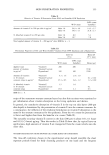
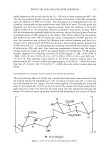
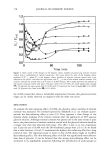
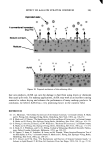
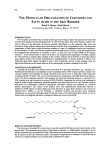
EFFECT OF AcHA ON STRATUM CORNEUM 173 added dropwise to the stirred mixture for 10 - 360 min at room temperature (RT) (18). The reaction solution became viscous and clouded, and formed a fiber-like precipitate upon the addition of 2000 ml of water. The precipitate of acetylhyaluronate was col- lected by a cheesecloth and was washed twice with 2000 ml of water. The precipitate was dispersed into 250 ml of 80 v/v% aqueous acetone. Upon the addition of 50 w/w% sodium lactate (9 g), the precipitate dissolved completely with gentle stirring. When 400 ml of acetone was gradually added to the solution, the gel-like precipitate of sodium acetylhyaluronate (AcHA) appeared in the beaker. After being collected by decantation and washed twice with 100 ml ethanol by using a homogenizer (10,000 rpm) for 10 min, the precipitate was collected by filtration with reduced pressure and dried in a vacuum, and a white powder of AcHA was obtained. Acetyl group analysis showed that AcHA contained 2.6 - 3.8 acetyl groups per repeating disaccharide unit (namely, degree of substitution, DS), and static laser scattering measurement showed that the weight- average molecular weight of AcHA was approximately 150 kilodaltons. FT-IR analysis strongly supported the following structure of AcHA (Figure 1): [IR 3440 (-OH or -NH), 1740 (-C=O-), 1620 (-C=O-), 1375 (-CH3), 1250 (-C-O-), and 1050 cm -• (-C-O-C-)]. This polymer could dissolve in 90 w/w% aqueous ethanol. Since the surface tension of 1.0 w/w% AcHA was approximately 55.0 mN'm -•, which was lower than that of 1.0 w/w% HA (74.0 mN-m-•), AcHA shows the surface tension reducing ability. MEASUREMENT OF DYNAMIC ELASTIC MODULUS OF STRATUM CORNEUM The skin-softening effects of AcHA and conventional humectants were measured using the method reported by Takahashi eta/. (19). A stratum corneum strip (20 x 3 mm) was held horizontally by two clamps. The left clamp applied a fixed-amplitude sinusoidal stress (5 pm amplitude, 30 Hz) to the left end of the sample. The right clamp had a high-sensitivity sensor that detected the weak stress that was transmitted through the sample. The detected stress signal was calculated and transformed into a series of digital COONa I CH3COHN ' H _ o OR _ n R: H or CH3CO Figure 1. Structure of sodium acetylhyaluronate (AcHA).

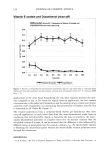
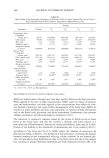
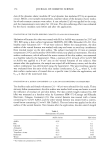
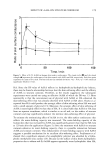
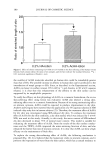
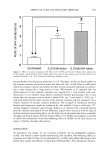
174 JOURNAL OF COSMETIC SCIENCE data of the dynamic elastic modulus (E') and dynamic loss modulus (E") by an operation circuit. Before a test sample measurement, baseline values of the dynamic elastic modu- lus of each stratum corneum were taken. A test solution (2 pl) was applied to the strip, and the measurements were taken for 120 min. The skin-softening effect was evaluated by the elastic modulus ratio before and after the application. EVALUATION OF THE WATER-HOLDING CAPACITY OF AcHA ON HUMAN SKIN Hydration of human skin that was treated with HA or AcHA was measured at 25 øC and 50% RH using a skin surface hygrometer SKICON-200 (lBS, Shizuoka) (20-22). Five healthy male volunteers (26 - 44 yr) were selected. Before the measurement, the skin surface of the ventral forearm was washed with soap and water to avoid any interference from residual matter on the skin surface. The subject was kept for 30 min at constant temperature (25 øC) and humidity (50% RH) without any physical movements. The skin surface conductance, which reflected the water content of the skin surface, was measured as a baseline value by the hygrometer. Then, a portion of 0.2 ml each of 0.2 w/w% HA or AcHA was applied to a 9-cm 2 area on the ventral forearms of test subjects. One minute after the application, the sample was wiped off with beauty cotton, and the skin surface conductance was determined using the hygrometer. The water-holding capacity was evaluated from the ratio of the skin surface conductance, C•/C•_o, where C• is the skin surface conductance of treated skin at a specific time (t) after the application, and C•_ o is that of the nontreated skin. EVALUATION OF A LOTION CONTAINING 0.2% AcHA ON THE SOFTENING OF HUMAN SKIN Ten healthy male and female volunteers (24 - 46 yr) were selected for this study. Thirty minutes before measurement, the skin surface was washed with a soap and water to avoid the influence of residual oil and skin debris. The skin stretch length (induced by 200 hPa) was measured as a baseline value by Cutometer SEM 472 (Courage and Khazaka Electronic, Cologne, Germany) (23). One ventral forearm was treated with a lotion containing 0.2 w/w% AcHA, and the other ventral forearm was treated with a conven- tional lotion containing 0.2 w/w% HA (Table I). The test lotion was applied to the skin surface of the ventral forearm. Ten minutes after the application, the skin stretch length Table I Formulations of Lotions AcHA lotion HA lotion AcHA 0.2* -- HA -- 0.2 Glycerol 5.0 5.0 Antiseptic 0.1 0.1 Citric acid 0.03 0.03 Trisodium citrate 0.12 0.12 Surfactant 0.15 0.05 Water up to 100 up to 100 * All values are presented as w/w%.
Purchased for the exclusive use of nofirst nolast (unknown)
From: SCC Media Library & Resource Center (library.scconline.org)