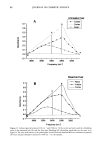
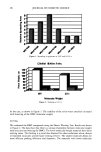
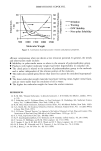
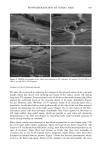
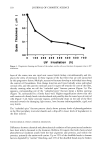
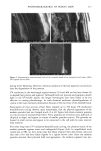
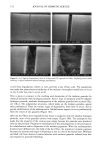
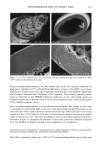
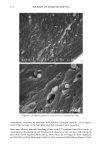
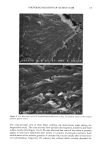
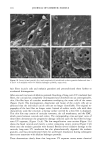
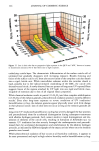
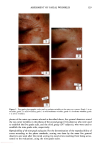
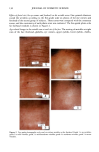
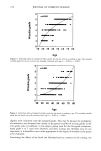
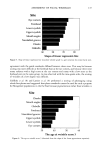
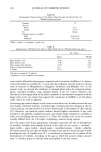
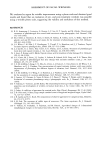
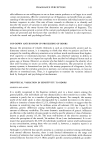
ASSESSMENT OF FACIAL WRINKLES 137 Site Eye corners Forehead Lower eyelids Upper eyelids Mouth angles Nasolabial groove Cheeks Glabella s'o 7'0 9'0 Slope of linear regression line Figure 5. Slope of linear regression line (standard wrinkle grade vs. age) variation for several facial sites. agreement with the grade standards differed between these sites. This may be because scoring was more difficult at the forehead than at the eye corners, and because there were many subjects with a high score at the eye corners and many with a low score at the forehead even in the same group. As was observed with the nine-grade scale, the scoring of wrinkles of a low degree was difficult. Griffiths et al. (8) and Larnier et aL (9) performed a scoring of photoaging using whole-face photos and suggested that photo standards cannot be used for such a purpose for Mongoloid populations in the Far East because pigmentation rather than wrinkles is Site Cheeks Mouth angles Glabella Forehead Nasolabial groove Upper eyelids Lower eyelids Eye corners 30 40 50 60 The age at wrinkle score 3 Figure 6. The age at wrinkle score 3 (obtained from the slope of the linear approximate equation).

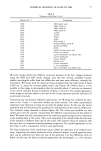
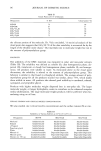
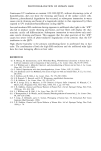
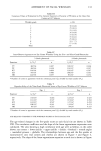
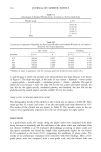
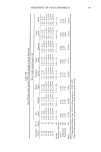
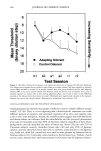
138 JOURNAL OF COSMETIC SCIENCE Table IX Demographic Chararcteristics of the Subject Population for the Clinical Test of a Wrinkle-Improving Agent Number 15 Age (yr) Mean 42.5 Range 35-54 Sex female Overall severity of wrinkle* Mild 10.0 (67%) Moderate 5.0 (33 %) * Mild = grade 1-5 moderate = grade 6-8. Table X Improvement in Wrinkle Score After an Eight-Week Use of a Wrinkle-Improving Agent Eye corners Agent Placebo Mean baseline score 5.00 4.93 Mean week-8 score 4.40 5.06 Mean change from baseline -0.60 0.07 Percent change from baseline 12.0 -1.42 p Value* 0.01 The data are means of 15 subjects. * Significant (t-test) compared with placebo. more readily affected by photoaging compared with Caucasians. Griffiths et al. demon- strated this based on a profile of a 72-year-old obese Japanese and the results of clinical tests of tretinoin in Mongoloids in Singapore, Indonesia, and Malaysia (14). In the present study, we showed the usefulness of enlarged photo scales for evaluating photo- aging, especially wrinkles, using enlarged photos of the eye corners. However, the decrement of the kappa value of the photo standards at the forehead compared with the kappa value at the eye corners may support the contention of Griffiths et al. that photo scales cannot be used in Japanese. Concerning age-related changes in the scores at each facial site, wrinkles around the eyes were highly correlated with age. A similar high correlation between changes at the eye corners and age was also observed in a three-dimensional (3-D) analysis of skin replicas (15). However, our previous replica analysis showed higher correlations of age with wrinkles at the glabella, nasolabial grooves, and mouth angles compared to wrinkles at other sites (excluding the eye corners) (15). Thus, the wrinkle score at the eye corners visually differed from the 3-D surface morphology analyzed using replicas. Since the slope of the linear approximate expression represents the rate of development of wrinkles, wrinkles more rapidly develop in the order of.' eye corners forehead lower eyelids upper eyelids mouth angles nasolabial grooves cheeks glabella. Wrinkles around the eyes that are highly correlated with age also showed a high wrinkle development rate. A wrinkle score of 3 is considered to represent the initiation of the development of wrinkles. According to the ages at which the present subjects showed score 3, wrinkles appear to develop early and rapidly at the eye corners.
Purchased for the exclusive use of nofirst nolast (unknown)
From: SCC Media Library & Resource Center (library.scconline.org)