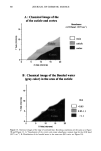
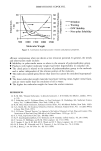
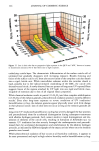
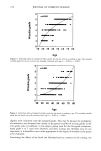
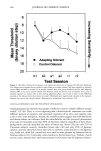
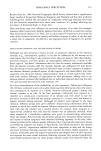
148 JOURNAL OF COSMETIC SCIENCE 60 '•50 ß 40 • 3o ß lO ODOR --O-- Neutral •--EI-- Positive --•- Negative IRRITATION I I I I 5 10 15 20 5 10 15 20 -- VS --S --M --W Exposure Duration (minutes) Figure 3. Average intensity ratings of the perceived odor and irritation of a 20-minute chamber exposure to methyl salicylate (wintergreen) for participants given a positive, neutral, or negative bias about the nature of the odorant. Reprinted, by permission, from reference (36). characterizing information was conveyed by the behavior, symptoms, and verbal reports of a "confederate" subject (an actor whose positive, negative, or neutral verbalizations and symptom reports were scripted) (39). These results suggest that odor experience may be particularly prone to the influence of extrasensory factors, such as expectations and the emotional states and vigilance induced by such expectations. Moreover, based on the studies reviewed here, responses to odors appear to depend strongly on context and, accordingly, will vary among different in- dividuals and across time within the same individuals as a function of how odor infor- mation is interpreted through different cognitive and emotional filters. INTERPRETING AND UTILIZING THE SOURCES OF VARIATION IN OLFACTORY PERCEPTION Given the wide variety of factors that appear to influence individual sensitivity and hedonic responses to any odorant, one may be left to wonder whether it is possible to utilize fragrance in any systematic fashion or whether the variation in response to a select group of odorants will render the perception and response to these fragrances hopelessly idiosyncratic. Clearly, as more research is conducted on fundamental mechanisms in olfaction and sources of variation in odor perception, better information will be available to guide the systematic use of fragrances. In the meantime, there is considerable evidence from extant olfactory research to indicate that fragrance is a powerful tool to elicit hedonic reactions (both positive and negative) and different mood states (40,41), and that perhaps through mood induction, specific odors can become associated with a

FRAGRANCE PERCEPTION 149 particular environment or emotional state (42). The association of odors with emotional states through conditioning may well be one of the most potent methods to endow specific odors with the ability to promote relaxation and health benefits (43•47). Exposure can also significantly modify the sensory and affective response to a fragrance, although the specific direction of the effect will depend greatly on the duration and frequency of the exposure and the other stimuli that are present at the time of exposure (23,24,48). Moreover, although there can be substantial variation across different cultures or ethnic groups, within a particular culture or age-group there can be considerable agreement over what odor sensation constitutes a "clean" smell or a "calming" smell, owing perhaps to the homogeneity of lifestyles and experiences that promote associations with odors (31,49). Thus, following a careful evaluation of the target audience, the appropriate fragrances and their optimal intensities can be selected for many different commercial applications. CONCLUSION Despite the popular perception that olfactory sensation and information is of limited importance to humans, who rely heavily on sight and sound, there is considerable evidence that multiple facets of human experience and behavior are impacted, both positively and negatively, by our ability to perceive odors and fragrances. This ability can warn us of possible airborne chemical hazards (50), orient us to food sources, and allow us to recognize kin or other close relationships (51). Perhaps most significantly, olfactory sensations can rapidly and dramatically alter mood (40,52) and anxiety (46). This proclivity for impacting affectlye responses has served as a powerful argument for in- corporating olfactory cues into many products or environments. All of these applications can benefit greatly from an increased understanding of the determinants of human odor perception and response. What should emerge clearly from this review is that psychological mechanisms are as important as biological mechanisms for understanding and predicting the human response to olfactory sensations. Moreover, psychological determinants of odor perception appear to hold greater promise for modi- fying olfactory experiences to address the variability found across different individuals and cultures than do biological determinants. Fragrance research and development that acknowledges and pursues both mechanisms will undoubtedly profit from this insight. REFERENCES (1) W.S. Cain, "Indoor Air as a Source of Annoyance," in Environmental Annoyance: Characterization, Measurement and Control (Elsevier, Amsterdam, 1987), pp. 189-200. (2) J. M. Levine and D. H. McBurney, "The Role of Olfaction in Social Perception and Behavior," in Physical Appearance, Stigma, and Social Behavior: The Ontario Symposium, Volume 3 (Lawrence Erlbaum, Hillsdale, NJ, 1986), pp. 179-217. (3) A. LeGu•rer, Scent (Kodansha America, New York, 1994). (4) H.J. Christopher, Bonaparte in Egypt (Harper & Row, New York, 1962). (5) W. S. Cain and J. E. Cometto-Mufiiz, "Irritation and Odor: Symptoms of Indoor Air Pollution," in Indoor Air '93: Volume 1, Health Effects (Indoor Air '93, Helsinki, 1993), pp. 21-31.
Purchased for the exclusive use of nofirst nolast (unknown)
From: SCC Media Library & Resource Center (library.scconline.org)