142 JOURNAL OF COSMETIC SCIENCE odors were viewed as potentially curative, or at least protective (2,3). For example, the habit of perfuming gloves and handkerchiefs seems to have originated as a way of protecting the wearer from the foul and "disease producing" smells permeating Europe during the Middle Ages and Renaissance. In an attempt to protect his troops from airborne disease, Napoleon commissioned a "bad smell map" of Egypt to guide their movements in the early nineteenth century (4). We should, perhaps, not find it sur- prising that many of these attitudes and beliefs still exist, being embodied in reactions to odors that range from concerns about becoming sick from exposure to environmental odors (5,6) to attempts to be healed through exposure to natural aromas (7,8). Some of the most extreme claims for the positive benefits of fragrance derive from the field of aromatherapy. The resurgence of interest in the use of essential oils and volatiles highlights the persistence of the belief that certain fragrances have beneficial effects on health, mood, and mental well-being (7-10). Although anecdotal experience informs us that exposure to fragrances that we like or fragrances that are associated with happy memories or favored individuals can elevate our mood, aromatherapy's claims go beyond such second-order associative or placebo effects of fragrance. Aromatherapists contend that positive benefits are derived from the actual properties and characteristics of these derivatives, which are active, independently therapeutic agents (11). As might be ex- pected, this assertion has provoked considerable controversy between aromatherapists and the scientific and medical establishment. Although inhalation or dermal absorption of lipophilic compounds can introduce these chemicals into the bloodstream, many scientists believe that the amounts that will be absorbed in these applications are not physiologically significant doses and, thus, that any systemic effects (positive or nega- tive) from inhaled or absorbed oils are negligible. Unfortunately, there is little in the way of scientific evidence to support or refute this idea. However, it is equally plausible that the effects of scent can exert powerful effects on mood and well-being through psychological mechanisms alone, and in this domain, there is considerable scientific research to inform us. OLFACTORY RESEARCH AND FRAGRANCE PERCEPTION: WHAT'S THE CONNECTION? Correlated with the increased interest in aromatherapy and other therapeutic uses of fragrance is a proliferation in the number of scientific studies of odor perception in humans and the impact of odors on mood, memory, and perceived well-being. Between 1990 and the present, MedLine (the National Library of Medicihe's [NLM] premier bibliographic database covering the fields of medicine, nursing, dentistry, veterinary medicine, the health care system, and the preclinical sciences) lists more than 650 published, scientific articles on the subject of human oilaction, suggesting that there have been considerable scientific advances in our understanding of both the mechanism and function of the human olfactory system and the effect of odors on mood, mental state, or performance. Among these references, however, there are no studies that provide unequivocal evidence that exposure to specific fragrance materials at concentrations that are commonly encountered in perfumes or scented products produces measurable direct effects (positive or negative) on human health or well-being. Instead, much of the evidence suggests that the first, and perhaps the foremost, impact of fragrance is through the conscious perception of odor. Because our ability to perceive odors has an indisput-

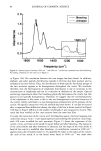
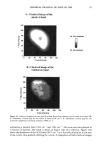
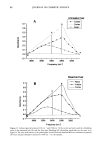
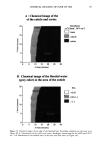
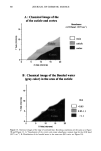
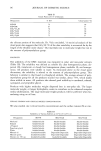
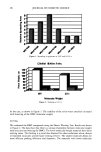
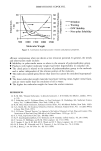
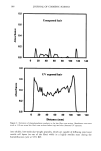
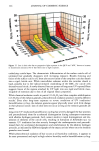
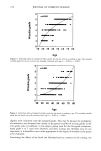
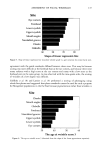
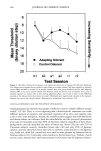
FRAGRANCE PERCEPTION 143 able influence on our willingness to use or shun certain products or to linger in or avoid certain environments, effective commercial use of fragrances can benefit from an under- standing of the myriad factors that contribute to or determine individual sensitivity and hedonic responses to odor. One aim of basic research in olfaction is to identify and describe the sources of variation in odor perception, which can lead to a more complete understanding of the many factors that determine our perception of fragrance. The following sections provide a review of the current psychological perspectives on the way odors are processed and the factors that contribute to the variation in odor experience, at both the neural and psychological levels. TOP-DOWN AND BOTTOM-UP PROCESSING OF ODORS Because the perception of volatile chemicals is such an evolutionarily ancient and ru- dimentary sensory system, it is tempting to think that what we perceive and how we interpret the resulting olfactory sensation occur without much involvement from higher- level cognitive or emotional processes. Similarly, any observed variation in ability to perceive an odor or in its impact has typically been ascribed to biological factors such as genes, age, or disease. However, as anyone who has failed to recognize the identity of an odor until locating its source can attest, olfactory perception, like perception in other sensory systems, is determined not just by the sensory properties of a fragrance, but by information that the stimulus activates in memory, our current expectations, or even our affective or emotional state. Thus, it is appropriate to examine the variation induced both by biological and psychological mechanisms. INDIVIDUAL VARIATION IN SENSITIVITY TO ODORS GENETICS AND AGING It is widely recognized in the fragrance industry and, to a lesser extent, among the general public, that individuals can vary dramatically in their sensitivity to odors. This variation is partly due to a number of predisposing factors. For example, the sensory world of the older adult is often distinguished by a marked decrement in the detect- ability or intensity of many odors (12,13), although there is evidence to suggest that the decrease in sensitivity may not be uniform across all odorants (14) (see Figure 1). In addition, genetic differences among individuals appear to account for a significant amount of olfactory variability. The most dramatic manifestation of genetic influences on olfaction is the inability of some people to smell a specific odorant or class of odorants, known as specific anosmia (15,16). The most well-known of the selective anosmias in- volves the perception of the steroid, 5ot-androst-16-en-3-one (androstenone). It is esti- mated that approximately 40-50% of individuals worldwide cannot smell androstenone at any concentration among those who can smell it, however, a majority report it as having a urinous, sweaty odor (15). Although it is believed that specific anosmia is a common occurrence among individuals with normal olfactory function, there is only limited information on the range and diversity of odorants that cannot be smelled by one or more individuals with otherwise normal olfactory function (16,17). Most people's specific anosmias probably go uniden-
Purchased for the exclusive use of nofirst nolast (unknown)
From: SCC Media Library & Resource Center (library.scconline.org)