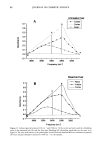
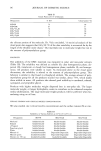
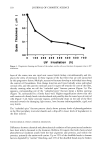
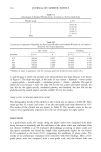
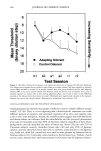
FRAGRANCE PERCEPTION 147 Results from the 1986 National Geographic Smell Survey showed that a significantly larger number of Asians from Malaysia, Singapore, and Thailand said that they would eat something that smelled like mercaptan (an unpleasant rotten-egg smelling odor) than did the Caucasian respondents from those same countries (32), perhaps reflecting the prevalence of fermented foods in Asian diets. Odor familiarity may even influence the perceived intensity of an odor. For example, Japanese subjects perceived a familiar Japanese food odor, dried fish, as much less intense than did German subjects (31). Thus, just as culture-specific experience can account for some of the variation in both the sensory and hedonic response to odors, it can also play a major role in judgments of preference and appropriateness of fragrances for specific contexts. EXPECTATIONS, EMOTIONS, AND THE PERCEPTION OF ODORS Although any odor sensation is based, in part, on properties inherent in the chemical stimulus (e.g., concentration, quality), it can also be influenced by the mental set or expectations that we bring to any situation where odors are present. Odor detectability, perceived intensity, and even quality are meaningfully influenced by a variety of dif- ferent types of "top-down" information that can color the sensory information available from the odorant stimulus itself. For example, Knasko and colleagues (33) have shown that describing an aerosol application of deionized water as either a pleasant or unpleas- ant odorous substance produced reports of odor experience and mood effects that were congruent with the given hedonic characterization. And, in several studies that exam- ined more indirect influences of expectation on odor perception, adding color to an odorous solution increased the likelihood that an individual reported detecting the odor (34) and increased the perceived odor intensity (35). In a clear demonstration of the malleability of odor experience, Dalton and colleagues (36-38) have conducted a series of studies examining how information about the source and consequences of exposure to a volatile chemical influenced people's sensory and somatic response to an odor. In the basic paradigm, individuals were exposed in a chamber to a steady-state concentration of an odorant and were asked to rate the perceived intensity of odor and any sensory irritation (i.e., to eyes, nose, and throat) at regular intervals during exposure. Although all subjects were exposed to the same chemical, different groups were given different characterizing information about the odorant to which they would be exposed. Subjects assigned to a positive-bias condition were told that the odorant was a natural extract. In contrast, those assigned to a negative-bias condition were told that the odorant was an industrial chemical, while those assigned to a neutral-bias condition were given no characterizing information about the odorant. Perceived odor and irritation ratings were measured during exposure, and reports of health symptoms were obtained following exposure. In all cases, infor- mation provided to the subjects greatly influenced their reported odor experience during and following exposure (see Figure 3). Specifically, individuals exposed to the odorant under a "positive" expectation exhibited the most adaptation to odor and the lowest perceived irritation following exposure they reported the fewest health symptoms. In contrast, individuals given the negative expectation rated higher levels of odor intensity and reported the most overall irritation following exposure they reported significantly more health symptoms than the other groups. Similar results were observed when the

148 JOURNAL OF COSMETIC SCIENCE 60 '•50 ß 40 • 3o ß lO ODOR --O-- Neutral •--EI-- Positive --•- Negative IRRITATION I I I I 5 10 15 20 5 10 15 20 -- VS --S --M --W Exposure Duration (minutes) Figure 3. Average intensity ratings of the perceived odor and irritation of a 20-minute chamber exposure to methyl salicylate (wintergreen) for participants given a positive, neutral, or negative bias about the nature of the odorant. Reprinted, by permission, from reference (36). characterizing information was conveyed by the behavior, symptoms, and verbal reports of a "confederate" subject (an actor whose positive, negative, or neutral verbalizations and symptom reports were scripted) (39). These results suggest that odor experience may be particularly prone to the influence of extrasensory factors, such as expectations and the emotional states and vigilance induced by such expectations. Moreover, based on the studies reviewed here, responses to odors appear to depend strongly on context and, accordingly, will vary among different in- dividuals and across time within the same individuals as a function of how odor infor- mation is interpreted through different cognitive and emotional filters. INTERPRETING AND UTILIZING THE SOURCES OF VARIATION IN OLFACTORY PERCEPTION Given the wide variety of factors that appear to influence individual sensitivity and hedonic responses to any odorant, one may be left to wonder whether it is possible to utilize fragrance in any systematic fashion or whether the variation in response to a select group of odorants will render the perception and response to these fragrances hopelessly idiosyncratic. Clearly, as more research is conducted on fundamental mechanisms in olfaction and sources of variation in odor perception, better information will be available to guide the systematic use of fragrances. In the meantime, there is considerable evidence from extant olfactory research to indicate that fragrance is a powerful tool to elicit hedonic reactions (both positive and negative) and different mood states (40,41), and that perhaps through mood induction, specific odors can become associated with a
Purchased for the exclusive use of nofirst nolast (unknown)
From: SCC Media Library & Resource Center (library.scconline.org)