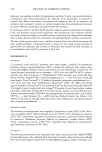
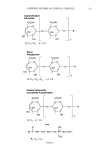
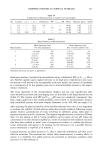
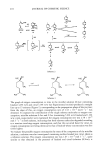
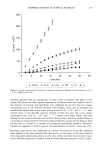
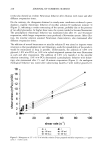
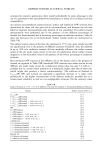
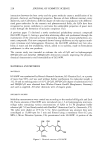
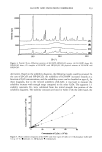
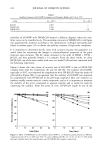
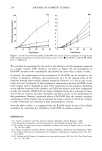
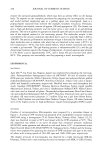
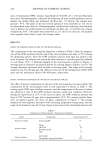
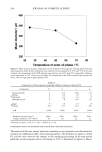
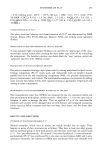
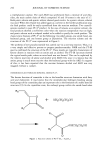
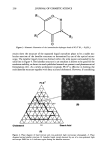
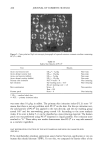
228 JOURNAL OF COSMETIC SCIENCE interaction between the host cavity and the guest molecule causes a modification of its physical, chemical, and biological properties. Because of their different internal cavity diameters, each CyD shows a different degree of molecular encapsulation with different- sized guest molecules. In the cosmetic and pharmaceutical fields, the CyDs have been recognized as potent candidates to overcome the undesirable properties of guest mol- ecules through the formation of inclusion complexes (5,6). A previous paper (7) disclosed a newly synthesized polyhydroxy aromatic compound (LG106W Figure 1), having a good skin-whitening effect and synthesized through the examination of the structure-activity relationship among the natural polyhydroxy aro- matic compounds. This new compound showed strong inhibitory activity against mush- room tyrosinase and melanogenesis. However, the LG106W exhibited very low solu- bility in water and low availability, which, added to its stability, made its formulation problematic in skin care products. The current study was intended to evaluate the role of CyD and its hydroxypropyl (HP-[3-CyD) and dimethyl (DM-[3-CyD) derivatives towards improving the physico- chemical characteristics and bioavailability of LG106W. MATERIALS AND METHODS MATERIALS LG106W was synthesized by Biotech Research Institute, LG Chemical Ltd., at a purity of more than 99%, and was used without further purification. Its molecular weight is 332.39 and its melting point is 192øC. [•-CyD, HP-[•-CyD (degree of substitution: 0.6) and DM-[3-CyD were obtained from Wacker-Chemie GmbH (Burghausen, Germany) and used as supplied. All other chemicals were of reagent grade. SOLUBILITY STUDIES Solubility measurements were carried out according to the method of Higuchi and Lach (8). Excess amounts of LG106W were introduced into 1.5-ml polypropylene microcen- trifuge tubes containing various concentrations of CyDs in 0.1 M phosphate buffer solution (pH 7.0) and firmly sealed with Parafilm © (American Can Co., Greenwich, CT). The tubes were shaken at 25øC for 72 hr. After equilibrium was attained, they were centrifuged at 15,000 rpm for 5 min and filtered using a membrane filter (0.2 pm, MFS-3, Micro Filtration Systems, CA) presaturated with LG106W. A portion of the OH OH OH OH OCH• Figure 1. Chemical structure of LG106W.

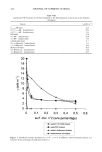
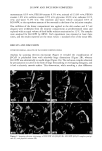
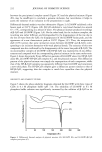
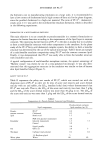
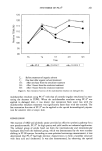
LG 106kV AND INCLUSION COMPLEXES 229 flitrate was diluted with 50% v/v methanol-water and injected to HPLC. The experi- ments were carried out in triplicate. The HPLC consisted of a solvent delivery pump (Waters 626, Waters Co., MA), a C18 column (Hewlett Packard BDS), a UV detector (Waters 486), and a data processing system (Millennium 32, Waters). The mobile phase was composed of 58% v/v methanol and 42% v/v water that contained phosphoric acid to adjust to a pH 2.5. A wavelength of 283 nm was selected, and the temperature of the column was kept at 30øC. The correction of concentration against each sample point was undertaken. An apparent 1:1 stability constant, Kc, was calculated from the initial straight line portion of phase solubility diagrams according to the following equation (9): Koe -- slope intercept-(1-slope) PREPARATION OF INCLUSION COMPLEXES For the complex preparation, two methods were used, depending on the physical prop- erties of CyDs: 1. In the case of preparation of solid complexes, an aqueous solution of •3-CyD was prepared at room temperature. An equimolar amount of the guest compound was added, and the mixture was stirred at ambient temperature for 24 hr. The •3-CyD inclusion complex formation was indicated by the precipitation of a white solid. The solid complex was isolated by filtration, washed with distilled water, and dried under vacuum. 2. To prepare the complexes with CyD derivatives, an excess amount of the guest compound was added to an aqueous solution of the CyD derivatives, and the mixture was stirred at ambient temperature for 24 hr. After the excess of guest compound was removed by filtration, the complex powder was obtained by spray-drying the flitrate. DETERMINATION OF PHYSICOCHEMICAL PROPERTIES OF CyD COMPLEXES The microscopic aspect of the raw materials was compared with that of the products obtained by precipitation and simple physical mixture, by examination under the scan- ning electron microscope (JSM 840A, Jeol, Japan). The reality of the inclusion was confirmed by subjecting the raw materials, the simple physical mixture, and the precipitated product to differential scanning calorimetry (Setaram TG-DSC, Caluire, France). The samples were analyzed in an open capsule to allow the evaporation of water lost by CyD. Determinations were carried out on 10 mg of LG106W or on the corresponding quantities. The different samples were heated from 25øC to 250øC at a rate of 10øC/min. The powder X-ray diffraction patterns were also taken by a Rigaku Rint-2500 diffrac- tometer (Tokyo, Japan). The complexes were prepared as following: The complex of LG106W with HP-[3-CyD in a molar ratio of 1:1 was prepared by the kneading method, i.e., LG106W (30 mg) was dissolved in a small amount of ethanol, and the solution was kneaded thoroughly with HP-•3-CyD (124 mg) and water (about 1 ml) for about 40 min. The solid complex was dried under reduced pressure at room temperature for two days, and subjected to powder X-ray diffraction. The operation conditions were: X-ray of
Purchased for the exclusive use of nofirst nolast (unknown)
From: SCC Media Library & Resource Center (library.scconline.org)