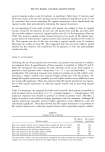
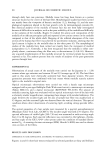
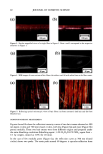
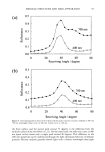
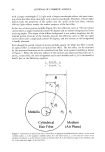
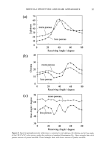
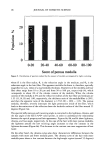
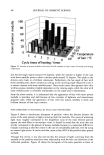
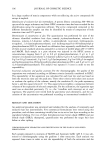
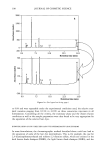
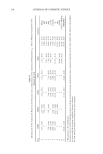
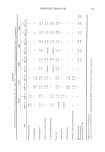
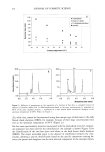
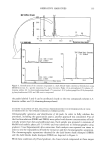
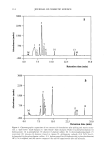
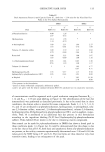
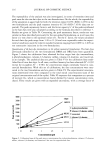
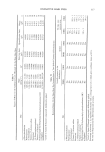
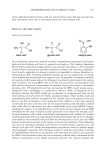
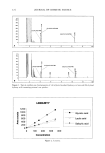
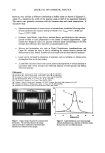
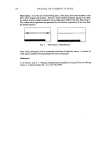
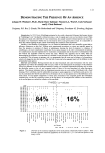
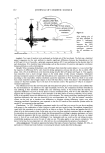
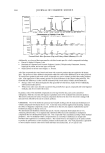
96 JOURNAL OF COSMETIC SCIENCE o 0-20 20-40 40-60 60-80 80-1 O0 Score of porous medulla Figure 9. Distribution of panelists ranked by the amount of medulla accompanied by light scattering. where R is the fiber radius, 0• is the refraction angle in the medium, and 02 is the refraction angle in the hair fiber. The apparent medulla thickness is, therefore, optically magnified to n2/n • times of actual medulla thickness. Diameters of the medulla and hair fiber often range from 10 to 20 pm and from 50 to 100 pm, respectively (4), which corresponds to about 4% of the volume content of the medulla. When the volume content of the medulla is 4% and the refractive indexes of the hair fiber and medium are 1.55 (11,14,15)and 1.00, respectively, the thickness ratio of the medulla/fiber is 20%, and then the apparent ratio of the diameter is 1.55/1.00 x 20% = 31%. The porous medulla, therefore, severely intercepts the light penetration inside of the fiber, which leads to the extinction of the reflection from the backside surface of the fiber around 55 degrees (Figure 6a). The spectral reflectance ar each receiving angle is converted ro the lighrness, chroma, and the hue angle of the CIE L*a*b* color system, in order to understand the relationship between the optical properry and hair appearance. Figures 8a, 8b, and 8c show lightness, chroma, and hue angle, respectively. In the case of the hair with more porous medulla, the lightness around the low receiving angle increases so that the contrast in the lightness decreases (Figure 8a). This decrease in the contrast can cause suppression of hair luster. On the other hand, the chroma curves also show characteristic differences between the samples with more and fewer medulla pores. The chroma curve of the hair with more medulla pores shows a low contrast between the high-angle region (around 55 degrees)

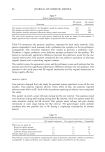
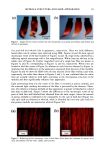
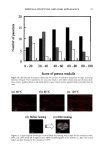
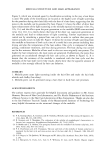
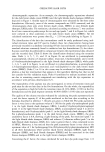
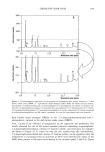
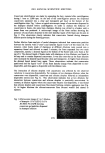
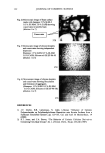
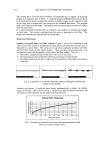
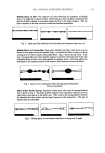
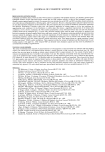
MEDULLA STRUCTURE AND HAIR APPEARANCE 97 2O 15 - 10 0-20 20-40 40-60 60-80 80-100 Score of porous medulla Figure 10. Distribution of panelists ranked by the amount of medulla accompanied by light scattering. Panelists of Figure 9 were classified by the way a hair dryer is used. Open column: non-user of a heat dryer. Gray column: panelists finish to dry before full dry state. Closed column: panelits finish to dry after full dry state. (a) 60øC (b) 80øC (c) 120øC I /hm !mm mm (d) Before heating (e) After heating 3 •tm 3 •tm Figure 1 I. Upper: Optical microscopic views of fibers after heating with a dryer for five minutes at 60øC, 80øC, and 120øC (from left to right). Lower: SEM microphotographs of the medulla in a hair cross section before and after heating for five minutes at 120øC.
Purchased for the exclusive use of nofirst nolast (unknown)
From: SCC Media Library & Resource Center (library.scconline.org)