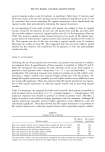
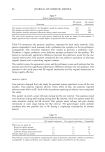
PECTIN-BASED VAGINAL MOISTURIZER 87 CONCLUSION The results of this double-blind crossover study indicate significantly less vaginal residue with SE vaginal moisturizer than with Rp vaginal moisturizer. No significant differences in efficacy between the two products were found. We conclude that the bioadhesive polycarbophil, as formulated in Rp vaginal moisturizer, provides no additional benefit over pectin, as formulated in SE vaginal moisturizer, in the relief of vaginal dryness. ACKNOWLEDGMENTS C. B. Fleet Company, Inc., sponsored this study. We would like to acknowledge the assistance of the staff at Consumer Product Testing Company, 70 New Dutch Lane, Fairfield, NJ 07004. We appreciate the statistical assistance of Charles Cox ofC. B. Fleet Company, Inc. REFERENCES (1) A. A. Haspel, M. Luisi, and P.M. Kicovic, Endocrinological and clinical investigations in postmeno- pausal women following administration of a vaginal cream containing oestriol, Mat•ritas, 3, 321-327 (1981). (2) M. Bygdeman, and M. L. Swahn, Replens versus dienoestrol cream in the symptomatic treatment of vaginal atrophy in postmenopausal women, Mataritas, 23, 259-263 (1996). (3) L. E. Nachtigall, Comparative study: Replens versus local estrogen in menopausal women, Fert. Ster., 61, 178-180 (1994). (4) S.J. Kelly, Coping with vaginal dryness, Clin. Pratt. SexaMity, 8, 18-21 (1992). (5) J. Balzarini, L. Naesens, E. Verbeken, et al., Preclinical studies on thiocarboxanilide UC-781 as a virucidal agent, AIDS, 12, 1129-1138 (1998). (6) G. A. Bachmann, M. Notelovitz, S. J. Gonzalez, et al., Vaginal dryness in menopausal women: Clinical characteristics and nonhormonal treatment, Clin. Pract. SexaMity, 7, 1-8 (1991).

J. Cosmet. Sci., 53, 89-100 (March/April 2002) Influence of internal structures of hair fiber on hair appearance. I. LiDht scatterinD from the porous structure of the medulla of human hair SHINOBU NAGASE, SATOSHI SHIBUICHI, KENICHI ANDO, EMIKO KARIYA, and NAOKI SATOH, Hair Care Research Laboratories, Kao Corporation, 1-3, B•/nka 2-chome, S•/mida-k•/, Tokyo 131-8501, Japan. Accepted for publication December 31, 2001. Based on a presentation at the 21st IFSCC Congress, Berlin, Germany, September 12, 2000. Synopsis In this study the influence of the medulla structure on hair appearance was examined. Hair with a porous medulla gave a whitish and lusterless appearance because of light scattering from the fiber center, whereas in the cases without pores, a clear and brilliant appearance was observed. The optical influences of the medulla pores were measured by a spectral goniophotometer, and obtained data were analyzed in terms of the CIE L*a*b* color system. Both contrasts in lightness and apparent color (chroma and hue) decreased in the hair with medulla pores, and the decreases in contrast caused a whitish and lusterless appearance. The distribution of the amount of medulla pores was investigated for Japanese females. The histogram was further analyzed by hair care behavior of individual panelists, and it was found that the pores in the medulla can be generated in a heat-drying process. INTRODUCTION Hair shine is one of the greatest concerns of consumers, and so many intensive studies have been carried out. Most of them are to elucidate the mechanism regarding the contrast of intensities, such as specular reflection versus diffusion scattering, in relation to the surface structure of the hair fiber. However, hair shine involves optical processes more than just the reflection from the outermost surfaces. Recently consumers have tended to color or lighten their original hair because they regard their hair as one of the vital means for expression of their style. Bleached or colored hair sometimes shows a whitish tone, giving a lusterless and dull impression, even when no cause can be found for this on the cuticle surface. Light penetrates deeply into such hair fibers. Thus the inner structure must play a more crucial role in hair shine. The authors found that hair shine is strongly affected by the medulla structure, and they report here new findings on the influence of the porous structure in the medulla upon hair shine. Furthermore, it was discovered that pore generation occurs in the medulla 89
Purchased for the exclusive use of nofirst nolast (unknown)
From: SCC Media Library & Resource Center (library.scconline.org)