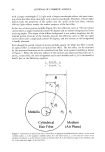
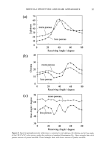
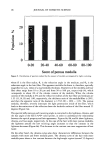
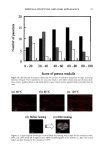
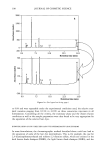
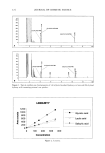
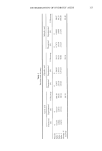
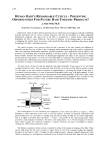
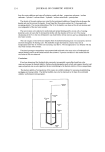
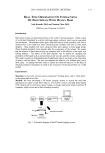
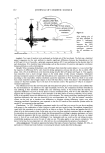
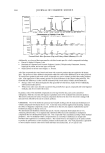
2001 ANNUAL SCIENTIFIC MEETING 147 STUDY AND IDENTIFICATION OF VOLATILE COMPOUNDS FROM HUMAN SKIN Asira Ostrovskaya, Peter A. Landa, Marina Sokolinsky, Anthony D. Rosalia and Daniel Maes Estee Lauder Inc., Research and Development, 125 Pinelawn Road, Melville, NY 11747 Introduction: Human skin is an extremely complicated biochemical system. Each individual has a unique skin chemistry and accordingly a personal smell that is as characteristic as human fingerprints. When the same perfumes or fragrance products are applied to individuals, differences in odor have been observed. The goal of our investigation was to recognize and identify volatile compounds responsible for the unique odor from human skin. A novel analytical technique which combines Solid Phase Micro Extraction (SPME) with subsequent analysis via Gas Chromatography - Mass Spectroscopy (GC-MS) was developed and successfully applied. Method: The SPME (Supelco Inc.) technique used consists of fused silica fibers coated with Divinylbenzene / Carboxen on polydimethylsiloxane, 50/30urn. These fibers are used to absorb and concentrate analytes in the headspace above the skin. The volatile compounds are then transferred into the GC-MS where they are thermally desorbed and analyzed. Sampling: A glass sampling device, developed for this study, with a 6cm diameter opening was placed and secured over the skin. The SPME fiber is introduced into the top of the sampling device through a septurn. The fiber is then exposed to the headspace for 45 minutes. The Fibers are then desorbed in the heated injection port of the Gas Chromatograph. Analytical Conditions: GC Conditions: Columns: non-polar DB-I and polar DB-Wax lnjector= 270øC for DB-I 250øC for DB-Wax Transfer Line = 270 øC for DB-1 250øC for DB-Wax Flow = 1 mL/min Split = 100/1 mL/min (split valve closed during desorption) Oven Temp. = 40 øC (2rain), 4 øC/rain, to 200 øC (3rain) MS Conditions: MS Scan: 35 - 400AMU @ 2.0scans/sec. The volatile compounds are analyzed and identified by interpreting their Mass Spectra and by performing searches to known Mass Spectral libraries. Protocol: 50 female panelists were recruited for this study. All panelists were healthy and between 18 and 60 years of age. Prior to the beginning of the study panelists were instructed not to use any fragranced products or aromatic foods throughout the entire study. The untreated volar forearms of the panelists were used as the test sites. The skin was cleaned with water and dried prior to testing. Results and Discussion: Several classes of compounds were found and identified in the headspace from human skin and they include: shorter and longer chain hydrocarbons, short chain aldehydes, a branched ketone, silicones, and residual components of fragrances and cosmetics. ß On 88% of the panelists - Short chain aldehydes were found such as: Nonanal, Octanal, and Decanal. ß On 96% of the panelists - Hydrocarbons of longer chain lengths were found such as: Tetradecane, Pentadecane, and Hexadecane. ß The relative levels of these common compounds, however, differed between individuals.

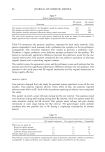
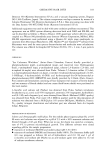
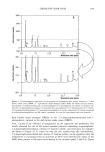
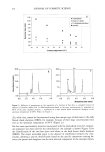
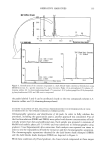
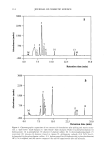
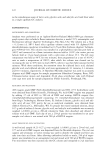
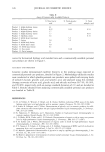
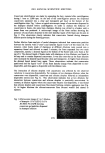
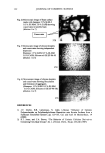
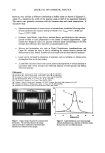
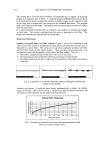
148 JOURNAL OF COSMETIC SCIENCE | Octanal Nonanal Decanal / , ...... / ,..," ----" / Chromato•ram of Volatiles From Skin .............. .... ,,_ ,I .... •G• .... • ' • ........ •o •.• ........ ::2 •.•...•..•..•.• ...... .•o ,...•,,..5.. 5•...• ............ .• .• ..•. ............... ..• .• ....... :..:•'o..... .....•......• •....L •..,.• •.?...•....5..•.. ,• ..•., .• • x ß o No,anl Peak: Mass Spectrum (Top) an Libra• Match (Botton Fit = 90 Additionally, we obse•ed that some panelists e•ibited ce•ain specific volatile compounds including: - Ketone: 6-Methyl-5-Hepten-2-one - Residuals of Fragrances and Cosmetic Products: Lmalool, Dihydromethyl Jasmonate, Ionones, Isopropyl M•istate, and several •es of Glycols. - Hydrocarbons of sho•er chain lengths: i.e. Decane. All of the compounds that were found could react with cosmetic products that are applied to the human skin. The presence of these different compounds could affect and initiate differences in the odor perceived. To confi• how products react with volatile compounds we used a cosmetic product that usually produces odor. After application of the cosmetic product we found differences in the relative odor perceived. We found that the differences in odor could be codected with ce•ain na•ral volatiles from human skin: ß Stronger odors were detected in panelists that generally have the ketone, higher levels of aldehydes, and branched hydrocarbons. ß While lower odors were detected in panelists that generally have glycol compounds and some fragrance residuals, and did not e•ibit the ketone. In general, some of the identified compounds are evolving from the skin, and can be considered endogenous, while the silicones and fragrance ingredients seem to be residuals from consumer products. The relative amounts and varieW of na•ral components found on the skin were obse•ed to change with time and were affected by the use of cosmetic products. Conclusions: The novel method is a practical and valuable tec•ique for the s•dy and identification of volatile compounds from human skin in vivo. It also has many potential applications including: studying the effects of fragrance compounds, crea•, and lotions on the skin the analysis ofpheromones and of biochemical changes in human scent, etc. We deterned and identified co•on and specific volatfie compounds from human skin m-vivo. Analyzing untreated skin, we recognized and established differences and si•larities in endogenous compounds that are liberated from human skin. The compounds were classified according to their che•cal propedies. Also we identified volatile compounds that can con•ibute to differences in u•que odor fo•ation after application of cosmetic products. The results from our investigation can be used as a basis to predict the perromance of new cosmetic products on the human skin. The work presented is a precursor to more in-depth research in the field of smell and odor from human skin. in vivo and in vitro.
Purchased for the exclusive use of nofirst nolast (unknown)
From: SCC Media Library & Resource Center (library.scconline.org)