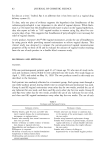
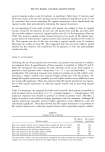
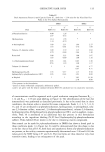
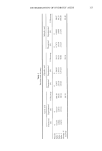
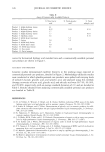
PECTIN-BASED VAGINAL MOISTURIZER 83 product in this study was consistent with the stated directions for use on each package. The ingredients for each vaginal moisturizer are shown in Table II. The study protocol for an almost identical study and the informed consent agreement used in this study were approved by an IRB prior to initiation of the study. METHODOLOGY Each potential patient's suitability for the study was reviewed (Table I). Those who passed the initial screening completed an informed consent agreement before admission into the study. Each panelist underwent a complete gynecological examination by a board-certified gynecologist for signs of erythema, edema, and any vaginal or perineal inflammation or irritation. The examination included the use of a colposcope for visu- alization of the entire vaginal wall. The initial findings of the vaginal/perineal exami- nation had to be within the normal range for the patient to continue in the study. I,terva/I. After a one-week washout period, during which the patient was not allowed to use any type of vaginal lubricant/moisturizer, the patients returned for another complete gynecological examination as described above, with one addition. The gyne- cologist's examination included an observation for evidence of vaginal residue. Residue was noted by location and approximate amount (0 = none 1 -- minimal 2 = mild 3 = moderate 4 = significant). Each patient received a test product according to the ran- domization code and a daily diary to document compliance with the study requirements. After two weeks of product usage every other day, the patients returned unused product to the clinic along with their diaries. Their diaries were reviewed for completeness. Each patient was required to complete an evaluation form assessing the product's overall acceptability and efficacy. Gynecological examinations were repeated as described above, including an observation for evidence of product residue. I,terva/II. During the one-week washout period between intervals, patients douched with Summer's Eve Ultra and were not allowed to use any type of vaginal lubricant/ moisturizer. After this one-week washout, the patients returned for another complete gynecological examination, as described above, including an observation for evidence of Table II Ingredients in Each of the Two Vaginal Moisturizers, Rp and SE Rp SE Purified water Purified water Glycerin Propylene glycol Mineral oil Methylcellulose Polycarbophil Xanthan gum Carbomer 934P Sodium lactate Hydrogenated palm oil glyceride Methylparaben Sorbic acid Lactic acid Methylparaben Dextrose Sodium hydroxide Sodium chloride Edetate disodium Pectin Propylparaben

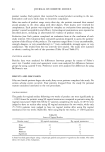
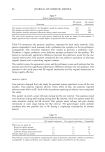
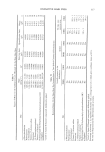
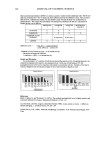
84 JOURNAL OF COSMETIC SCIENCE product residue. Each patient then received the second product according to the ran- domization code and a daily diary to document compliance. After two weeks of product usage every other day, the patients returned their unused second product to the clinic along with their diaries. Their diaries were reviewed for completeness. Each patient was required to complete an evaluation form assessing the product's overall acceptability and efficacy. Gynecological examinations were repeated as described above, including an observation for evidence of product residue. Eva/•atio, form, Each patient completed an evaluation form at the conclusion of each study interval. The evaluation form contained questions designed to assess the patients' opinion of the efficacy of the products. The responses ranged from 1 (very uncomfortable, strongly disagree, or very unsatisfactory) to 7 (very comfortable, strongly agree, or very satisfactory). The results from the two intervals were totaled. The totals were summed to obtain a ranking for each of the questions (Table III and Table IV). STATISTICAL ANALYSIS Residue data were analyzed for differences between groups by means of Fisher's exact test. Comfort scores and agreement scores were analyzed for differences between groups by using a paired T-test. Preference scores were analyzed for differences by using McNemar's test. RESULTS AND DISCUSSION Fifty-one female patients began the study forty-seven patients completed the study. No serious adverse events occurred. Four patients dropped from the study for personal reasons considered unrelated to the test procedures. VAGINAL RESIDUE The grades for vaginal residue following two weeks of product use were significantly (p 0.001) lower for patients using SE vaginal moisturizer compared to patients using Rp vaginal moisturizer (Table lI1). Of the 47 patients completing the study, 41 (87%) were judged to have no residue after using SE vaginal moisturizer for two weeks, while only 25 (53%) patients were judged to have no vaginal residue after using Rp vaginal mositurizer for two weeks (Table lll). After using Rp for two weeks, 17 (36%) patients Table III Scores of Vaginal Residue Residue noted SE vaginal moisturizer Rp vaginal moisturizer None 41 25 Minimal 4 0 Mild 0 5 Moderate 2 12 Significant 0 5 A board-certified gynecologist using a colposcope graded each patient's vaginal area for residue. This table shows the results of his evaluations.
Purchased for the exclusive use of nofirst nolast (unknown)
From: SCC Media Library & Resource Center (library.scconline.org)