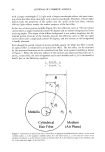
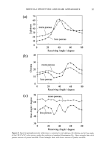
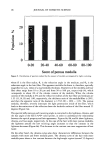
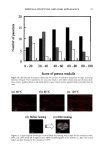
j. Cosmet. Sci., 53, 127-150 (March/April 2002) Papers Presented at the 2001 Annual Scientific Meeting and Technology Showcase (Friday's Program) December 6-7, 2001 New York Hilton New York, NY 127

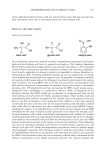
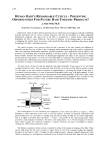
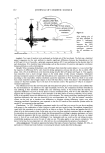
128 JOURNAL OF COSMETIC SCIENCE HUMAN HAIR'S REMARKABLE CUTICLE- PRESENTING OPPORTUNITIES FOR FUTURE HAIR TOILETRY PRODUCTS? J. Alan Swift, Ph.D. Swift Hair Consultancy, 29 Moorland Park, Wirral CH60 8Q J, UK Human hair, which is almost entirely proteinaceous in composition and contains a multitude of different proteins associated with its various internal structures, can best be described as a multi-component hierarchical composite. The major part of the fibre is occupied by a central cortex, which largely determines the fibre's elastic behaviour. The focus of attention of the present paper is the series of overlapping thin cellular sheets, the cuticle, which sheath the fibre and the contribution these layers might be making to the fibre's bending behaviour. The cuticle occupies a key position within the hair's structure. It not only controls the diffusion of materials into the fibre but, by dint of the overlapping scales presented at the outer surface, it imbues the fibre with important directionally-dependent fr/ctional properties. Such differential fr/ction, aided by the presence of a lubricating film covalently attached to the outer surface, is the reason why the hairs on the head normally maintain the maximum of disentangled alignment and helps in the rejection of irritant detritus from the scalp surface. At most 25% of the fibre bulk is occupied by the cuticle but in theory it has the potential for contributing a much greater proportion than this to the hair's bending resistance. It offers the prospect for being a controlling factor in styling hair to a changed level of curliness. The hair cuticle consists of large but relatively thin sheets (typically 50 gm across by 0.5 gm thick) wrapped around the cortex. They overlap each other from the root to the tip of the fibre to produce a series of scale edges on the outer surface at inter•als of approximately 5 I.tm along the length of each hair. A convenient working analogy is of stack of bottomless disposable plastic cups, with approximately 10 cup- layers being present in transverse section at the perimeter of the undamaged fibre. Each cuticle sheet, which contains mainly protein, is internally laminated and is separated from its neighbours by a very thin (25 nm) cell membrane complex of which, in turn, covalently-bound saturated lipids form an important part. Cuticle cell 1 Fibre surface Outer •3-1ayer ( ,',-layer [j:..:: }: 3 • • .:.:.) ! ?. ' Exocuticle Inner [3-layer layer •-Iayer Cell membrane complex Outer [3-layer Cuticle cell 2 • -- Epicuticle Figure 1.
Epicuticle Schematic diagram of cuticle sub- structure The nomenclatures for the laminated sub-components of the cuticle are shown in figure 1, which illustrates a small transverse section close to the hair surface. In terms of chemical composition and physical behaviour it is convenient to consider each cell sheet as being divided into two main components. One is a highly crosslinked layer (epicuticle + A-layer + exocuticle) on the outer-facing aspect which possesses a high modulus of elasticity. The other is the endocuticle, 1/2 to 3/4s the thickness of the fast layer, which contains few chemical crosslinks, is thereby relatively soft and is susceptible to massive swelling (ca. 100%) when immersed in water. The fineness/coarseness of hair are best considered in terms of the cantilever bending of the fibre. There can be little doubt that the force to bend is a major factor by which the consumer judges the diametric thickness of their hairs ( 1 ) and is of import for hair setting processes. Taking a simplistic approach for the cantilever bending of a homogeneous cylindrical rod as a model for the hair fibre, then the force to bend
Purchased for the exclusive use of nofirst nolast (unknown)
From: SCC Media Library & Resource Center (library.scconline.org)