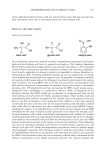
J. Cosmet. Sci., 53, 121-126 (March/April 2002) Simultaneous determination of alpha and beta hydroxy acids in personal care products by capillary Das chromatoDraphy K. MOLEVER, Research and Development Department, The Dial Corporation, 15101 N. Scottsdale Road, Scottsdale, AZ 85254. Accepted for publication December 31, 2001. Synopsis A simple and rapid procedure is described for the isolation, silylation, and simultaneous capillary gas chromatographic quantitation of alpha hydroxy acids and beta hydroxy acids in various personal care products. The sample is dissolved in acidified N,N-dimethylformamide to simultaneously acidify/extract the hydroxy acids a portion is then trimethylsilyl derivatized with BSTFA and quantified by capillary gas chromatography (GC) using flame ionization detection. INTRODUCTION Alpha hydroxy acids such as lactic acid and glycolic acid (and beta hydroxy acids such as salicylic acid) and their salts are commonly added to personal care products for their skin enhancement properties. However, the analysis of hydroxy acids has not been straightforward in finished product matrices except for the high-performance liquid chromatography (HPLC) assay of hydroxy acids containing a UV-absorbing chromo- phore, such as the beta hydroxy acid salicylic acid. Although other analytical methods for hydroxy acids in consumer products including gas and liquid chromatography have been reported in the literature (1-6), this gas chromatographic (GC) method combines specificity, quantitation, and easy sample preparation for the simultaneous analysis of these hydroxy acids in commercial personal care products. Advances in capillary gas chromatography have greatly enhanced capabilities for resolv- ing complex mixtures frequently, the resolving capacity of capillary columns can elimi- nate the need for extensive sample preparations or cleanups. In our analytical laboratory we routinely analyze consumer products for ingredients such as glycols, sorbitol, fatty acids, and similar ingredients, using adaptations of our previously published procedure for determining glycerin in soap bars (7) we also published a further adaptation, employing one-step acidification/dissolution using acidified N,N-dimethylformamide followed by silyl derivatization and capillary GC analysis to quantitate sodium lauroyl sarcosinate in personal care products (8). This technology has been further adapted here 121

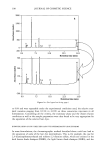
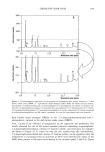
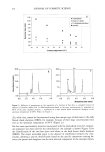
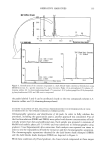
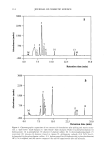
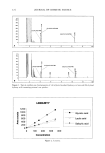
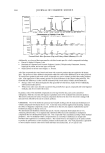
122 JOURNAL OF COSMETIC SCIENCE to the simultaneous assay of lactic acid, glycolic acid, and salicylic acid (and their salts) in a single capillary GC analysis. EXPERIMENTAL INSTRUMENTS AND CONDITIONS Analyses were performed on an Agilent/Hewlett-Packard Model 6890 gas chromato- graph system that included a flame ionization detector, a model 7673 autosampler, and Chemstation software (Agilent Technologies, Palo Alto, CA). The column was a 30-m x 0.32-ram i.d. HP-5 fused silica capillary column coated with 5% diphenyl-95% dimethylsiloxane copolymer (crosslinked) at 0.25-pm film thickness (Agilent Technolo- gies #19091J-413). The column was installed in a split/splitless injection port held at 300øC and connected to a flame ionization detector held at 310øC the carrier gas was helium held at 12-psi head pressure with a split ratio of about 25:1. The GC oven temperature was held at 90øC for two minutes, then programmed at a rate of 10.0øC/ rain to reach a temperature of 200øC, after which the column was cleaned out by increasing the rate to 30øC/rain to reach 280øC, where it was then held constant for five minutes. With these conditions, the retention times for silylated lactic acid, silylated glycolic acid, and silylated salicylic acid were approximately 4.1 minutes, 4.3 minutes, and 10.5 minutes, respectively. A Hamilton Microlab dispenser was used to accurately dispense acid-DMF reagent for sample preparations (Hamilton Company, Reno, NV). Ultrasonic/vortex mixers and disposable 20-ml glass scintillation vials with Polyseal cone caps were used for sample preparation (Fisher Scientific, Pittsburgh, PA). REAGENTS AND SOLUTIONS ACS reagent grade DMF (N,N-dimethylformamide) and HC1 (37% hydrochloric acid) were obtained from Fisher Scientific, Pittsburgh, PA. Acid-DMF reagent was prepared by adding 2.5 ml of HC1 to 500 ml of DMF and mixing. BSTFA reagent (bis- trimethylsilyltrifluoroacetamide containing 1% trimethylchlorosilane) was obtained from Regis Technologies, Morton Grove, IL. Sodium L-lactate, glycolic acid, and sali- cylic acid, all over 99% purity for use as analytical standards, were obtained from Aldrich Chemical Co., Milwaukee, WI. To prepare the mixed standard solution, about 0.15 g each of sodium L-lactate, glycolic acid, and salicylic acid standards was accurately weighed (+0.0001 g) into a 200-ml volumetric flask, then dissolved and diluted to volume with acid-DMF. Each day of use, a 250-pl portion was transferred to an auto- sampler vial where it was mixed with 500 pl of BSTFA reagent. ASSAY PROCEDURE AND CALCULATION A well-mixed sample (0.23-0.27 g) was weighed (+0.0001 g) into a 20-ml vial, and 9.75 ml of acid-DMF reagent was dispensed from the Microlab dispenser. The vial was capped, and ultrasonic or vortex mixing was used to dissolve the sample and force any salts into their acid form. After allowing undissolved solids to settle, 250 pl of super- natant was transferred to an autosampler vial and mixed with 500 pl of BSTFA reagent. Two microliters was then injected into the GC column and compared to 2-pl injections
Purchased for the exclusive use of nofirst nolast (unknown)
From: SCC Media Library & Resource Center (library.scconline.org)