OXIDATIVE HAIR DYES 103 Detector 540 (Kontron Instruments S.P.A.), and a vacuum degassing system, Degasys DG 1300 (Unifiows, Japan). The column temperature was kept constant by means of a Column Thermostat 582 (Kontron Instruments S.P.A.). Data processing was done with the Data System 450-MT2/DAD Series (Kontron Instruments S.P.A). Additional equipment was used to deal with some coelution problems encountered. This equipment was an HPLC system allowing detection both with DAD and ESI-MS, and can be described as follows: a Waters Alliance 2690 quaternary solvent delivery system coupled to a Waters 996 photodiode array detector (Waters Corporation, Milford, MA). ESI-MS experiments were performed using a Quattro LC triple stage quadrupole in- strument from Micromass (Manchester, UK). MaxEnt TM and Transform TM software from Micromass were used for mass spectra deconvolution and molecular mass calculations. The column was a Merck Lichrospher RP 60 Select B (C8), 250 x 4 mm, 5-pm particle size. CHEMICALS "Les Colorants Wackherr" (Saint-Ouen l'Aum6ne, France) kindly provided p- phenylenediamine (ppd), m-aminophenol (map), and resorcinol (res). Hydroquinone (hyd), 0-aminophenol (oap), p-aminophenol (pap), toluene-2,4-diamine (2,4-dat), and o•-naphtol (o•-napht) were obtained from Fluka. Toluene-2,5-diamine sulfate (2,5-dat), 2,4-diaminophenoxyethanol (2,4-dape), 2-methyl-5-hydroxyethylaminophenol (2-CH3- 5-OHEtap), 6-hydroxyindole (6-OHi) and hydroxypropyl-bis-(N-hydroxyethyl-p- phenylenediamine) HCI (HBNPPD) were kindly provided by L'Oreal, (Paris, France). Five commercial formulations consisting of four shampoos (two nuances of brown shades and two nuances of blonde shades) and one cream (dark brown shade) were purchased on the local market. L-Ascorbic acid sodium salt (NaAsc) was obtained from Fluka. Sodium tetraborate decahydrate (p.a.), acetic acid 95% (suprapure), ammonia 25% (suprapure), hydrochloric acid (0.1 M), and n-heptane (p.a.) were obtained from Merck. Methanol (HPLC quality) was obtained from Fluka. Pure water (18.2 Mf•/cm quality) used for the preparation of solutions was obtained from a MilliQ plus 185 system (Millipore, Molsheim, France). N57 quality nitrogen (desolvation and nebulizer gas) was obtained from Air Liquide (Liege, Belgium). PREPARATION OF REAGENTS Solvents and chromatographic mobile phase. For the mobile phase (aqueous phase B), a 0.05 M acetic acid solution was adjusted to a pH of 5.9 with a 10% ammonia solution and filtered through a 0.45-1•m filter. When not in use, the eluent was stored at a tempera- ture of 4øC to prevent microbiological growth. Two different solvents were tested regarding pH for the sample preparation: © mixtures of methanol (MeOH) and mobile phase (pH 5.9) (40%) © mixtures of methanol (MeOH) and Soerensen buffer (40%). The Soerensen buffer (pH 8.1) was prepared as follows: 88 ml of hydrochloric acid (0.1 N) and 2 g/l of L-ascorbic acid sodium salt (NaAsc) as an anti-oxidant agent were added to 112 ml of sodium tetraborate solution.

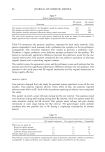
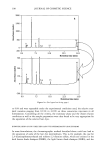
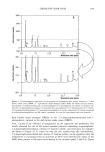
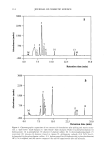
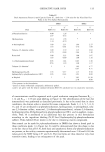
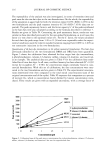
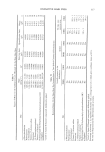
104 JOURNAL OF COSMETIC SCIENCE Preparation of the stock standard solutions. Stock solutions of the thirteen dye intermediates were prepared individually in the two different solvents at a concentration of 10g/l for p-phenylenediamine, toluene-2,4-diamine, and toluene-2,5-diamine sulfate, and at a concentration of 2.5 g/l for m-aminophenol, 0-aminophenol, p-aminophenol, resorcinol, hydroquinone, tx-naphtol, 2,4-diaminophenoxyethanol, 2-methyl-5-hydroxyeth- ylaminophenol, 6-hydroxyindole, and hydroxypropyl-bis-(N-hydroxyethyl-p- phenylenediamine) HCI. The stock solutions were shown to be stable at -30øC for a week. Preparation of the commercial samples. Five formulations were purchased and prepared in mixtures of MeOH and Soerensen buffer pH 8.1 (40%). The dilutions were performed 15 times (w/w) for the dark brown shades and 10 times (w/w) for the light brown and blonde shades. Out of these five formulations, two were also prepared at a different pH and reanalyzed after the spiking of hair dye intermediates. A dark brown shade com- mercial shampoo (DBRS) originally containing m-aminophenol, toluene-2,5-diamine sulfate, 2,4-diaminophenoxyethanol, resorcinol, and hydroxypropyl-bis-(N-hydroxy- ethyl-p-phenylenediamine) HC1 was additionally spiked with 10 g/1 of p- phenylenediamine, 2.50 g/l of hydroquinone, 1.95 g/l of m-aminophenol, 1.97 g/l of 2,4-diaminophenoxyethanol, and 1 g/l of hydroxypropyl-bis-(N-hydroxyethyl-p- phenylenediamine) HCI. Toluene-2,5-diamine sulfate and resorcinol were not spiked. The sample was diluted 25 times (w/w) in a mixture of MeOH and mobile phase B, pH 5.9 (40%), before extraction and injection into the chromatographic system. For a dark blonde shade commercial shampoo (DBLS) originally containing m- aminophenol, toluene-2,5-diamine sulfate, 2,4-diaminophenoxyethanol, resorcinol, and hydroxypropyl-bis-(N-hydroxyethyl-p-phenylenediamine) HC1 at different initial con- centrations than in the dark brown shampoo (DBRS), the spikes were of 0.67 g/l of m-aminophenol, 2.33 g/l of resorcinol, 1.10 g/1 of 2,4-diaminophenoxyethanol, 5.27 g/l of toluene-2,4-diamine, 0.21 g/l of hydroxypropyl-bis-(N-hydroxyethyl-p- phenylenediamine) HCI, and 0.96 g/1 of o•-naphtol. Toluene-2,5-diamine sulfate was not spiked. The sample was diluted ten times (w/w) in a mixture of MeOH and mobile phase B, pH 5.9 (40%), before extraction and injection into the chromatographic system. PROCEDURES Reversed-phase HPLC separations. For the analysis of the commercial formulations prepared in mixtures of MeOH and Soerensen buffer, pH 8.1, a non-linear MeOH (A)/aqueous phase (B) gradient (gradient 1) was used as described in our previous work (6). The total flow was 1 ml/min, and the column temperature was kept at 48øC. The column was equilibrated by 25 ml mobile phase between injections. Each analysis was repeated three times. For the analysis of the spiked shampoos in mixtures of MeOH and mobile phase B, pH 5.9, the optimization of the method led to a slight modification of the temperature (50øC) and of the gradient to improve the resolution of three particular target com- pounds (toluene-2,5-diamine sulfate, resorcinol, and 2,4-diaminophenoxyethanol). This optimized gradient (gradient 2) can be described as follows:
Purchased for the exclusive use of nofirst nolast (unknown)
From: SCC Media Library & Resource Center (library.scconline.org)