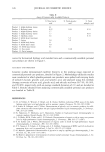
OXIDATIVE HAIR DYES 119 (5) (6) (7) (8) (9) (10) E. Pel, G. Bordin, and A. R. Rodrfguez, HPLC candidate reference method for oxidative hair dye analysis. I. Separation and stability testing,,/. Liq. Chrom. Re/. Techno/., 21,883-901 (1998). U. Vincent, G. Bordin, and A. R. Rodroeguez, Influence of matrix compounds on the analysis of oxidative hair dyes by HPLC, J. Cosmet. Sci., 50, 231-248 (1999). U. Vincent, G. Bordin, and A. R. Rodroeguez, Validation of an analytical procedure for the determi- nation of oxidative hair dyes in cosmetic formulations,,/. Cosmet. Sci., 53, 43-58 (2002). S. L. Ellison, M. Rosslein, and A. Williams, Eds., Q•antifying Uncertainty in Analytical Meas•rement (Eurachem/CITAC Guide, 2000), pp. 1-120. U. Vincent, Practical Aspects of the Determination of Oxidative Hair Dyes by RP-HPLC--Development of a Database (Annual Report, GE/R/ACH/04/99, 1999), pp. 1-24. L. R. Snyder, J.J. Kirkland, and J. L. Glajch, Practical HPLC Method Demlopment, 2nd ed. (Wiley- Interscience, New York 1997), pp. 24, 29, 208-210.

J. Cosmet. Sci., 53, 121-126 (March/April 2002) Simultaneous determination of alpha and beta hydroxy acids in personal care products by capillary Das chromatoDraphy K. MOLEVER, Research and Development Department, The Dial Corporation, 15101 N. Scottsdale Road, Scottsdale, AZ 85254. Accepted for publication December 31, 2001. Synopsis A simple and rapid procedure is described for the isolation, silylation, and simultaneous capillary gas chromatographic quantitation of alpha hydroxy acids and beta hydroxy acids in various personal care products. The sample is dissolved in acidified N,N-dimethylformamide to simultaneously acidify/extract the hydroxy acids a portion is then trimethylsilyl derivatized with BSTFA and quantified by capillary gas chromatography (GC) using flame ionization detection. INTRODUCTION Alpha hydroxy acids such as lactic acid and glycolic acid (and beta hydroxy acids such as salicylic acid) and their salts are commonly added to personal care products for their skin enhancement properties. However, the analysis of hydroxy acids has not been straightforward in finished product matrices except for the high-performance liquid chromatography (HPLC) assay of hydroxy acids containing a UV-absorbing chromo- phore, such as the beta hydroxy acid salicylic acid. Although other analytical methods for hydroxy acids in consumer products including gas and liquid chromatography have been reported in the literature (1-6), this gas chromatographic (GC) method combines specificity, quantitation, and easy sample preparation for the simultaneous analysis of these hydroxy acids in commercial personal care products. Advances in capillary gas chromatography have greatly enhanced capabilities for resolv- ing complex mixtures frequently, the resolving capacity of capillary columns can elimi- nate the need for extensive sample preparations or cleanups. In our analytical laboratory we routinely analyze consumer products for ingredients such as glycols, sorbitol, fatty acids, and similar ingredients, using adaptations of our previously published procedure for determining glycerin in soap bars (7) we also published a further adaptation, employing one-step acidification/dissolution using acidified N,N-dimethylformamide followed by silyl derivatization and capillary GC analysis to quantitate sodium lauroyl sarcosinate in personal care products (8). This technology has been further adapted here 121
Purchased for the exclusive use of nofirst nolast (unknown)
From: SCC Media Library & Resource Center (library.scconline.org)