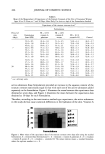
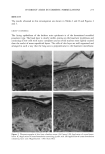
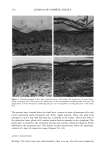
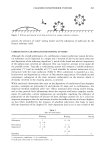
HYDROXY ACIDS IN COSMETIC FORMULATIONS 281 1. All the formulations studied, including the cream without hydroxy acids, present an epithelium hydradon effect and a more detached horny layer. 2. Hydroxy acids and their derivatives, except salicylic esters of lipophilic acid, in the cream formulation cause a significant total epidermal thickness increase in hairless mice in a fifteen-day application period. The alterations observed were due to an increase in extracellular hydradon and increases in cellular volume (intracellular hydradon) and nuclear volume (intensive cellular activity), because there was no increase in the number of cells. 3. Glycolic acid and lactic acid are more effective in the increase of cellular volume in the basal and spinous layers (with increase in the nuclear and cytoplasmatic volume) when compared with other study groups. 4. Hydroxy acids are more effective when compared with the control group and with their derivatives, mainly in the cellular renovation and in the process of exfoliation. 5. The results show that the cosmetic benefits from the use of hydroxy acids are caused by the modification of the epidermis. ACKNOWLEDGMENTS This work is part of a Master's thesis submitted by Ldcia Helena Terenciani Rodrigues to the Faculty of Pharmaceutical Sciences of Ribeir•o Preto, University of S•o Paulo. Ldcia Helena Terenciani Rodrigues received a graduate (Master's) fellowship from CAPES. The authors thank Dr. Ana Maria Roselino, Dr. Geraldo Maia Campos, and Dr. Ruberval A. Lopes for valuable discussion and suggestions. REFERENCES (1) E. Berardesca and H. Maibach, AHA mechanisms of action, Cosmet. Toiletr., 110, 30-31 (1995). (2) E.J. Van Scott and R.J. Yu, Hyperkeratinization, corneocyte cohesion, and alpha hydroxy acids, J. Am. Acad. Dermatol., 11, 867-879 (1984). (3) W. P. Smith, Hydroxy acids and skin aging, Cosmet. Toiletr., 109, 4108 (1994). (4) E.J. Van Scott and R.J. Yu, Alpha-hydroxy-acids: Therapeutic potentials. Can. J. Dermatol., 1, 108-112 (1989). (5) E.J. Van Scott and R.J. Yu, Alpha-hydroxy-acids: Produceres for use in clinical practice, Cutis, 93, 222-228 (1998). (6) C.M. Ditre, T. D. Griffin, G. F. Murphy, H. Sueki, B. Telegan, W. C. Johnson, R.J. Yu, and E.J. Van Scott, Effects of o•-hydroxy acids on photoaged skin: A pilot clinical, histologic, and ultrastruc- tural study, J. Am. Acad. DermatoL, 34, 187-195 (1996). (7) R. W. Siegfried, Formulating with alpha hydroxyacids, D.C.I., 5, 30-34 (1995). (8) M. G. Rubin, PH is an important element in determining the safety and efficacy of AHAs, Suppl. Cosmet. Dermatol., 5, 14-15 (1996). (9) W. P. Smith, Comparative effectiveness of o•-hydroxy acids on skin properties. Int. J. Cosmet. Sd., 18, 75-83 (1996). (10) J. C. Dinardo, Studies show cumulative irritation potential based on pH, Suppl. Cosmet. Dermatol., 5, 12-13 (1996). (11) S. Bennett, D. Scholz, G.J. Brooks, D. F. Parish, and F. Burmeister, Extratos mistos de frutas: Novo enfoque para renovaq2o da pele, Cosmet. Toiletr., 7, 59 (1995). (12) L. Celleno, A Study to Assess the Antiacne Activity of ot-Hydroxy Acid Esters, Universit• Cattolica del Sacro Cuore, Facolth di Medicina e Chirugia "Agostino Gemelli," Scula Diretta a Fini Speciali per Tecnici Cosmetici (1994).

282 JOURNAL OF COSMETIC SCIENCE (13) K. A. Holbrook and K. Wolff, Dermatology in General Medicine (McGraw-Hill, New York, 1993), pp. 241-253. (14) W. P. Smith, Hidr6xi-&idos e o envelhecimento cutineo, Cosmet. Toiletr., 7, 72-78 (1995). (15) P.M. B. G. Maia Campos et al. Histopathological, morphometric, and stereologic studies of dertoo- cosmetic skin formulations containing vitamin A and/or glycolic acid, J. Cosmet. Sci., 50, 159-170 (1999). (16) S.J. Kim and Y. H. Won, The effect of glycolic acid on cultured human skin fibroblasts: Cell proloferative effect and increased collagen synthesis,J. Dermatol., 25, 85-89 (1998). (17) L. S. Moy, K. Howe, and R. L. Moy, Glycolic acid modulation of collagen production in human skin fibroblast cultures in vitro, Dermatol. Surg., 22, 439-441 (1996).
Purchased for the exclusive use of nofirst nolast (unknown)
From: SCC Media Library & Resource Center (library.scconline.org)