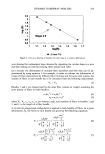
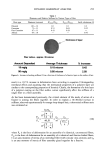
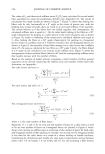
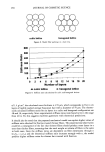
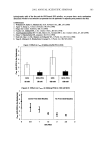
j. Cosmet. sd., 53, 283-286 (September/October 2002) Mechanisms in combination cleaner/conditioner systems E. D. GODDARD, 9 Hatsawap Road, Cambridge, MD 21613. Accepted for publication April 30, 2002. INTRODUCTION In any system, for a spontaneous process to occur, the change in free energy (AG) that is involved in the process has to be negative. For those systems involving extensive interfacial areas (solid/water, solid/oil, solid/air, air/water, oil/water), the physical pro- cesses that occur are generally driven by a reduction in the overall interfacial free energy of the systems. The purpose here is to consider the interfacial processes that can occur when a combination cleaning/conditioning system is applied to a keratin substrate such as hair or skin. It is appropriate first to consider the surface characteristics of these two substrates and to qualitatively describe the surface chemical events that can occur when hair and skin are subjected to separate cleaning (washing) and conditioning steps. SURFACE CHEMISTRY OF NATURAL KERATINS Because it is a natural protein, the constituent polypeptide chains of keratin have a variety of side chain acid and basic groups. Those in the surface region of a keratin fiber, particle, or sheet contacting an aqueous phase determine the isoelectric point of the interface. The isoelectric point of natural keratins is quite low ( hair -4, skin -5). This means that in normal treatments of conditioning or washing, in which the pH is generally neutral to alkaline, the keratin surface bears a net negative charge. Keeping in mind that electrostatic forces are among the strongest of physical forces, one can un- derstand why conditioning agents are generally cationic in nature. The second important surface property of natural keratins is their hydrophobicity. Contact angle work by E1 Shimi and Goddard (1) on smooth keratin specimens (polished bovine hoof and taut human skin) showed that their surfaces are relatively non-wetting to water and are comparable in hydrophobicity to polyethylene. Unlike the latter, however, keratin is hydratable and during submersion in water quickly becomes rela- tively non-wetting to oils (see Figure 1). After emersion from water a keratin surface rapidly regains its hydrophobic character. The dual characteristic of being hydrophobic in air but (hydratable and) hydrophilic in water is directly relevant to behavior during conditioning and cleaning procedures. It indicates that the surface molecules of keratin 283

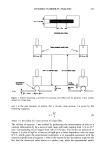
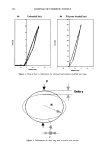
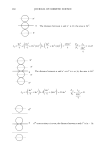
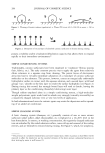
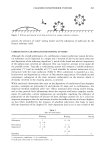
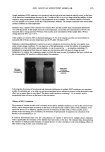
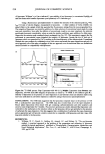
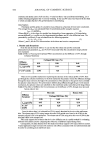
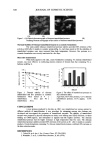
284 JOURNAL OF COSMETIC SCIENCE A •,1 A -- 17 II IIIIIII 1 I Figure 1. •0(7etting of keratin surfaces (qualitative): a. •0(7ater 00(7) in air (A). b. Oil (O) in water. c. Oil in air. Figure 2. Desorption of second layer of adsorbed cationic surfactant on keratin during rinsing. possess a mobility and/or a hydration/dehydration capacity that allows them to respond rapidly to their immediate environment.* SIMPLE CONDITIONING SYSTEMS Traditionally, cationic surfactants have been employed to "condition" fibrous systems (hair, fabrics, etc.). The early common practice was to apply the agent from relatively dilute solutions in a separate step from cleaning. The potent forces of electrostatic attraction lead to virtually immediate adsorption of a monolayer of cationic surfactant molecules on the substrate. This process, however, creates an energetically unfavorable hydrophobic surface in contact with the aqueous solution, and a second layer, with head groups "out," adsorbs on the first layer to render the surface hydrophilic (see Figure 2). During rinsing this second, less strongly bound layer will tend to desorb, leaving the primary layer as the conditioning (boundary lubricating) outer layer. Though seldom employed alone in a simple conditioning system, a high-molecular- weight polycationic agent would tend to adsorb very strongly (virtually irreversibly) on a negatively charged substrate even at very low levels of application. In both aforementioned cases the cationic agent may assist the deposition and/or spread- ing of an added oil conditioner. SIMPLE CLEANING SYSTEM A basic cleaning system (shampoo, etc.) generally consists of one or more anionic surfactant (alkyl sulfate, alkyl ethoxysulfate, etc.) employed at a 10-20% level in the base formulation. In essence, at washing concentration, the negatively charged surfactant ions are adsorbed by the soiled substrate surface, cause roll-up and removal of the soiling entities, and are themselves removed during rinsing. See Figure 3, which, for simplicity, * The presence of a covalently bonded fatty acid outer (mono) layer, whole or partial, on hair fibers will be expected to affect the details but not the essential elements of the above picture substantial hysteresis in their wetting by water is well known (2).
Purchased for the exclusive use of nofirst nolast (unknown)
From: SCC Media Library & Resource Center (library.scconline.org)