292 JOURNAL OF COSMETIC SCIENCE METHODS TO ASSESS SKIN PENETRATION Thomas J. Franz, M.D. Adequate delivery of drugs and cosmetics to their site of action in the skin is essential to the development of effective products. A number of different approaches (pharmacokinetic and pharmacodynamic) to assess the penetration of topically applied materials are currently available. Each has unique characteristics to support its relevance, but all have limitations as well. This presentation will discuss the utility of several of these techniques and examine the types of data obtained in each case. 1. Human Cadaver Skin Model: This model has been widely used over the past half-century to evaluate the movement of drugs, cosmetic agents, and toxicants through the skin and its relevance as a model for living man has been well documented. Its greatest use has been in the development and screening of formulations to enhance absorption and maximize bioavailability. The model is dependent tipon the fact that the skin's barrier (stratum corneum) retains its structural integrity after death and, therefore, is suitable for in vitro evaluation. Validation of function integrity following harvesting and mounting on diffusion chambers is essential and this is accomplished by assessing water permeability through the use of tritiated water or measurement of transepidermal water loss (TEWL). Though animal skin is frequently used in this model, the relevance to man is unpredictable and examples of misleading data common. Comparison of the bioavailability of monographed drugs (hydrocortisone, hydroquinone, salicylic acid) using the cadaver skin model show large differences between marketed products. Differences in efficacy can be assumed and, in one case, can be demonstrated. 2. Stratum Comeum Tape Stripping (DPK): In recent years there has been a resurgence of interest in tape stripping as a means to directly assay the content of drugs and cosmetics in the stratum corneum, or to quantitate percutaneous absorption through analysis of the "in transit" compartment. Elegantly simple in concept, there is currently an absence of data to demonstrate concordance between experimental results and theoretical expectations. Though the method does indeed have utility, complete validation is currently lacking and, at present, it must be used with caution. 3. Transepidermal Water Loss: Assessing changes in the functional integrity of the skin's barrier can be accomplished by measuring the rate of water loss (evaporimeter), since the prime function of the stratum corneum is to serve as a water barrier. Agents that affect the skin in different ways (irritants, retinoids) can be shown to alter barrier function, and the measurement of changes in the TEWL over time can be a very sensitive means by which to assess the dynamics of these agents. 4. Gene Profiling: A technique that combines stratum corneum tape stripping with the analytical tools of molecular biology holds great promise for the future. Recovery of intact DNA and RNA from the stratum corneum offers a non-invasive, sensitive, and specific method for assessing the actions of topically applied agents on the skin. The potential for use of this new technique to address a number of issues in both dermatopharmacology and dermatotoxicology are readily apparent.

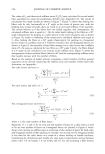
2002 ANNUAL SCIENTIFIC SEMINAR 293 TARGETED PENETRATION AND RELEASE OF ASCORBIC ACID BY THE USE OF MULTIPLE PIASE TECHNOLOGY Gerd H. Dahms, Ph.D., Holger Seidel, Ph.D., and Andreas H. Jung, Ph.D. IFAC GmbH & Company KG (Institute of Colloidtechnology), Duisburg, Germany Multiphase polyol-in-oil-in-water (POW) emulsions belong to the family of mt•ltiple emulsions. Unlike the well known water-in-oil-in-water (WOW) emulsions, which consist of a water-in-oil (WO) emulsion dispersed in a given water phase, a multiphase POW emulsion is a complex system in which a conventional oil-in-water (OW) emulsion is in competition with a polyol-in-oil (PO) emulsion dispersed in it. Since the PO emulsion is the core element of the multiphase POW emulsion, we would now like to take a closer look at this type of emulsion. PO emulsions The structure of PO emulsions is similar to that of the well known WO emulsions with the difference that polyols, instead of water, are dispersed in a given oil phase. A question that certainly arises at this point is: what are the advantages of PO emulsions as opposed to WO emulsions. One answer to this question, among others, is the different solvent behavior of polyols and water. The amphiphilic solvent properties of polyols enable them to dissolve both hydrophilic and lipophilic substances. Furthermore, they are able to dissolve substances, such as polyphenols, which are not soluble in either water or oils. In addition, polyols protect active substances which are sensitive to hydrolysis, e.g. ascorbic acid, urea or enzymes, against chemical decomposition. Another favorable characteristic of PO emulsions, apart from their amphiphilic solvent properties, is the extremely small extent to which they dissolve atmospheric oxygen. As a result, easily oxidized active substances can be afforded excellent protection against oxidative decomposition by dissolving them in polyols. Because of their outstanding properties, PO emulsions offer an interesting alternative to WO emulsions. PO emulsions worked into OW emulsions offer an ideal vehicle for the stable encapsulation of active substances. Active substances dissolved in the polyol phase of a multiphase POW emulsion can be protected in this way against oxidation and hydrolyric breakdown. This presupposes, hoxvever, that the active substances do not travel from the polyol phase into the external water phase via diffusion and that any oxidative attack from the outside is xvarded off successfully. Protective measures against oxidation The amount of protection against oxidative attack conferred on the active substances dissolved in the PO emulsion depends solely on whether oxygen penetrates the polyol phase. For example, oxygen radicals can be transported into the polyol phase via the oil phase of the PO emulsion or via the water phase of the OW emulsion. The possibilities for oxygen radicals to penetrate the polyol phase via the oil phase can be reduced fairly simply by using only inert oils, e.g. silicone oil or isoparaffin oil, in the PO emulsmn. Oils of this kind can neither be attacked by oxygen - and thus form oxygen radicals in the oil phase - nor transport oxygen. In addition to using inert oils in the PO emulsions, further measures should be taken during the formulation of POW emulsions to lessen the formation of oxygen radicals. In particular, it is very important to protect the water phase. Owing to the relatively high solubility of oxygen in water, oxygen radicals can be created repeatedly in the aqueous phase of an OW emulsion. If highly concentrated PO emulsions are used, the oxygen radicals created in the water phase can gain access to the polyol phase via interfacial membranes. If the polyol droplets are separated from each other by a sufficiently thick oil layer as a result of the low polyol concentration, however, the diffusion of oxygen radicals will be suppressed. It is advisable in any case, however, to add a free- radical trap to the water phase. Diffusion of water-soluble active substances Up to this point we have been discussing the question of how to stabilize the active substances present in encapsulated form in PO emulsions to protect them against oxygen radicals. An issue that still needs to be clarified, however, is how such PO emulsions behave in multiphase multiple POW emulsions with respect to the diffusion of water-soluble active substances from the polyol phase into the water phase. In conformance with the Laxv of Osmosis, the emulsion system attempts to equalize the different osmotic pressure between the polyol phase and the water phase. Depending on the composition of the two phases, water will either diffuse into the polyol phase or active substances and polyols will diffuse into the water phase. The flow triggered by the difference in osmotic pressure can be calculated according to the equation formulated by Florence and Whitehill (I):
Purchased for the exclusive use of nofirst nolast (unknown)
From: SCC Media Library & Resource Center (library.scconline.org)