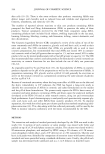
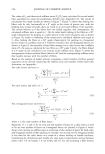
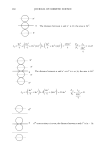
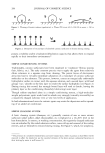
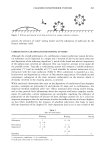
294 JOURNAL OF COSMETIC SCIENCE Vo= DwA/fix* An/RT where: V o • volume flow of the diffusing substances diffusion constant of the diffusing substances interface of the multiple droplet Ax = thickness of the oil membrane An = osmotic gradient As can be derived from the above equation, diffusion decreases as the thickness of the oil membrane increases. In other words, the lower the concentration of the dispersed polyol phase in the PO emulsion, the more favorable the Ax values. Since the diffusion of a substance through a medium is a transport phenomenon, it is opposed by the viscosity. As a result, it is beneficial to keep the viscosity of the oil phase as high as possible. An oil membrane with a high viscosity and a layer thickness of 50-100 nm can already present a virtually insurmountable obstacle to diffusing substance. The hypothesis of Florence and Whitehill presumes that all the droplets in a multiple droplet are separated from the phase boundary layer by an oil membrane. However, this is not the case: several polyol droplets lie directly on the edge of the multiple droplet. At this location, the membrane of the dispersed polyol droplets meets the membrane of the multiple droplet. Since in this case Ax -- o, the diffusion rate is determined solely by the viscosity of the interfacial membrane surrounding the polyol droplets. Since this membrane consists of a liquid crystalline cubic and inversely hexagonal phase which exhibits a high viscosity at temperatures of up to = 40 øC, the diffusion through this liquid crystalline membrane is relatively low. However, diffusion out of or into the multiple droplets can be regulated not only via the viscosity of the interfacial membrane or the layer thickness of the oil phase between the interfacial membranes. Instead, it can also be regulated via the coverage of the external interface by multiple droplets. In particular, linear polymers, e.g. xanthan gum or mixtures ofxanthan gum with gum arabic or crosspolymers. Polymers of this kind form fairly viscous interfaces when they adhere to the multiple droplets these interfaces present both a mechanical and steric obstacle to diffusion. Compatibility between OW and PO emulsions In addition to diffusion, however, the competing OW emulsion also poses a threat to the stability of the multiple droplets. The stability of the multiple droplets is endangered, in particular, by short-chain hydrophilic emulsifiers which are able to disengage themselves from the liquid crystalline gel network. To attain stable multiple emulsions, therefore, it is advantageous to employ a balanced mixture of complex emulsifiers. Furthermore, the multiple droplets, by virtue of their size, display a tendency to creaming and, in the worst case, to coalescence. According to Stokes' Law, the mobility of the multiple droplets can be restricted only by an external bulk water phase possessing a sufficient viscosity. V =2 r2gAp/9rl v = droplet velocity r = particle size g = gravitational constant Ap = change in density r 1 = residual shear viscosity Organic polymers, or mixtures of xanthan gum and bentonite, are especially suitable for this purpose. Storage stability of the active substances

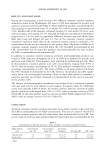
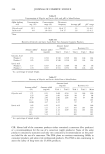
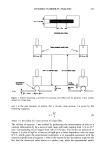
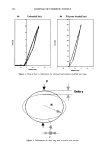
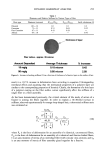
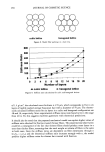
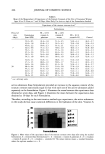
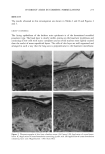
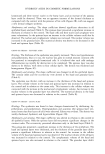
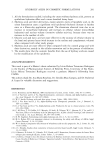
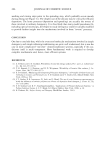
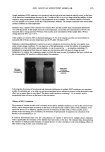
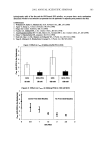
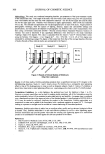
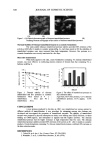
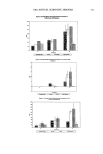
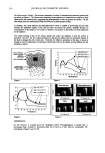
2002 ANNUAL SCIENTIFIC SEMINAR 295 Simple multiphase POW emulsions were produced, and their physical and chemical stability tested, on the basis of the theoretical considerations discussed so far. I would not like to say a few things about the stability of these emulsion, using encapsulated Vitamin C and polyphenols as my examples. The chemical stability of ascorbic acid was studied over a period of 450 days with polarimetric methods. The samples examined were stored under normal conditions at room temperature. Parallel to this, a sample of this emulsion was stored at 40øC and the ascorbic acid concentration determined over a 90-day period. In the sample stored at room temperature, an ascorbic acid concentration of 83.9% was measured after a storage period of 450 days. The ascorbic acid concentration of this sample after a 90-day storage period at 40øC was 71.4 %. If the samples are stored in PET or aluminum packages, 91.2% of the original ascorbic acid concentration is measured after 450 days at room temperature and 81.9% after 450 days at 40øC. Emulsions containing polyphenols or green tea as active substances are known to discolor very rapidly even under normal storage conditions. We can make use of this phenomenon to study the stability of encapsulated polyphenol over time with purely optical methods. As can be seen in Fig ..... , an emulsion containing 1% polyphenol in encapsulated form does not display any discoloration after 180 days of storage at room temperature. In contrast, the comparison sample, in which the same account ofpolyphenol has been worked into the corresponding OW emulsion, exhibited marked discoloration. ow cream containing 1%wt green tee POW cream containing 1%wt encapsulated green tee Following this discussion of the physical and chemical stabilization of multiple POW emulsions, two questions worthy of exploration are: a) in what way are the encapsulated active substances released on the skin and b) what effect can we expect them to exert there? The above model emulsion containing 1.1% of ascorbic acid in encapsulated form will serve as the basis for this discussion. Efficacy of POW Emulsions The question of whether ascorbic acid is released on the skin by multiple emulsions, as well as the extent of such release, can be answered quite accurately on the basis of the known anti-oxidative effect of this substance. If we expose the skin to UVA radiation, squalene peroxide is formed on the skin surface. If free ascorbic acid is present on the skin during UVA irradiation, the formation of lipid peroxide is suppressed as a function of the ascorbic acid concentration (1-3). It could be demonstrated that even low concentrations of vitamin C delivered by multiple phase emulsions reduce significantly the formation of the harmful lipid peroxides on the skin. The obtained data demonstrating the reduction of lipid peroxide formation on human skin are in ideal correlation to the anti-wrinkling effects of other studies using ascorbic acid on hairless mice.
Purchased for the exclusive use of nofirst nolast (unknown)
From: SCC Media Library & Resource Center (library.scconline.org)