304 JOURNAL OF COSMETIC SCIENCE FERMENTATION AND BIOTRANSFORMATION: PROMISING ROUTES TO NOVEL ACTIVES FOR THE COSMETICS INDUSTRY Jon Anderson, Ph.D. Actives International, LLC Development of novel active ingredients requires innovative, reliable and affordable sourcing. With recent concerns over BSE and a general move away from animal derived compounds coupled with the shortcomings of plant derived extracts (such as seasonal supplies and year to year variability) alternative methods of production need to be accessed. Fermentation and Biotransformation are promising routes for the discovery and large scale supply of ingredients for the cosmetics industry. Fermentation is a controlled process to grow microorganisms with the proper environment, nutrients and carbon source so as to provide a target compound. The microorganisms include a variety of bacteria, fungi, and microalgae the target molecules range from macromolecules such as proteins and polysaccharides to• small hydrocarbons and heterocyclic compounds. The target molecules can be endogenous constituents of l the microorganisms such as hyaluronic acid, [3-glucans, and phytosphingosines. The target molecules also l can be constructed by altering the chemical "building blocks" or by altering various biosynthetic pathways to provide, for example, unique ceramides. Additionally., interesting peptides or proteins of animal origin can be produced through fermentation by inserting the genes responsible for coding into the vector genome, thus l allowing cross family production of low yield or rare compounds. Biotransformation or biofermentation can be described as the structural modification of one compound (usually abundant, affordable, and inactive) into another compound with significant activity. This structural modification is achieved through specific enzymatic processes of the microorganism such as oxidation, reduction, esterification or ring formation during the fermentation process. Enzymatic synthesis is a variation of this process where the specific enzymes have been isolated from the microorganism and, for example, immobilized on a matrix for synthesis without fermentation. Several examples of the production of value- added compounds will be presented. Higher plants have also been a good source for active compounds however several shortcomings are apparentl with cultivation seasonal variation of quality and concentration, etc. Plant tissue culture has provided reliable avenue for controlled production of plant secondary metabolites used in the cosmetics industry sucN as shikonin, saikosaponins, and bryonolic acid. Biotechnology provides a variety of methods to produce high quality active ingredients in a reliable andl controllable way. This technology, however, has to be balanced by cost. This presentation will discuss various aspects of the biotechnological production of compounds for the cosmetics industry.

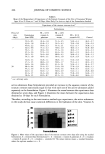
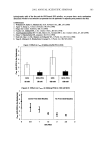
2002 ANNUAL SCIENTIFIC SEMINAR 305 Low MOLECULAR WEIGHT TANNINS As A NEW CLASS OF SKIN-LIGHTENING AGENT Ratan K. Chaudhuri, Ph.D Rona/EM Industries, Inc., Hawthorne, New York 10532 (An Affiliate of Merck KGaA, Darmstadt, Germany) Background: Skin-lightening agents have been widely used to either lighten or depigment the skin. Preparations in the European market tend to be used to treat age spots and freckles, whereas the Asian market uses them to change or modify skin color. A wide variety of skin-lighteners, namely hydroquinone, kojic acid and ascorbic acid derivatives such as magnesium ascorbyl phosphate, have been used for these purposes •'2. A review of the literature shows tha•t many plant extracts with limited standardization have also been shown to have the ability to lighten skin'. Many current skin lighteners have inadequate safety or stability profiles. The purpose of this work was to investigate the effectiveness of a standardized antioxidant fraction 4 ofPhyllanthus emblica fruits (trade named as Emblica •) as a skin lightener. Product Description & Standardization: P. emblica is one of the important Ayurvedic (Science of Life) herbs in India, and has been used for over thousands of years for a wide variety of human ailments. Its status ranges from insignificant in the western world to highly prized in tropical Asia. The fi'uits are selected, harvested and processed according to strict criteria to ensure a consistently high quality product. Emblica antioxidant is extracted from premium quality fruits using a water-based process (US Patent # 6,124,268 and pending patents). Emblica antioxidant is distinctly different from other commercially available extracts ofP. emblica fruits as it is defined to the extent of well over 50% (typically, 60 to 70%) in terms of its key chemical components. None of the extracts of P. emblica in the market compare to Emblica antioxidant in composition and consistency of composition, aqueous stability and color. The low molecular weight (1,000) hydrolyzable tannins, namely Emblicanin A and Emblicanin B, along with Pedunculagin and Punigluconin are the key ingredients in Emblica antioxidant. In nature, Emblicanin A and Emblicanin B have only been found in P. emblica plants 5. Emblica antioxidant has been standardized (Monograph on Emblica, Merck KGaA, 2001) by using high performance thin layer chromatography (HPTLC). Alternately, the product can be standardized by using high performance liquid chromatography (HPLC). Product Safety: A repeat insult patch test was conducted with 100 human subjects to determine the potential for Emblica to produce primary irritation and primary sensitization. Emblica has been found to be a non-primary irritant and a non-primary sensitizer to the human skin. A phototoxicity test was conducted with 20 human subjects to determine the potential for Emblica (2% in water) to produce phototoxicity from a single derreal application. Emblica is found to be non-phototoxic. In both studies, no adverse effects or unexpected reactions of any kind were observed on any of the subjects. Emblica is non-mutagenic, has an oral LDs0 of5,000 mg/kg (rats) and is minimally irritating to eyes. Product Stability: Long term aqueous stability (12 months at 45 øC) of Emblica antioxidant was determined by monitoring its antioxidant activity using diphenylpicrylhydrazide (DPPH) test. The DPPH method is a simple colorimetric assay for determining antioxidant activity based on the decrease in absorbance at 517 nm of the DPPH radical (deep purple) after the addition of an antioxidant compound in an aqueous ethanolic solution. Emblica antioxidant retains its antioxidant activity to the fullest extent after 12 months at 45 øC, while others failed. Additionally, a minimal batch to batch variation in antioxidant activity of Emblica antioxidant is seen in this test. Sk'in Lightening Clinical Studies: Three separate clinical studies were de, he to determine the potential of Emblica as a skin lightener. Study 1: 2% Emblica vs 2% Hydroquinone (13 Asians) Study 2: 2% Emblica vs 2% Hydroquinone (13 Hispanics) Study 3:1" J Emblica vs 3% Magnesium Ascorbyl Phosphate (MAP, 16 Asians). Human Volunteers with skin Types III and IV (as defined by the Fitzpatrick Phototype Scale) were selected for these studies. • Emblica is a trade name product of Merck KGaA, Darmstadt, Germany & EM Industries, Inc, USA
Purchased for the exclusive use of nofirst nolast (unknown)
From: SCC Media Library & Resource Center (library.scconline.org)