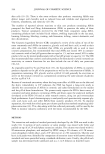
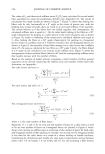
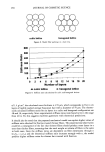
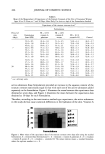
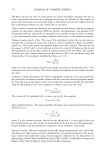
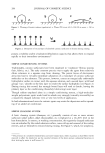
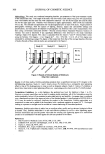
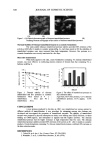
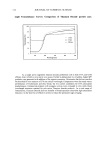
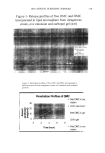
306 JOURNAL OF COSMETIC SCIENCE Methodology: This study was conducted comparing baseline, pre-treatment to final post-treatment results of the selected test sites. The length of the study was nine weeks. Each subject was given two (2) products (one with Emblica and the other one with competitive material) - one for the left upper arm and the other one for the right upper arm. Panelists were instructed to apply approximately .05ml of the test materials twice a day. The selected test application site was photographed prior to start of the study. Rigid control of photographic technique, from the aspects of lighting, distance, angles and camera/film settings and specifications, and subsequent development of photographs was followed. Skin color measurements were done using a tristimulus instrument (CR300 - Minolta Chroma Meter). Repeated Measures Analysis of variance was used to determine if any significant differences were observed in the mean Individual Typology Angle (ITA degree). This value is calculated from the mean L* and b* Chroma Meter values using the formula: ITA Degree = [ Arc Tangent ((L* - 50 ) / b*)] 180 / 3.1416. AE of ITA degree was calculated by subtracting average ITA degree of the treated site from that of the average baseline (first day of study). Results of these clinical studies are summarized in the Figure 1. Studv # 1 Studv# 2 Studv# 3 6-[ • ' ' ' • 4 Figure 1: Results of Clincal Studies of Emblica & Other Skin Lighteners la3 wks I I El6 wks El9 wks Results: In all three studies, Emblica-containing products show a significant increase in ITA degree vs the corresponding baselines. Study #s I and 2 clearly shows 2% Emblica has a comparable skin lightening effect to that of 2% Hydroquinone in Asian as well as Hispanic subjects. Study # 3 shows 1% Emblica is about three times better in skin lightening efficacy on a percentage-active basis over the 3% MAP product. Formulation Guidelines: As a skin lightener, the preferred use level for Emblica is from 1 to 2%. Nonionic or anionic emulsifiers can be used for making stable emulsions. pH of the formulations must be acidic (preferably, below 6.0) to maintain its antioxidant activity and stability. An opaque base is preferred over a translucent one due to the improved color of the finished product. A small amount of EDTA (0.05 to 0.1%) may be needed to uniformly distribute the product in the formulation. Emblica antioxidant as a suspension in water can be added to the formulation with a moderate agitation at around 40 øC. Prolonged heating or exposure to sunlight must be avoided as it causes darkening of formulated products. Summary: Emblica antioxidant is stable, has an excellent safety profile and no adverse biological effects to human. Thus, Emblica antioxidant is a safe and effective product for use as a skin lightening agent. Emblica antioxidant may provide greater value than the existing skin lightening agents as a stand-alone product or in combination with other agents for skin care products of the future. References: 1. Zhai H. and H.I. Maibach, Costa. & Toil., 116, 21-25, 2001. 2. Zuidhoff, H.W. and J.M. van Rijsbergen, Costa. & Toil., 116, 53-59, 2001. 3. Gupta, S., Happi, 3•8, 90-93, 2001. 4. Chaudhuri, R.K., SoaRs. Perfumery & Cosmetics, 174, 28-30, 2001. 5. Ghosal S., V.K. Triphati and S. Chauhan, Indian J. of Chcm., 35B, 941-948, 1996 and references cited therein.

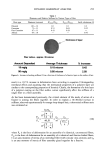
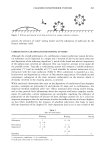
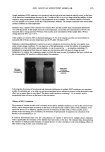
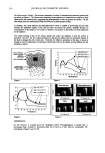
2002 ANNUAL SCIENTIFIC SEMINAR 307 STABILIZATION OF PROTEASE AND PROPERTIES OF CHITOSAN IMMOBILIZED ENZYMES Bum-chun Lee, Eun-jeong Yoon, Dong-hwan Lee, Jun-tae Bae, Hyeong-bae Pyo and Tae-boo Choe, Ph.D.* Hanbul Cosmetics Company, R&D Center 72-7, Yonsung-ri, Samsung-myun, Umsung-kun, Chungbuk, 369-830, Korea * Department of Microbial Engineering, Konkuk University I, Hwayang-dong, Kwangjin-gu, Seoul, 143-701, Korea Introduction Consumers expect and demand real performance and benefits from their products. In our skin, Keratins are the main constituents of homey cells and remain on the skin surface after the death of the cell. Sometimes the remaining substance cause skin trouble such as inflammation, acne and skin roughness. The protease having possible advantages: (1) normalizing human skin turnover (2) preventing skin spots, etc., through reducing variations in the areas among keratinous cells (3) activating the skin and reducing fine wrinkles• and (4) used as a percutaneous penetration enhancer. But enzymes are not easy to applying in skin care because those have some problem with stability and irritation. 2 In this study, a new protease(Kerasoft) were immobilized on various carriers by different methods of immobilization, including physical adsorption, ionic binding, covalent binding, and entrapment. A new procedure for entrapping enzyme was developed and investigated the properties of immobilized enzymes. The developed stabilization method can be used to stabilize enzymes as active ingredients in skin care products. Material and Methods Enzyme preparation was obtained from Bacillus sp. HB-5(KCTC 8959P) developed by Hanbul cosmetics R & D centers. The culture tiltrate was concentrated by ultrafiltration through a TFF System (Millipore Co., cut off mol wt., 10,000 USA). This partially purified enzyme was used for the preparation of the immobilized enzyme. First, Protease were mixed with calcium carbonate and then immobilized with chitosan. Morphological shape of chitosan immobilized protease was studied using a phase contrast microscope(Olympus BX-50, Japan) and Scanning electron Microscope(SEM). The stability of enzyme was evaluated by monitoring the residual activity storage at 40 in emulsion formulation. The proteolytic activity of protease was measured using casein as substrate. Protein concentration was determined by the method of Lowry. Skin coloration index was measured by spectrophotometer(Minolta CM-2002 Japan) after treated with cosmetics containing 5% dihydrxoyacetone(DHA). Results and Discussion Immobilization by physical adsorption, Ionic binding, Covalent Coupling and Entrapment Immobilized enzymes were prepared by physical adsorption on chitin, ionic binding onto DEAE-cellulose, covalent binding on cyanogen bromide-activated agarose(CNBr-Agarose), and entrapment in alginate had the highest activities. Also, The stability of immobilized enzyme were prepared by physical adsorption on chitin, ionic binding onto DEAE-cellulose, covalent binding on CNBr-Agarose, and entrapment in alginate had the highest activities. Morphological Observation of Chitosan immobilized Protease The chitosan immobilized protease was freeze dried and scanning electron micrographs are shown in Fig. 1. A higher magnification micrograph showed a spatial distribution of immobilized protease within the chitosan matrix. The surface of chitosan immobilized protease was not changed the overall shape and size.
Purchased for the exclusive use of nofirst nolast (unknown)
From: SCC Media Library & Resource Center (library.scconline.org)