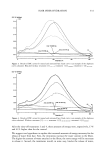
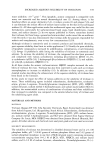
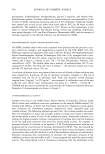
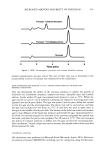
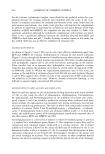
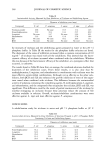
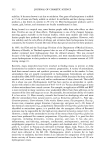
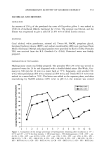
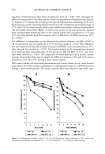
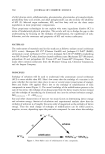
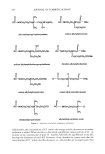
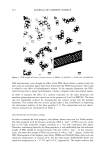
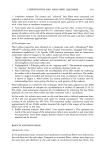
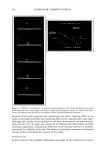
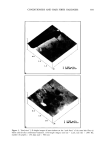
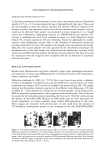
ANTIOXIDANT ACTIVITY OF LICORICE EXTRACT 553 MATERIALS AND METHODS EXTRACTION An amount of 250 g of the powdered dry roots of Glycyrrhiza glabra L. was soaked in 2500 ml of methanol (Merck, Germany) for 24 hrs. The mixture was filtered, and the tiltrate was evaporated to give a yield of 21.0% w/w of dried licorice extract. MATERIALS Cetyl alcohol, white petrolatum, mineral oil, Tween 80, NaOH, propylene glycol, butylated hydroxy toluene (BHT), and sodium metabisulfite (MS) were purchased from Merck (Germany). Methyl and propyl paraben were provided by Kech's (USA). Pemulen TR1 was received from the B.F. Goodrich Co. (USA). Deionized water was freshly prepared. PREPARATION OF TEST SAMPLES Hydroquinone cream was freshly prepared. The pemulen TR1 (2% w/w) was wetted in preserved water for 24 hr and dispersed with a double-bladed mixer (Ika-Werk, Ger- many) in 500 rpm for 10 min in a water bath at 75øC. Separately, cetyl alcohol (3% w/w), white petrolatum (8% w/w), mineral oil (8% w/w), and Tween 80 (1% w/w) were melted in a water bath at 70øC. The latter was added to the aqueous phase, and after neutralizing by NaOH solution (18% w/w) to pH 6.2, the mixture was stirred lOO .c: 90 '• 80 '• 70 ß • 60 ..-. 50 + 40 •: •o P 20 • '•o t,,. o C 25•0.5C I •45 + 0.5 C Figure 1. Comparison of the average percentage of hydroquinone remaining after incubation at 25 ø _+ 0.5øC and 45 ø _+ 0.5øC for three months. 1: CB (cream base) + HY (hydroquinone). 2: CB + HY + ext. (0.1%). 3: CB + HY + ext. (0.5%). 4: CB + HY + ext. (1%). 5: CB + HY + ext. (2%). 6: CB + HY + SM (0.1%). 7: CB + HY + SM (0.5%). 8: CB + HY + SM (1%). 9: CB + HY + SM (2%). 10: CB + HY + BHT (0.1%). 11: CB + HY + BHT (0.5%). 12: CB + HY + BHT (1%). 13: CB + HY + BHT (2%). i i i i , i i i i i i i i 0 I 2 3 4 5 6 7 8 9 10 11 12 13

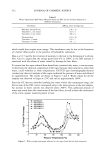
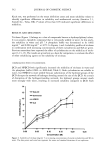
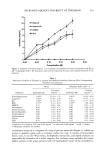
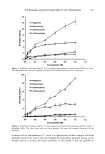
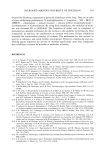
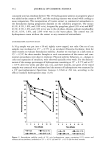
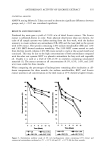
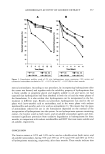
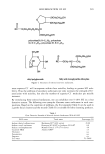
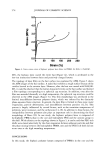
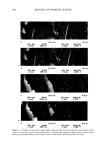
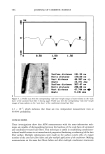
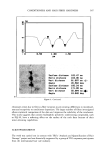
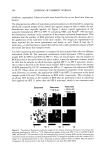
554 JOURNAL OF COSMETIC SCIENCE constantly until an emulsion formed. The 2% hydroquinone solution in propylene glycol was added to the cream at 40øC, and the resulting mixture was stirred while cooling to room temperature. The incorporation of licorice extract or commercial antioxidants to the formulation during preparation depends on the solubility properties. The extract (0.1%, 0.5%, 1.0%, and 2.0% w/w), levigated by propylene glycol (5% w/w) and BHT (0. ! %, 0.5 %, 1.0%, and 2.0% w/w), was in the oil phase, whereas sodium metabisulfite (0.t%, 0.5%, 1.0%, and 2.0% w/w) was in the water phase. The control was 2% hydroquinone cream without the extract or any commercial antioxidants. ANTIOXIDATIVE ACTIVITY STUDY A 10-g sample was put into a 20-ml, tightly screw-capped, test tube. One set of test samples was incubated at 45 ø + 0.5øC in an incubator (Fanazma Incubator, Iran) for three months to evaluate formulation stability. Another set was kept in a dark room at 25 ø + 0.5øC for three months. Samples at each concentration of the extract and com- mercial antioxidants were done in triplicate. Physical stability behaviors, i.e., changes in color and separation of emulsion, were observed optically every week. For the determi- nation of the average percentages of hydroquinone remaining at 25 o + 0.5 øC and at 45 o + 0.5øC after two weeks and after one, two, and three months, one gram of the tested samples was extracted with methanol and the amount of hydroquinone was measured by a UV spectrophotometer (Spectronic Genesys 2, USA) at 294 nm, according to the official standard hydroquinone assay (1,19). A B 100 100 90 90 80 80 30 30 20 20 10 10 0 0 , . ..... 0 2 4 6 8 10 12 0 2 4 6 8 10 12 Time (Week) Time (Week) ß CB •Ext. 0.1% •. CB •Ext. 0.1% & SM 0.1% ',4: BHT0.1% & SM 0.1% ,( BHT0.1% Figure 2. Formulation stability study of 2% w/w hydroquinone cream containing 0.1% extract and commercial antioxidants incubated at 25 ø + 0.5øC (A) and 45 ø _+ 0.5øC (B) for three months.
Purchased for the exclusive use of nofirst nolast (unknown)
From: SCC Media Library & Resource Center (library.scconline.org)