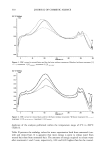
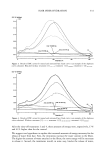
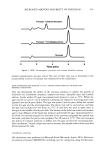
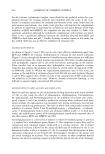
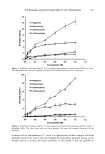
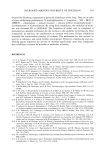
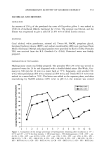
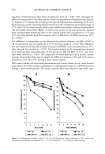
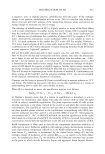
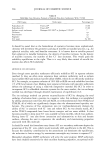
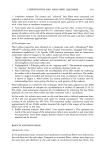
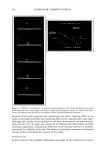
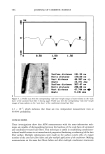
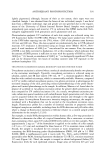
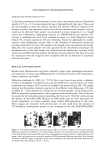
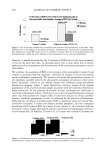
ANTIOXIDANT ACTIVITY OF LICORICE EXTRACT 555 STATISTICAL ANALYSIS ANOVA testing followed a Tukey test used to determine significant differences between groups, and p ( 0.05 was considered significant. RESULTS AND DISCUSSION Powdered dry roots gave a yield of 21.0% w/w of dried licorice extract. The licorice extract is yellowish-brown in color. From physical observation (data not shown), the color of all sample systems was darker starting from the first week, with the darkest intensity in cream without any antioxidants (CB+HY) and the least dark in the system with 2.0% extract. The systems containing 2.0% sodium metabisulfite (SM) and !.0% and 2.0% BHT showed emulsion instability. The 2.0% BHT cream started to crack from the first month, whereas 2.0% SM cream started to crack at the second month and continued. This may be due to the high concentrations of both antioxidants compared with the other test systems. BHT is a phenolic antioxidant for fatty acid and vegetable oil. Usually it is used at a level of 0.01-0.1% in cosmetics containing unsaturated materials (1). The extract systems at all concentrations (0.1%, 0.5%, 1.0%, and 2.0% w/w) were stable for three months. When comparing the percentages of hydroquinone remaining after incubation at dif- ferent temperatures for three months, the sodium metabisulfite, BHT, and licorice extract systems in all concentrations in the dark room at 25øC showed a higher remain- A 100 100 90 90 80 80 •o .• •o .o .o !.o 20 [ 20 10 10 0 ...... 0 0 2 4 6 8 10 12 B 0 2 4 6 8 10 12 Time (Week) Time (Week) •CB 0.5% [ C CB 0.5% L '-- SM 0.5% ..(
•Ext. BHT o.5%j •. SM 0.5% ..(
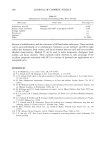
•Ext. BHT 0.5% Figure 3. Formulation stability study of 2% w/w hydroquinone cream containing 0.5% extract and commercial antioxidants incubated at 25 ø _+ 0.5øC (A) and 45 ø _+ 0.5øC (B) for three months.

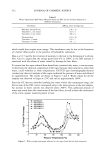
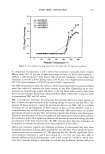
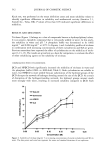
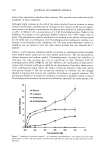
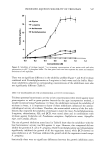
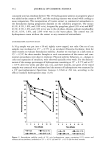
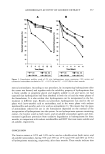
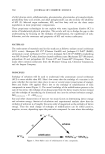
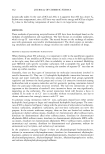
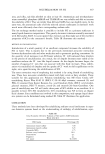
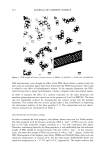
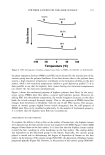
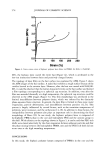
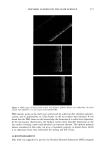
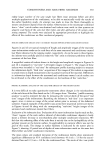
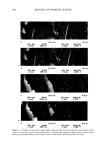
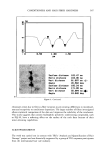
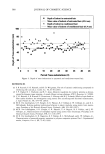
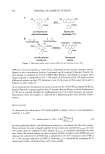
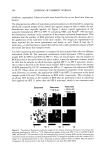
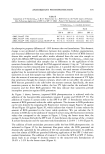
556 JOURNAL OF COSMETIC SCIENCE ing level of hydroquinone than those incubated at 45øC (p 0.05). This indicated the effects of temperature in accelerating the oxidative degradation of hydroquinone (Figure 1). Figures 2-5 compare the average percentages of hydroquinone remaining in 2% w/w hydroquinone cream containing licorice extract and the commercial antioxidants kept at 25øC and 45øC for three months. Both water-soluble antioxidant (sodium metabisulfite) and oil-soluble antioxidant (BHT), as well as the extract at all concentrations, showed more hydroquinone remaining than in the control system after incubation at 25øC and 45øC for three months, with the exception of 0. ! % SM and 0.1% BHT systems at 45øC (p 0.001). The difference in antioxidant activity between the systems of extract and SM or BHT at all concentrations was not significant at 25øC after two weeks (p 0.05). This difference was not observed between the systems of extract and BHT at all concentrations at 25øC after one and two months (p 0.05). The licorice extract at all concentrations showed more hydroquinone remaining than in the systems of SM and BHT at 25øC and 45øC after three months (p 0.05). The comparison of antioxidant activity of licorice extract systems showed that there was no significant difference between 1.0% and 2.0% extract systems at 25øC and 45øC during a three-month period. Both water-soluble and oil-soluble antioxidants and licorice extract in our study showed some protection from oxidative degradation in hydroquinone (but not 100% protection) during a three-month period. The extract systems were more effective than other com- A 9O 9O 8O 8O i 70 i 70 60 60 50 50 i 30 30 20 20 10 10 0 B i i i i 0 2 4 6 8 •0 •2 0 2 4 6 8 Time (week) Time (Week) i i 10 12 •CB 1% I '"'-•CB 1% J• SM1% .(
•Ext. BHT1% J• MS 1% .(
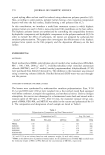
•Ext. BHT1% Figure 4. Formulation stability study of 2% w/w hydroquinone cream containing 1.0% extract and commerical antioxidants incubated at 25 ø _+ 0.5øC (A) and 45 ø _+ 0.5øC (B) for three months.
Purchased for the exclusive use of nofirst nolast (unknown)
From: SCC Media Library & Resource Center (library.scconline.org)