580 JOURNAL OF COSMETIC SCIENCE cosmetic properties. Most often, the active component of the conditioning formulation is a polymeric (such as PQ-10) or monomeric (such as cetyl trimethyl ammonium bromide CETAB) cationic quaternary compound, which has great affinity to the nega- tively charged hair fiber surface (pH = 3.67, isoelectric point) at pH values close to neutral. These conditioners adsorb strongly by electrovalent interaction with sulfonic acid groups on the hair fiber surface. Acid/base interaction between the conditioner and the keratin fiber can lead to different degrees of interaction. We hypothesize that penetration of at least the low-molecular-weight components of the cationic condition- ing compounds into the intercuticular regions leads to plasticization of the cuticular sheath, which, in turn, may lead to its softening. On the other hand, in the case of conditioning compounds dominated by hydrocarbon structures, the conditioner/keratin interaction may also occur by hydrophobic bonding between the hydrocarbon chains, which may reduce the moisturization and lead to hardening of the protein-conditioner complex (3) (as observed in our studies involving synthetic fibers). Using AFM, work of this nature has been done at TRI on synthetic fibers, providing useful information on the effect of topical finishes on the hardness of fibers (3). We extended this study to hair fibers. Atomic force microscopy (AFM) techniques have become quite unique for high-resolution examination of various materials on a nanome- ter scale, including keratin fibers. AFM provides information not only on the topogra- phy, but also on the adhesive, attractive, repulsive, viscoelastic, and micromechanical (microhardness) properties of the fibers. Although some work has been done using AFM to study the topography of untreated and conditioner-treated hair, no attempt has been made to study the hardness of the hair surface. In this work, we have used AFM to study the hardness of the hair fiber surface, which has been modified by the deposition of a cationic conditioning compound. EXPERIMENTAL MATERIALS Hair fibers. Root sections of individual hair fibers were from 14-inch-long, dark brown European hair from DeMeo. To avoid problems stemming from fiber-to-fiber variation, great care was taken that the study was carried out on adjacent regions of the same hair fiber root sections before and after multiple applications of a conditioner. Conditioner. The conditioner employed was Polyquaternium- 10 (PQ- 10). TREATMENTS/PROCEDURES 1. Pretreatment/cleaningo An appropriate number of untreated hair fibers with diameters of-90 l•m were selected. The fibers were cleaned while under constant stirring for ca. 30 minutes at 40øC in a surfactant solution (12.5% Texapon ASV 50, pH = 5.0). The cleaned fibers were air-dried overnight under controlled conditions (22øC, 45% RH). 2, Nano-indents before conditioner applications. Six nano-indents were carefully placed onto flat and "clean" regions of surface cuticle cells of seven hair fibers, totaling 42 nano- indentations. AFM tests were carried out on these fibers under controlled conditions (22øC, 45% RH).

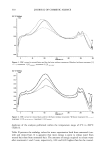
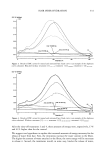
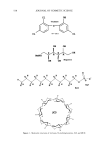
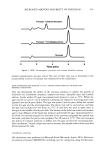
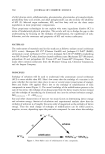
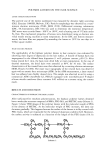
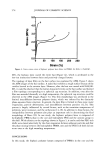
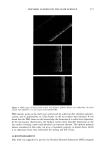
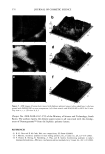
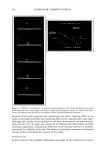
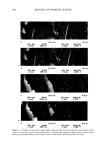
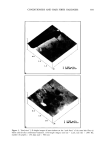
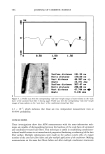
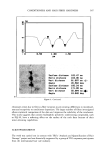
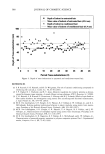
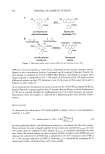
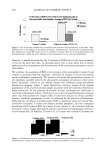
CONDITIONERS AND HAIR FIBER HARDNESS 581 3. Conditioner treatment. The cleaned and "indented" hair fibers were moistened and exposed to a total of ten 2-minute treatments with 0.5 % of Polyquaternium-10 (infinite bath), each time rinsed for 1 minute in running DI water (gal/min) at 40øC, and dried with a hair dryer at moderate temperature. 4. Nano-indents aj%r ten conditioner applications of the same hair fibers. A total of 42 nano- indentations were placed again onto the 10x conditioner treated, "clean-appearing," flat regions of surface cuticle cells of the adjacent regions of the same hair fibers, which had been indented prior to the conditioner treatment (not onto the same scale face indented prior to the conditioner applications). AFM techniques used Fiber surface properties were obtained on a nanometer scale with a NanoScope © Mul- timode TM scanning probe microscope from Digital Instruments, equipped with nano- indentation capabilities (3-6). Specific AFM scanning techniques used to characterize conditioner-induced changes in the surface properties of hair fibers were: 1. Height, phase contrast, and amplitude signals: These techniques characterize topog- raphy/morphology, surface adhesion, and viscoelasticity, and can be used to measure microroughness and total surface area. 2. Topographical 3-D height profile (in the "tapping mode"): This measures topography by "tapping" the fiber surface with an oscillating diamond probe tip. 3. Nano-indenting: This measures the microhardness of the fiber surface by indenting the surface with a diamond probe tip mounted on a metal-foil cantilever. The surface indent is imaged, recorded, and measured in real time. A schematic of the technique is shown in Figure 1, which shows the various positions of the indenter and the corresponding force curve giving the force at each position of the indenter. Nano-indentation is a relatively new technique, which has been adapted by the AFM protocol to determine or compare the microhardness of surfaces of materials (3-6). In this study, nano-indentation measures the microhardness by indenting the hair fibers (prej•rably the same hair fibers) before and after treatment with a conditioner. In this study, the indents were made on the scale faces with a defined maximum force of 30.1 laN and separated from each other by several micrometers. The cantilever constant of the indenter was 405 N/m. The maximum surface indentation depth was approximately 60 nm. Profile analysis measured the depth of the images of the indents, which were saved in real time. 4. Profile scanning analysis: (also called "cross section analysis"): This measures the depth of the saved images of the indentations (which were recorded in real time) after the experiment. From these images, features related to the relaxation behavior of the material can be derived. RESULTS AND DISCUSSION PRELIMINARY STUDY In the preliminary study, untreated and conditioner-treated hair fibers were indented on the scale faces and the scale edges. Compared to untreated fibers, indents were deeper on the scale faces and shallower at the scale edges of conditioner-treated hair fibers. The
Purchased for the exclusive use of nofirst nolast (unknown)
From: SCC Media Library & Resource Center (library.scconline.org)