POLYMER LATEXES ON THE HAIR SURFACE 577 (4) K. Yahagi and T Suzuki, Microlatex hair cosmetic composition, US Patent 4985239. (5) K. Yahagi and T. Suzuki, Hair cosmetic composition comprising submicron polymer particles, US Patent 4798721. (6) S. A. Young and M. A. Snyder, Hair styling shampoos containing organic oil, US Patent 6248315. (7) M.A. Snyder and J. R. Schwartz, Hair styling shampoos containing low Tg latex polymer particles, US Patent 6268431. (8) S. W. Park, J. W. Kim, J. B. Jun, and K. D. Suh, Nanostructured latex films from poly(butyl meth- acrylate) latex crosslinked with poly(ethylene oxide)-poly (propylene oxide)-poly(ethylene oxide) tri- block macrocrosslinker, Colloid. Polym. Sci., 280, 963-967 (2002). (9) J. W. Kim, J. Y. Park. J. B. Jun, I. S. Chang, and K. D. Suh, Fine polystyrene latexes with reactive poly(ethylene oxide)-poly(propylene oxide)-poly(ethylene oxide) triblock macrosurfactants in modified miniemulsion polymerization, J. Appl. Polym. Sd., 85,328-332 (2002). (10) A. Tuncel, Emulsion copolymerization of styrene and poly(ethylene glycol) ethyl ether methacrylate, Polymer, 41, 1257-1267 (2000). (11) Z. Liu and H. Xiao, Soap-free emulsion copolymerisation of styrene with cationic monomer: Effect of ethanol as a cosolvent, Polymer, 41, 7023-7031 (2000). (12) E. Perez and J. Lang, Internal structure of core-shell latex particles studied by fluorescence nonradiative energy transfer, Langmuir, 12, 3180-3187 (1996). (13) E. Perez and J. Lang, Flattening of latex film surface: Theory and experiments by atomic force microscopy, Macromolecules, 32, 1626-1636 (1999). (14) T. Tamai, P. Pinenq, and M. A. Winnik, Effect of cross-linking on polymer diffusion in poly(butyl methacrylate-co-butyl acrylate) latex films, Macromolecules, 32, 6102-6110 (1999). (15) A. Goudy, M. L. Gee, S. B iggs, and S. Underwood, Atomic force microscopy study of polystyrene latex film morphology: Effect of aging and annealing, Langmuir, 11, 4454-4459 (1995). (16) J. Feng, E. Odrobina, and M. A. Winnik, Effect of hard polymer filler particles on polymer diffusion in a low-Tg latex film, Macromolecules, 31, 5290-5299 (1998). (17) O. Pekcan and E. Arda, Site percolation model for latex film formation in soft polymer matrix, J. Colloid Inter. face Sci., 250, 471-477 (2002). (18) B. Akkisk, O. Pekcan, and E. Arda, Molecular weight effect on latex film formation induced by solvent vapor: An optical transmission study, J. Colloid Interface Sci., 245,397-401 (2002). (19) E. Odrobina, J. Feng, S. Kawaguchi, M. A. Winnik, M. Neag, and E. F. Meyer, Characterization of the miscibility of poly(butyl methacrylate) with a nonylphenol ethoxylate surfactant and with various poly(ethylene glycol) oligomers, Macromolecules, 31, 7239-7247 (1998).

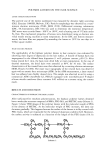
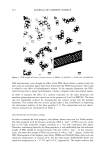
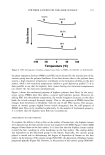
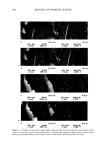
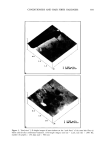
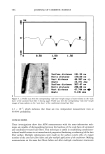
j. Cosmet. Sci., 54, 579-588 (November/December 2003) Effects of conditioners on surface hardness of hair fibers: An investigation using atomic force microscopy S. B. RUETSCH, Y. K. KAMATH, L. KINTRUP, and H.-J. SCHWARK, TRI/Princeton, Princeton, NJ 08542 (S.B.R., Y. K.K.), and Henkel KGaA, Diisseldorf, Germany (L.K., H.-J.S.). Accepted •br publication July 29, 2003. Synopsis Conditioners are known to have a prophylactic effect on hair damage caused by cosmetic chemical treatments or mechanical grooming procedures (1). They are known to impart softness and smoothness to hair by moisturizing the fiber (2). Since the amount of conditioners deposited on the fiber is very small in quantity, it is conceivable that mainly the surface is moisturized. This is especially true of polymeric conditioners, which deposit preferentially on the surface of the fiber, rather than penetrate into the cortex. Therefore, this study strictly investigates whether cationic polymeric conditioners impart softness to the surface cuticle cell as a result of their hydrophilicity, with no regard to its applicability to cosmetic effects. Such softening can be detected by indentation of the surface and can be quantified by measuring the depth of the indent in real time. Atomic force microscopy (AFM), equipped with nano-indentation capability, is ideally suited for this purpose. In this work it was used to determine changes in the microhardness (micromechanical properties) of the hair fiber surface as a result of fiber/conditioner/moisture interactions. In a preliminary study, we observed that the scale faces of hair treated with Polyquaternium 10 (PQ-10) conditioner gave deeper indents, while scale edges yielded shallower ones in comparison to cuticle cells of untreated hair. This suggests that the conditioner softens the scale face and hardens the scale edges. However, because of significant amounts of conditioner residues left on the scale face, this conclusion was rather ambiguous. Therefore, the study was repeated in which multiple indentations were made on the surface cuticle cells of a larger number of the same hair fibers before and after multiple applications of the conditioner. This reduces errors due to fiber-to-fiber variation in pre-existing microhardness differences in surface cuticle cells. Also, the larger number of fibers investigated in the current work allowed for a statistical outcome. This latter study has led to a rather definite conclusion that the scale face is indeed softened by polymeric conditioners such as Polyquaternium-10 (PQ-10). These studies will ultimately help in the development of conditioners with suitable moisturizing and softening effect on hair. INTRODUCTION Conditioners are applied to hair fibers to protect them from abrasion/ablation during everyday grooming (1), to improve general manageability, combability, and luster, and to reduce static charging (flyaway). In this study we strictly want to show whether a cationic conditioning compound present on the fiber surface imparts softness to the surface cuticle cell as a result of its hydrophilicity, with no regard to its applicability to 579
Purchased for the exclusive use of nofirst nolast (unknown)
From: SCC Media Library & Resource Center (library.scconline.org)