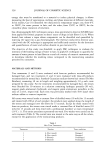
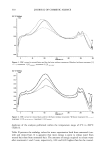
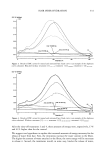
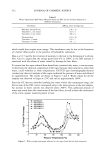
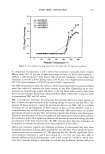
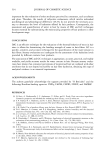
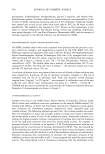
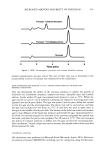
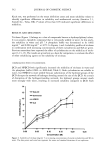
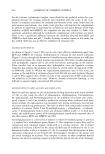
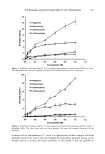
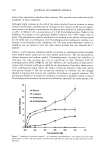
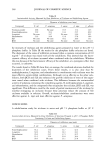
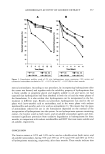
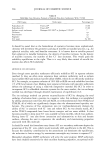
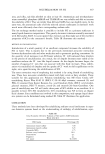
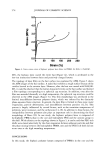
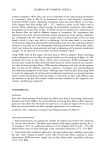
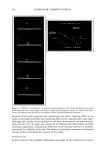
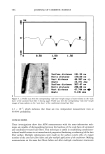
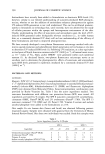
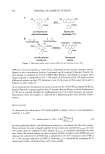
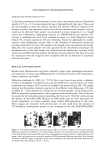
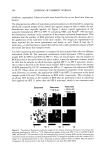
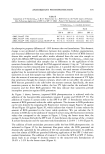
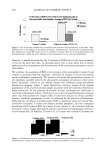
532 JOURNAL OF COSMETIC SCIENCE Table II Water Vaporization AH Values Obtained From the DSC Curves for Hair Subjected to Different Treatments Treatments AHvap, water (average)J/g Bleached, untreated hair 146 +_ 13 Treatment 1, not rinsed 210 +_ 5 Treatment 2, not rinsed 268 + 8 Untreated hair 164 +_ 19 Treatment 3, rinsed 192 + 7 Treatment 4, rinsed 231 + 2 which would thus require more energy. This interference may be due to the formation of a barrier (film) and/or to the presence of hydrophilic substances. Dias et al. (17) ascribe the retention of moisture in the hair to the formation of a silicone film. Cao (11) argues that the energy spent from 0øC to 200øC in the DSC analysis is associated with the release of water caused by heating the hair fibers. To ensure that the vapor released from heated hair contained only water, it was necessary to determine the chemical composition of the vapor because other substances, other than water, could volatilize at these temperatures. GC/TCD (gas chromatography/thermal conductivity detector) analysis of this vapor confirmed the presence of water and allowed its quantification. The results are shown in Figures 5 and 6. Water release for all the samples was observed to begin at 25øC and end at approximately 200øC. Since the GC detector identified nothing but water within this temperature range, the first section of the DSC curves corresponds only to the water present in the test samples. An increase in water content was observed above 200øC. This additional amount of water may result from the constitution of the hair fibers, as well as from the combustion of the entire organic material present in hair. $ [ • REFERENCE L •a- TREATMENT 2 / \ 4| = TREATMENT3 ! \ • • TREATMENT 4 0 0 50 1 O0 150 200 250 300 Reacion Temperature (ø-C) Figure 5. Water weight percentage observed in the vapor from the hair heat treatment.

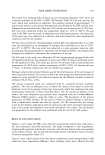
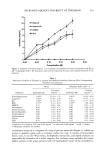
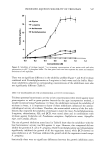
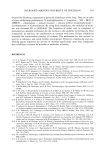
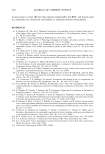
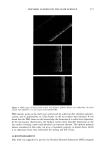
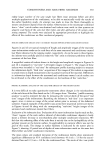
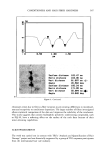
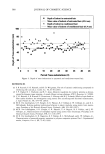
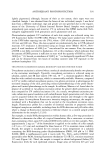
HAIR FIBER HYDRATION 533 0.5 0.4 '• 0.3 ß *-, 0.2. 0 • OA (.3 0.0 --•--REFERENCE ---,G-- TREATMENT • TREATMENT = TREATMEN --O--TREATMENT4 I 510 I I I ' I ' I 0 100 150 200 250 300 Reaction Temperature øC Figure 6. CO 2 weight percentage observed in the vapor from the hair heat treatment. A comparison of treatments 1 and 2 shows that treatment 2 provides both a higher AHvap value (267.79 J/g) and a higher percentage of water (12.82%) than treatment 1 (AHvap -- 209.96 J/g and 7.43% water). The results for treatments 3 and 4 show that treatment 3 provides a lower AHvap value (192.49 J/g), but a higher water percentage (16.73%) than treatment 4 (230.91 J/g and 12.85%, respectively). The DSC measurements show the extent to which heated hair fibers are protected from water loss, while GC measures the water content in hair fiber. Depending on its com- position, the formula may simply add water to the hair fibers and/or protect them from water loss (for example, by forming a film around the fiber), which may or may not result in proportional DSC and GC values. DSC is an effective technique for evaluating the thermal behavior of water present in hair: it allows the determination of the bonding energy of water in the hair fiber. The amount of water, however, cannot be determined directly by DSC. GC is a reliable technique for the quantification of water present in hair, and was therefore used as a complementary tool to DSC for the purpose of this study. Hair moisturizers can increase the amount of water in the hair fiber and/or form a barrier that hinders water desorption. Therefore, the association of these two analytical techniques proved particularly useful in the evaluation of hair fiber hydration. Because the amount of consumed energy provides an indication of the level of protection, the DSC data also show that this technique can be applied to evaluate the thermal protection properties of hair fibers. During the consumer research, the following attributes of moisturized hair were most frequently mentioned: softness, gloss, gliding feel, and silkiness. These attributes do not depend exclusively on hydration (7). The panelists did not identify significant differ- ences between treatments 1 and 2 and control (p = 0.1722), nor were they able to identify differences between treatments 3 and 4 and control (p = 0.0643), which indi- cates that consumer testing is inadequate to evaluate hair hydration. Sensory analysis is
Purchased for the exclusive use of nofirst nolast (unknown)
From: SCC Media Library & Resource Center (library.scconline.org)