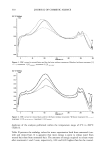
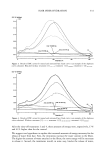
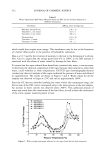
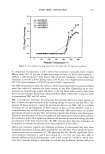
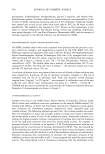
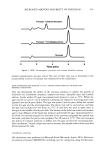
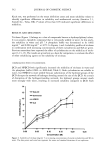
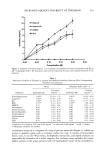
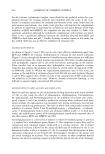
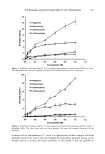
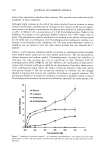
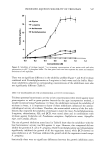
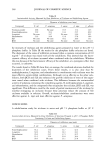
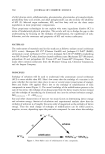
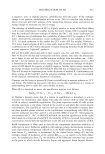
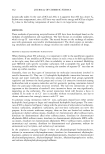
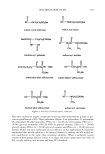
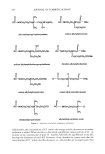
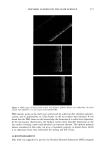
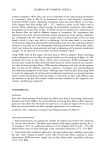
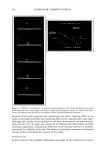
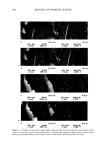
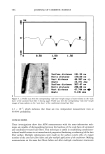
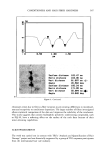
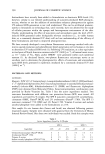
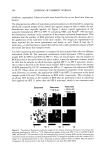
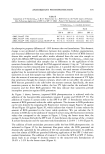
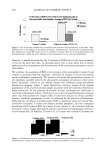
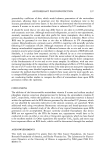
596 JOURNAL OF COSMETIC SCIENCE %-Decrease in ROS Levels of the Lower Epidermis Due to eo ...... _B_ •i • c_o_n_v_ _e_rtib_l•. _An_. _t_i_o_,_ __da•_ ___s_: - A_ y_e_ _r_ag_e_ 9__f_SP_F. •$_ &_ _1_$_ __•__t__a_ 50.4% + 5.2% / [] Breast • :::::::::::::] 21.5'/, + 2.1 Y, o Vitamin E Acetate Vitamin E Acetate, $TAY-C 50 Figure 4. The % decrease in ROS levels, compared to the sunscreen-only formulations, in the lower, viable epidermis due to the addition of antioxidant precursors. All fluorescence intensity data acquired for both skin samples and at both SPF values are used to calculate % decrease. Each bar in the graph represents the average decrease in ROS due to the addition of the antioxidant(s) to the sunscreen formulations. However, it should be noted that the % decrease in ROS levels in the lower epidermis is less for the facial skin data. As discussed above, this is most likely due to uneven application of the formulation and bioconversion of the antioxidant precursors to active antioxidants. We attribute the quenching of ROS to the presence of the antioxidants vitamin E and vitamin C generated from the enzymatic conversion of vitamin E acetate and sodium ascorbyl phosphate, respectively. The presence of esterase and phosphatase enzymes in the epidermis naturally converts the photostable antioxidant precursors to their active forms. Enzymatic activity in the studied samples was confirmed using two-photon fluorescence imaging. Figure 5 shows fluorescence intensity images of the stratum granulosum of the ex vivo facial skin sample incubated with the enzymatic fluorescence probe calcein-am. In the presence of esterase activity, nonfluorescent calcein-am is converted to fluorescent calcein, which gives rise to the increased fluorescence intensity above that detected from the images either of calcein-am solution or of skin autofluo- rescence. Similarly, phosphatase activity is confirmed by the presence of fluorescence following the conversion of nonfluorescent FDP to fluorescein (data not shown). Bio- conversion of vitamin E acetate and sodium ascorbyl phosphate, and the consequent quenching of UV-induced ROS by vitamin E and vitamin C, are consistent with the enzymatic activity images showing the presence of esterase and phosphatase activity in ex vivo human skin. In addition, Trivedi et al. (17) report that vitamin E decreases the Calcein-AM -Calcein-AM +Calcein-AM A C 5 1000 5 1000 5 1000 Figure 5. Fluorescence intensity images of (A) the esterase activity probe calcein-am in solution, (B) skin autofluorescence, and (C) the stratum granulosum of calcein-am-incubated ex vivo facial skin.

ANTIOXIDANT PHOTOPROTECTION 597 permeability coefficient of skin, which would enhance penetration of the antioxidant precursors, allowing them to penetrate over the three-hour incubation time to the stratum granulosum and lower layers. It has also been determined that bioconversion of vitamin E acetate to its active antioxidant form is enhanced by UV irradiation (18). It should be noted that ex vivo skin may differ from in vivo skin in its ROS generating and enzymatic activities. Although media and refrigeration, as used in our experiments, routinely maintain for several days skin grafts for tissue transplants, their ability to prevent any degradation in biochemical processes in the skin is unknown. More or less ROS may be generated in vivo than ex vivo due to differences in UV chromophore content. Mitochondria are a primary source of ROS in respiring cells naturally and also following UV irradiation (19,20). Although treatment of our ex vivo samples does not destroy mitochondrial respiration (1), differences between the ex vivo and in vivo envi- ronments may be great enough to contribute to changes in the amount of ROS detected. Similarly, it is unclear how enzymatic activity is affected by an ex vivo environment compared with an in vivo environment. Until the recent advent of two-photon micros- copy techniques, researchers have not had the tools to acquire data for direct comparison of the biochemistries of in vivo and ex vivo tissue samples. In addition, with our ever- increasing knowledge of the importance of the photobiological effects of UVA radiation, the use of a UV source that more closely mimics the solar spectrum may prove important when conducting more detailed experiments. We are currently developing methods to translate the method described herein to explore these issues and, for more specific use, to compare ROS generation in human subjects with ex vivo skin samples. In addition, we are conducting further studies to compare the effect of antioxidants alone upon ROS generation within the epidermis. CONCLUSIONS The addition of the bioconvertible antioxidants vitamin E acetate and sodium ascorbyl phosphate improve sunscreen photoprotection by forming the antioxidants vitamins E and C, respectively, within the epidermis. As a result, an antioxidant reservoir is formed within the epidermis and the ROS that are generated by the residual UV photons, which are not absorbed by sunscreen molecules in the stratum corneum, are quenched. With additional work using two-photon fluorescence microscopy and broad-spectrum solar- simulating light, a detailed study of the effects of any topical formulation upon ROS generation can be accomplished. Because currently available fluorophores that detect ROS are not approved by the FDA for human use, experiments would have to be conducted in vitro on either ex vivo skin or living skin equivalents, which we have found to be excellent models (1). Other ingredients like nanofine Ti:O2, lipids, and esters may have important effects on ROS levels, which could be determined through this method. ACKNOWLEDGMENTS This work was supported by grants from the Skin Cancer Foundation, the Cancer Research Foundation of America, and Roche Vitamins Inc. The Laboratory for Fluores- cence Dynamics at the University of Illinois is supported by NIH grant PHS P41- RR03155.
Purchased for the exclusive use of nofirst nolast (unknown)
From: SCC Media Library & Resource Center (library.scconline.org)