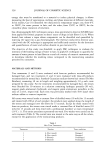
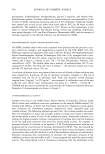
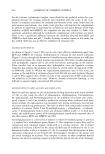
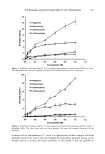
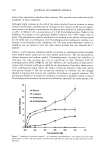
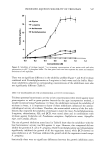
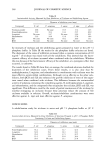
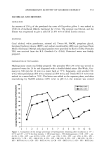
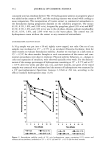
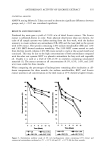
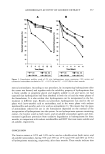
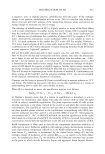
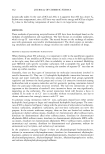
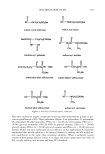
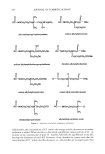
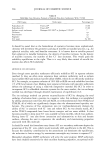
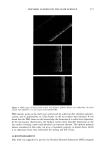
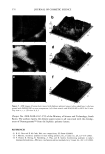
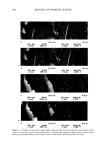
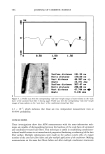
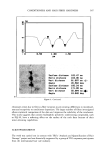
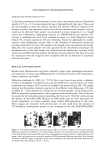
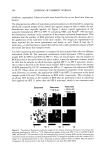
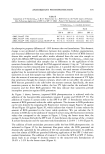
594 JOURNAL OF COSMETIC SCIENCE riboflavin, tryptophan). Identical results were found for the ex vivo facial skin (data not shown). The photoprotective effects of sunscreens and antioxidants are determined by comparing identically acquired images of the control data against images of skin to which the test formulations were topically applied. As Figure 3 shows, topical application of the sunscreen formulations SPF 8 or SPF 15 containing OMC and Parsol © 1789 decreases the fluorescence intensity in the cytoplasm of the stratum spinosum keratinocytes. This indicates that the number of ROS generated within the keratinocytes decreases due to the application of the sunscreen to the skin's surface. The images are representative of those acquired for the strata granulosum and basale as well. Table II lists the % reductionav,, in the fluorescence signal detected for each viable epidermal stratum of both the breast and facial skin samples tested. It is both interesting and important to compare the data acquired from the two different individuals (Table II). The sunscreen combination tested attenuates UVB by approxi- mately 80% for SPF 8 and 90% for SPF 15. Thus, we would expect that the amount of ROS detected in the layers below the skin's surface, where the sunscreen remains, would be 10% less for samples to which have been applied SPF 15 vs SPF 8 sunscreen. In fact, this is what is detected in the breast tissue studied. SPF 8 sunscreen reduces the amount of ROS generated by 84.7% increasing the SPF to 15 improves the reduction of ROS to 90.1%. These values are consistent with the absorptive properties of the sunscreens used. However, in contrast, the application of SPF 8 and SPF 15 sunscreens to the facial samples yields 42% and 79% reductions in ROS levels, respectively. This correlates to an almost 40% decrease in the number of ROS that are generated in skin to which has been applied the SPF 15 rather than the SPF 8 sunscreen, which is not consistent with Suns creen Suns creen Suns creen + Vit E-Ac + Vit E-AC + StayC 50 D 5 50 5 50 5 50 Figure 3. Two-photon fluorescence intensity images of the stratum spinosum of human ex vivo breast skin following irradiation by 1600 J m -2 UV. Displayed are images of skin with SPF 15 (A-C) and SPF 8 (D-F) OMC and Parsol © 1789 sunscreen (A,D), the sunscreen plus vitamin E acetate (B,E), and the sunscreen plus vitamin E acetate and sodium ascorbyl phosphate (STAY-C © 50) applied topically to the skin's surface (C,F). Image 3C is predominantly blue in color, indicating an almost complete absence of ROS. Note the absence of apparent cell structure due to the lack of fluorescence and thus detectable ROS.

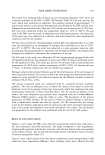
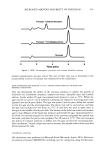
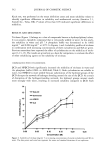
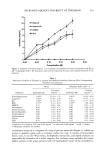
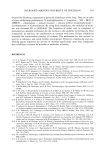
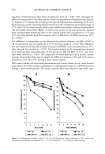
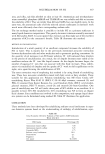
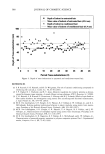
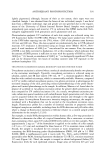
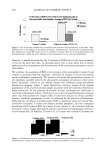
ANTIOXIDANT PHOTOPROTECTION 595 Table II Comparison of % Reductiona•g in R123 Fluorescence (i.e., ROS level) in the Viable Layers of Human Skin Following Application of SPF 8 or SPF 15 OMC +Parsol 1789 Sunscreen and Antioxidants % Reduction•vg (+ standard deviation) Breast Facial SPF 8 SPF 15 SPF 8 SPF 15 +OMC, Parsol © 1789 +OMC, Parsol © 1789, vitamin E acetate +OMC, Parsol © 1789, vitamin E acetate, STAY-C © 50 84.7 (1.1) 90.1(1.1) 42.2 (4.2) 79.4 (2.0) 88.3 (0.8) 91.9 (0.9) 41.8 (6.5) 79.0 (4.2) 91.7 (1.1) 95.5 (0.5) 54.0 (2.4) 84.1 (3.7) the absorptive property difference of-10% between the two formulations. This dramatic change is not attributed to differences between skin samples. Cellular, pigmentation, and structural differences that may contribute to variability in the level of ROS detected between skin samples would not affect results obtained from the same skin sample to which the different SPF formulations have been applied. The % reduction•vg values may differ between individual skin samples due to differences in the application of the sunscreen formulations. Although the FDA-approved amount (2 mg cm -2) of sunscreen formulation was first measured prior to application, it is possible that less adhered to the facial skin as opposed to the breast skin. As a result, the total amount of formulation applied may be inconsistent between individual samples. Thus, UV attenuation by the sunscreens on each skin sample may differ. The data are consistent with the conclusion that the amount of sunscreen present upon the skin determines the amount of UV light that penetrates through the stratum corneum, which will in turn affect the amount of ROS that are generated in the cells below the stratum corneum. Specifically, the more sunscreen present at the skin's surface, the less UV light reaches the nucleated kera- tinocytes and the fewer ROS generated. The data indicate that sunscreens provide incomplete protection against ROS generation. As Figure 3 shows, however, improved ROS photoprotection is achieved with the addition of the bioconvertible antioxidants vitamin E acetate and STAY-C © 50. The addition of vitamin E acetate either to the SPF 8 or SPF 15 formulation reduces the amount of ROS generated within the viable epidermis. The decrease in ROS production can be seen directly by comparing the fluorescence intensity images Figures 3A against 3B and Figure 3D against Figure 3E, which indicate that vitamin E acetate reduces the amount of ROS generated in the lower viable epidermis. We can calculate the % decrease in ROS due to the addition of vitamin E acetate using the fluorescence intensity values that correspond to the images in Figure 3. Using the breast tissue data, the average % decrease (for both the SPF 8 and 15 data) between the average of the +vitamin E acetate formulation and the sunscreen-only formulations is 20.9% + 3.9% (Figure 4). The addition of both antioxidant precursors yields the best ROS photoprotection. As indicated in Figure 3C by the dominant blue-green colors, the ROS generated are dramatically quenched by the addition of the two antioxidant precursors. In addition, note that almost all ROS are quenched following application of the SPF 15-dual anti- oxidant formulation. The addition of vitamin C to either the SPF 8 or SPF 15 formu- lation leads to an average % decrease relative to the sunscreen-only formulations of 50.4% + 5.2% for the breast tissue (Figure 4).
Purchased for the exclusive use of nofirst nolast (unknown)
From: SCC Media Library & Resource Center (library.scconline.org)