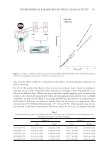
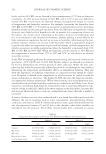
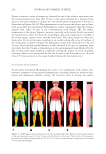
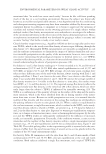
JOURNAL OF COSMETIC SCIENCE 236 of their high effi cacy in mitigating hyperpigmentation (6). Much effort has been made in searching for feasible and effective tyrosinase inhibitors. For instance, based on systematic studies on the inhibitory effect of quercetin, dodecyl gallate, and thymol on mushroom tyrosinase, Kubo et al. proposed a kinetic model of the inhibition process and pointed out some favorable features in molecular structure for a potential effective inhibitor (4,6,7). Nerya et al. analyzed a series of inhibitors extracted from the root of Licorice (8). Gong et al. has previously reported some potent tyrosinase inhibitors, such as ferulic acid and cinnamic acid (9,10). Isoferulic acid is an active component found in Rhizoma Cimicifugae. Reported in this paper is a kinetic study on the inhibitory effect of isoferulic acid on mushroom tyrosinase. By investigating the in vitro inhibitory effect of isoferulic acid on both monophenolase and diphenolase activities of mushroom tyrosinase, a competitive inhibition model was established and the kinetic parameters were calculated. The current results provide ex- perimental support for the potential application of isoferulic acid as a high-effi cacy anti- pigment ingredient in industry. EXPERIMENTAL MATERIALS Mushroom tyrosinase, L -tyrosine, and L -3,4-dihydroxyphenylalanine (L-DOPA) were pur- chased from Sigma (Shanghai, China). Isoferulic acid was obtained from the National Institute for the Control of Pharmaceutical and Biological Product (Guangdong, China). Dimethyl sulfoxide (DMSO) and other reagents were of analytical grade and obtained from com- mercial suppliers. Double distillated and de-ionized water was used unless stated otherwise. METHODS The diphenolase activity assay was performed as previously reported (9). The monophe- nolase activity assay was performed with L -tyrosine as substrate. Using a microsyringe, a tyrosinase solution (0.20 ml, 0.38 mmol/L) was added to a thermostatic solution (5.0 ml, 30°C) containing 50 mmol/L Na2HPO4–NaH2PO4 (pH = 6.8), 1.5 mmol/L L -tyrosine and different concentrations of isoferulic acid (predissolved in DMSO). The resulting mixture was mixed thoroughly using the syringe and immediately monitored by spectro- photometry at 475 nm for 10 min. The molar absorption coeffi cient of the oxidation product (o-quinone) from the substrate (L-tyrosine or L -DOPA) is calculated to be 3700 (mmol/L·cm)-1. Absorption data were recorded on an HP 6010 UV spectrophotometer by Agilent Technologies (Shanghai), China. RESULTS AND DISCUSSION EFFECT OF ISOFERULIC ACID CONCENTRATION ON MONOPHENOLASE ACTIVITY OF TYROSINASE The inhibitory effects of different concentrations of isoferulic acid on the oxidation of L -tyrosine via tyrosinase were studied. The kinetic course of the oxidation of L -tyrosine in

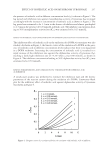
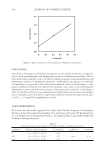
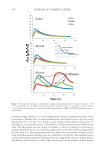
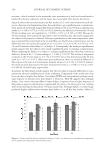
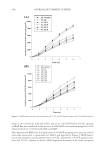
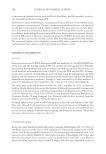
EFFECT OF ISOFERULIC ACID ON MUSHROOM TYROSINASE 237 the presence of isoferulic acid in different concentration levels (cI) is shown in Figure 1. The lag period and inhibition rate against monophenolase activity of tyrosinase (IM) increased accordingly with the increase in concentration of isoferulic acid, as shown in Figure 2. The lag period was estimated to be 1.1 min in the absence of inhibitor and almost quadrupled to 4.3 min in the presence of 0.20 mmol/L isoferulic acid. The inhibitor concentration lead- ing to 50% monophenolase activity lost (IC50) was estimated to be 0.13 mmol/L. EFFECT OF ISOFERULIC ACID CONCENTRATION ON DIPHENOLASE ACTIVITY OF TYROSINASE The inhibitory effect of isoferulic acid on the oxidation of L -DOPA via tyrosinase was also studied. As shown in Figure 3, the kinetic curves of the oxidation of L -DOPA in the pres- ence of isoferulic acid in different concentration levels indicate that there is no lag period in L -DOPA oxidation. Increasing the concentration of isoferulic acid (cI) resulted in a rapid increase of the inhibition rate against the diphenolase activity of tyrosinase (ID), reaching a fairly high inhibition rate of 73.2% when cI was 0.80 mmol/L, as shown in Figure 4. The inhibitor concentration leading to 50% diphenolase activity lost (IC50) was estimated to be 0.39 mmol/L. KINETIC PARAMETERS IN L-DOPA OXIDATION VIA TYROSINASE WITH ISOFERULIC ACID AS INHIBITOR A steady-state analysis was performed to estimate the inhibition type and the kinetic parameters of the reaction system during the oxidation of L -DOPA. Lineweaver–Burk plot for the inhibitory effect of isoferulic acid against diphenolase activity of tyrosinase was shown in Figure 5. Figure 1. Progress curves of L -tyrosine oxidation via tyrosinase with isoferulic acid as inhibitor.
Purchased for the exclusive use of nofirst nolast (unknown)
From: SCC Media Library & Resource Center (library.scconline.org)