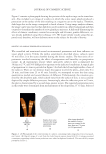
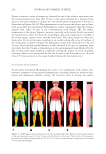
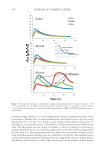
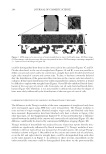
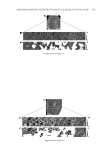
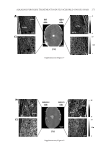
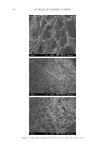
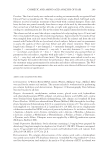
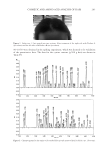
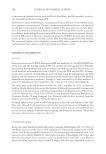
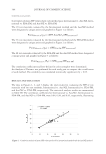
JOURNAL OF COSMETIC SCIENCE 254 Figure 4 contains a series of images we obtained for one of the subjects upon entry into the environmental room, then after 30 min in the room, followed by a period of time spent in the sauna chamber. In Figure 4A, the overall surface temperature of the skin is lower than in Figures 4B–4D. This phenomenon occurs because the subject was acclima- tized in an offi ce for several hours beforehand at a lower temperature than the environ- mental room. After 30 min in the environmental room (Figure 4B), the surface temperature of the subject begins to increase, especially in the rostral (facial) region and the superior torso. After 10 min in the sauna (Figure 4C), peak temperature is reached at the rostral region, superior torso, and the lower limbs. The subject begins to sweat pro- fusely after 10 min in the sauna, resulting in an overall cooling effect over all surfaces of the integument as shown in Figure 4D. Subsequent images were obtained at 30, 40, and 50 min, which showed similar behavior as that observed at 20 min. In summary, these data show that the 30-min acclimatization in the environmental room followed by the fi rst 10 min in the sauna chamber is suffi cient to bring the subject to a state of profuse sweating, which can be monitored for the last 20 min of the skin replica test. (A total time of 30 min was spent in the sauna chamber during the skin replica test.) FLUX DENSITY MEASUREMENTS As previously mentioned, IR imaging was used to view components of the subject’s ho- meostatic response to rising internal temperatures, including changes in radiative dissi- pation and subsequent sudorifi c cooling. On occassion, prior to testing, the subject Figure 4. (A) IR images collected upon entry into the environmental room, (B) after 30 min acclimatization in the environmental room, (C) after 10 min, and (D) 20 min in the sauna. The scale for all the images is provided on the right and ranges from 28.1°C to 37.6°C. Precise measurements of temperature can be made at every pixel in the image.

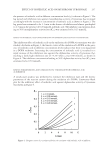
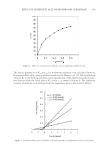
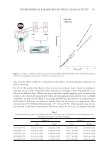
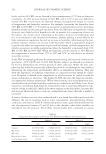
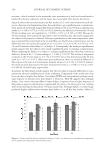
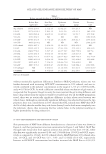
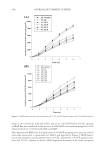
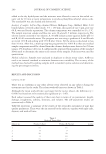
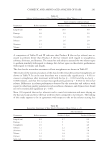
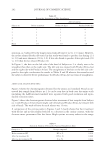
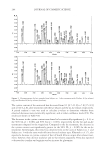
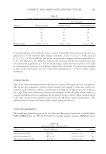
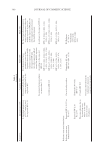
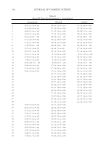
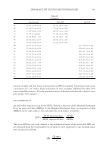
ENVIRONMENTAL PARAMETERS ON SWEAT GLAND ACTIVITY 255 mentioned that “he would not sweat much today” because he felt cold from spending much of the day in a cool working environment. Because the subject was historically known as an excellent and predictable sweater, it was hypothesized that his conditioning and subsequent sweating response may have been somewhat subdued by his recent envi- ronmental history. In addition, to minimize or to begin to appreciate the intrusion of circadian and seasonal variations on the sweating processes of a single subject within multiple studies, fl ux density measurements were undertaken to investigate the infl uence of the environmental history on the effectiveness of the fi nal acclimatization process. Hence, an exploratory instrumental method was developed for gauging a subject’s uncanny and accurate “feeling” that he/she is ready or not ready to sweat. Closed-chamber evaporimeters (e.g., AquaFlux AF200) are devices typically used to mea- sure TEWL, which is the steady-state fl ux density of water vapor diffusing through the skin barrier (17). Meaningful TEWL measurements are typically accomplished in cool and dry ambient environments to diminish the impact of ambient humidity and exces- sive insensible perspiration on the quality of the measurement however, since our inter- ests involve monitoring the physiological response to thermal stress (i.e., not TEWL), cumulative fl ux density profi les, as a function of time and elevated heat index, are relevant toward understanding the advent of perspiration processes (18). For Subjects 1 and 2, fl ux density readings (n = 3) were recorded at 0, 30, and 60 min of acclimatization (30.5°C and 36.5% RH) after initial equilibration in cool (6.3°C and 66% RH), or warm (24.1°C and 28% RH) settings. At each time point, readings were taken at three different zones of the mid-volar forearm, always starting with Zone 1 and ending with Zone 3. Zone 1 was closest to the wrist, Zone 3 was closest to the elbow, and Zone 2 was sandwiched between Zones 1 and 3. Table III conveys the average number of fl ux density maxima (n = 3) visible in the fl ux density vs. time plots, skin surface water loss (SSWL, n = 3), and fl ux density (n = 3). The reported average fl ux density refl ects the averaged steady-state fl ux density, or the timed-out (80 s) fl ux density, which are inher- ently larger than the subject’s TEWL if infl uenced by insensible sweating (19). The SSWL is a combination of the quantity of water on the surface of the skin and the instru- ment transient, which is the water absorbed from the air during transfer of the instru- ment from zone to zone. Because no visible perspiration was seen, it is assumed that the number of fl ux maxima and the variation in the average fl ux readings are attributable to the pulsing infl uence of active eccrine glands (20,21). When a subject is equilibrated in the cool environment, a single fl ux maximum, which is related to the SSWL, and a steady- state fl ux density, which is related to TEWL, are present (e.g., 6.3°C data for Subjects 1 and 2) in the fl ux density vs. time plot. Exposure to warmer pre-equilibration tempera- tures, or to longer acclimatization times, causes a thermoregulatory response by the sub- ject and the TEWL results are subsequently confounded by the infl uence of increased, steady, yet insensible, perspiration. Eventually, if the conditions warrant, eccrine activity intensifi es and the number of fl ux density maxima within a single measurement period increases (e.g., 24.1°C pre-equilibration and 60 min acclimatization data, Figure 5 and Table III). The visible pulsing effect in the evaporimetry profi le is assumed to be the sum- mation of effl ux from the asynchronous fi ring of several active eccrine glands within the confi nes of the 38.5-mm2 measurement orifi ce. For brevity, Table III summarizes only the data from the 0- and 60-min marks of fi nal acclimatization (30.5°C and 36.5% RH), after pre-equilibration at the cool and warm conditions. Both subjects exhibited a single fl ux maximum, and a typical TEWL-like
Purchased for the exclusive use of nofirst nolast (unknown)
From: SCC Media Library & Resource Center (library.scconline.org)