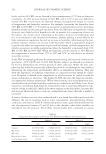
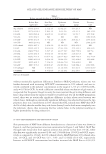
JOURNAL OF COSMETIC SCIENCE 252 levels, such as 80% RH, we are limited to lower temperatures (37ºC) due to dewpoint constraints. At 45ºC we were limited to 60% RH, and at 52ºC it was very diffi cult to exceed 35% RH. In any event, we observed changes in perspiration output as a result of temperature and humidity variation. For example, increasing the humidity from 30% RH to 60% RH at 37ºC results in an increase in perspiration activity. Increasing humidity results in two principal outcomes. First, the effi ciency of evaporative cooling decreases since high levels of humidity in the air permits less evaporation of sweat on the surface. As a result, sweat remaining on the surface increases in temperature and acts as an insulator to the external environment, thereby making it more diffi cult for body temperature regulation. Second, an increase in humidity, while keeping the tem- perature constant, results in an increase in the heat index, which is a parameter designed to predict the effective temperature as perceived by humans. At both temperatures, we observe an increase in axillae perspiration when the humidity is increased from 30% RH to 60% RH and 80% RH. When the humidity is held constant at 30% RH and the temperature is increased from 37ºC to 45ºC and 52ºC, we also observe an increase in axillary activity. In the FDA monograph guidelines for antiperspirant testing, the hot room conditions are specifi ed at ~38ºC (100ºF) and 35–40% RH. Further, subjects are allowed to acclimatize for 40 min followed by two 20-min periods of sweat collection. While the tests com- pleted in this study do not precisely follow this protocol, our fi ndings are very useful in illustrating the temperature and humidity effects on sudoriferous behavior. They also show the importance of dewpoint temperature as a major factor that should be consid- ered. Dewpoint is defi ned as the temperature to which air must be cooled in order for water condensation to take place. The higher the RH, the more the dewpoint tempera- ture approaches ambient temperature. When administrating clinical antiperspirant tests, one should avoid such high humidity conditions as condensation will likely occur. In our experience, we fi nd that high dewpoint temperatures make it extremely diffi cult for evap- orative cooling to take place. Much of the sweat remains on the skin surface, becomes hot, and does not allow new sweat to carry out cooling functions hence the body is unable to cool itself. A variety of other tests were also conducted and it was found that additional factors also infl uence the rate of sweating, such as water consumption, preconditioning climatic conditions, and exercise. Table II contains perspiration rates, again determined from the rate of perspiration between 25 and 45 min in the chamber, when other variables are introduced into the protocol. All of these clinical studies were conducted at a sauna Table II Perspiration Rates (g/min) at 45°C and 35% RH with the Infl uence of External Factors Subject 1 Subject 2 Left Right Left Right Control 0.0790 ± 0.001 0.0848 ± 0.005 0.0405 ± 0.002 0.0295 ± 0.002 Hot water 0.1020 ± 0.003 0.1019 ± 0.010 0.0639 ± 0.006 0.0562 ± 0.057 RT water 0.0829 ± 0.015 0.0799 ± 0.002 0.0464 ± 0.003 0.0321 ± 0.000 Bicycle for 15 min 0.1085 ± 0.002 0.1010 ± 0.000 Cold acclimatization 0.0238 0.0214 0.0170 0.0140

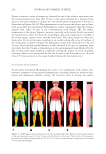
ENVIRONMENTAL PARAMETERS ON SWEAT GLAND ACTIVITY 253 temperature of 45°C and 35% RH. In all cases, except the cold acclimatization proce- dure, subjects fi rst spent 30 min in the environmental room at 27°C and 50% RH. Drinking a glass of hot water (76°C) at t = 20 min in the sauna chamber resulted in a sharp increase in the fi ring output of the sweat glands—an increase ranging from 20% to 29% for Subject 1 in the left and right axillae, respectively, and 58% and 91% for Subject 2 in the left and right axillae, respectively. As a control, we had subjects also consume a glass of room-temperature (RT) water—measured at 22°C—also at t = 20 min in the sauna chamber. In this case, there appears to be a very slight increase in sweat activity, although in most cases it falls within the limits of the standard deviation. We also conducted a clinical protocol, which incorporated physical activity into the acclima- tization period in the environmental room. The subject spent 15 min in the environ- mental room under the same conditions as in all other tests followed by a 15-min period of physical exertion on a stationary exercise bicycle (20 mph, 86 rpm, level 3). In this case, physical activity resulted in a similar increase in perspiration rate as with consump- tion of hot water. In the fi nal test listed in Table II, both subjects were acclimatized in a cold room at 2°C and 80% RH for 30 min prior to immediate entry into the sauna chamber, thereby replacing the 30-min equilibration period in the environmental room at 27°C and 50% RH. As a result, the rate of perspiration decreased markedly by 70% and 75% in the left and right axillae, respectively, for Subject 1 and 58% and 53% in the left and right axillae, respectively, for Subject 2. Such experiments offer ideas for alternative equilibration techniques when testing antiperspirant actives. For example, we might be able to reduce the amount of time spent during the acclimatization phase of the study by incorporating physical activity or hot water consumption into the test protocol. Likewise, we must also consider the subject’s environment prior to the clinical test. If the subject spends time in a cold environment prior to entry into the environ- mental room or sauna, this will certainly infl uence the outcome of the results. In fact, the inspiration for conducting the cold acclimatization test came from such conditions. When developing the test protocol, we noted that subjects who spent most of their day in a cold environment had much lower perspiration rates than on days when their cli- matic conditions were better controlled. Essentially, when subjects commented that they had a chill because their offi ce space was unusually cool on a particular day, we observed a reduction in gravimetric output. IR THERMAL IMAGING IR thermography is an imaging science concerned with the measure of emitted IR radia- tion from objects in the electromagnetic spectrum range of 9,000–14,000 nm (9–14 μm). Thermal imaging cameras are used for a variety of different temperature-related imaging solutions including medical imaging, military applications (night vision), manufactur- ing situations, and research investigations. It provides a quick approach for acquiring accurate temperature measurements in the form of an image. It is a nondestructive tech- nique that allows us to resolve the temperature distribution of objects within an image. Each image contains a two-dimensional grid (x and y), representing spatial coordinates (just like a normal digital photograph) with z information (temperature) plotted in the form of a color distribution scale. Therefore, each pixel in the image contains temperature data plotted using a distribution of various shades of colors ranging between green and white.
Purchased for the exclusive use of nofirst nolast (unknown)
From: SCC Media Library & Resource Center (library.scconline.org)