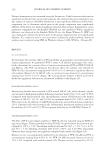
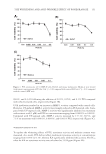
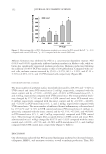
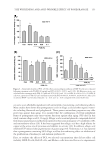
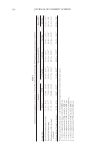
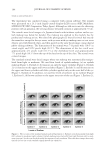
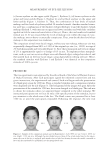
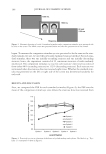
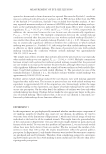
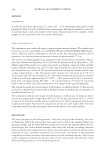
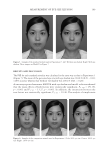
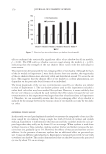
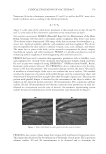
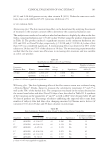
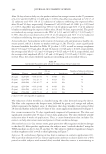
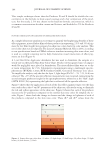
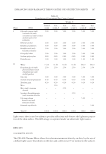
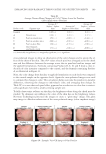
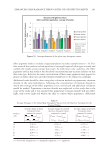
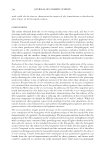
Table I General Histomorphometrical Analysis on Dorsal Back Skin Tissue Following UVB Irradiation and Treatment with PCS Group index Control Test materials (PCS) Intact PCS Intact UVB 0.5 ml/kg 1 m1/kg 2 m1/kg 1 m1/kg Microfolds (number/mm of skin) 11.44 ± 4.42 63.89 ± 13.83 a 46.11 ± 9.92 a, b 37.00 ± 10.07 a, c 41.00 ± 12.21c a, 11.22 ± 3.53d, e Epithelial thickness (μm) 19.73 ± 2.77 73.36 ± 10.89 a 59.93 ± 10.64b a, 42.05 ± 11.92 a, c 49.43 ± 13.58c a, 19.15 ± 2.46e Infl ammatory cells (cells/mm2 of dermis) 11.78 ± 5.67 220.89 ± 26.85 a 173.78 ± 24.63c a, 98.78 ± 36.01 a, c 112.44 ± 45.26c a, 11.22 ± 5.43e Collagen fi bers (%/mm2of dermis) 52.48 ± 6.50 84.27 ± 6.05d 74.13 ± 8.29 a, e 66.80 ± 11.56d, f 70.29 ± 12.41 d, f 50.90 ± 7.21b Values are expressed as the means ± S.D. from nine histological fi elds of dorsal back skin tissues. a p 0.01 as compared with intact control by MW test. b p 0.05 as compared with UVB control by MW test. c p 0.01 as compared with UVB control by MW test. d p 0.01 as compared with the intact control by LSD test. e p 0.05 as compared with UVB control by LSD test. f p 0.01 as compared with UVB control by LSD test. JOURNAL OF COSMETIC SCIENCE 156

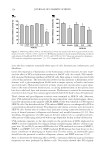
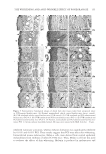
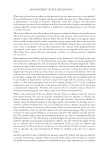
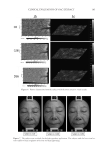
THE WHITENING AND ANTI-WRINKLE EFFECT OF PONEGRANATE 157 determines skin color. Melanin is a complex polymer derived from the amino acid tyro- sine and melanin biosynthesis, and it is regulated by melanogenic proteins, tyrosinase, tyrosinase-related protein (TRP)-1, and TRP-2 35,36). Tyrosinase activity is important for the control of melanogenesis, because it is the catalyst of the rate-limiting reaction of the melanogenic pathway. Thus, inhibition of tyrosinase activity is the most important approach to achieve skin whiteness 36,37). On the other hand, several other approaches have been used to suppress melanin synthesis, including inhibition of tyrosinase mRNA expression, aberration of tyrosinase glycosylation and maturation, acceleration of tyrosi- nase degradation, interference with melanosome maturation and transfer, inhibition of infl ammation-induced melanogenic responses, and acceleration of skin turnover. Although our data showed that PCS signifi cantly inhibits melanin synthesis and does not affect tyrosinase activity, further studies are required to examine the underlying mechanism of PCS on melanin synthesis. Last, to confi rm the protective effects of PCS on photoaging, a histomorphometrical anal- ysis was performed. In UVB-exposed mice, noticeable increases in the number of infl am- matory cells infi ltrating the dermis, abnormal collagen depositions, and formation of microfolds on the surface of the epithelial lining were observed. However, signifi cant decreases in UVB-induced histopathological dermal sclerosis and infl ammatory signs were observed in 1, 2 and 0.5 ml/kg PCS-treated hairless mice compared with UVB con- trol mice. These results indicate that PCS exerts protective effects against UVB-induced photoaging, at least under the conditions evaluated in this histopathological analysis. Acute exposure to UV irradiation causes migration of infl ammatory cells, especially the fi rst line of defense cells, neutrophils (38). This infl ammation is involved in accumulated damage to the skin induced by skin cancer and premature skin aging (39,40). In addi- tion, chronic photoaging induces marked hyperplasia of epidermal cells with hyperkera- tosis, leading to wrinkle formation (26,41) with MMP-mediated dermal sclerosis (26,33). Collectively, these results suggest that PCS, as an ingredient of functional cosmetics, could exert adequate antiwrinkle and whitening benefi ts. These effects are associated with enhanced hyaluronan synthesis, as well as suppressed elastase, collagenase, MMP-1, and tyrosinase activities and melanin production. In addition, UVB-induced histopatho- logical dermal sclerosis and infl ammatory signs were signifi cantly decreased in PCS- treated hairless mice compared with UVB-exposed mice. Therefore, these results suggest that PCS may serve as a predictable functional ingredient. ACKNOWLEDGMENT This work was supported by a National Research Foundation of Korea (NRF) grant, funded by the Korean government (MSIP No. 2011-0030124). REFERENCES (1) E. Cevenini, L. Invidia, F. Lescai, S. Salvioli, P. Tieri, G. Castellani, and C. Franceschi, Human models of aging and longevity, Expert. Opin. Biol. Ther., 8, 1393–1405 (2008). (2) B. A. Gilchrest, Skin aging and photoaging, Dermatol. Nurs., 2, 79–82 (1990). (3) M. S. Kim, Y. K. Kim, K. H. Cho, and J. H. Chung, Regulation of type I procollagen and MMP-1 expression after single or repeated exposure to infrared radiation in human skin, Mech. Ageing Dev., 127, 875–882 (2006).
Purchased for the exclusive use of nofirst nolast (unknown)
From: SCC Media Library & Resource Center (library.scconline.org)