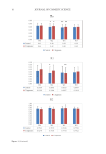
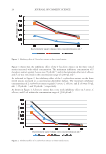
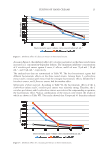
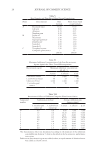
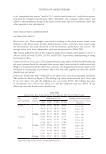
6 JOURNAL OF COSMETIC SCIENCE to use only the mild facial soap and sunscreen supplied by the researchers. No other dermo- pharmaceutical or cosmetic products were authorized for facial use during the study. The first 14 tubes of product were provided to the subjects at their first clinic visit and the remaining 14 tubes were provided at the second visit. Because normal conditions of use required applying the cream at home, researchers could not perform compliance control. Subjects were instead asked to complete a daily log and note the number of applications. Empty tubes and completed daily logs were returned to the researchers at follow-up visits for compliance assessment. STUDY PROCEDURE At the beginning of the experiment and again after 2, 4, and 5 weeks, subjects were interviewed and their faces were examined, photographed by VISIA® (Canfield Scientific, Inc., Parsippany-Troy Hills, New Jersey), and instrumentally measured for efficacy assessment. Skin phototypes, subject medical history, and current medications were also recorded. A dermatologist monitored subjects for any side effects during each clinical visit. Subjects completed a subjective questionnaire at the end of the study. The questionnaire used a four-point scale (strongly disagree, disagree, agree, and strongly agree) to assess each subject’s perspective on the products’ organoleptic characteristics and global efficacy. Subjects were also asked if they would continue to use this product in the future. EFFICACY ASSESSMENTS To obtain quantitative measurements of skin quality, subjects attended the laboratory without applying any product to the face since the previous evening (except the morning wash). They were acclimated in a climate-controlled room at 20–22°C and 50% ± 2% relative humidity for at least 20 min before any skin measurements were taken. After the acclimation period, two measurement points, one melasma, and one adjacent site, were selected and mapped on a plastic sheet. The midpoint between Targus and the lateral mouth angle on the left cheek was also mapped for skin biomechanical measurement. Small holes were cut at the measurement points on the plastic sheet to create openings for the measurement probes. This skin mapping process was used as a guide to ensure measurement sites were the same across all subjects and clinic visits. Melanin levels at each site were determined using a narrowband spectrophotometer (Mexameter® MX18, Courage + Khazaka Electronic GMBH, Köln, Germany). A 5 mm probe emitted specific light wavelengths and calculated the amount of light absorbed by the skin as the melanin index (MI) and erythema index. An assigned medical technician performed the measurement twice in each area. Only the MI, which represents the melanin content of the skin, was analyzed for this study. A decrease in MI signified improvement of pigmentation. Measurements are expressed in arbitrary units (AU). Skin biomechanical properties were measured using a Cutometer® (MPA580, Courage + Khazaka Electronic GMBH, Köln, Germany). The Cutometer® (Courage + Khazaka Electronic GMBH, Köln, Germany) uses a probe to apply negative pressure to the skin for a defined period and then records the degree of skin deformation into the probe. In this study, a 2 mm-diameter probe was used at a constant vacuum pressure of 500 mbar,

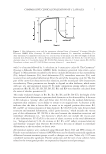
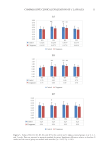
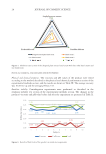
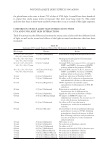
7 COMPARATIVE CLINICAL EVALUATION OF C LAPPACEA with 5 s of suction followed by 3 s of release in 3 consecutive cycles (8). The Cutometer® (Courage + Khazaka Electronic GMBH, Köln, Germany) generated time-strain curves (Figure 1). Measurements recorded by the device include deformation or skin extensibility (Ue), delayed distension (Uv), final deformation (Uf), immediate retraction (Ur), total recovery (Ua), and residual deformation (R) at the end of the measuring cycle (9). The first part of the curve (Ue) characterizes skin elasticity, and the second part (Uv) characterizes viscoelasticity. These parameters are thought to depend on skin thickness, which varies with age, sex, and anatomical region (9). To make comparisons among subjects, relative parameters (R0, R1, R2, R3, R4, R5, R6, R7, R8, and R9) were therefore calculated from the ratios of absolute parameters (9). This study evaluated changes in R0, R1, R2, R5, R6, and R7. R0 (Uf), the height of the first maximal skin deformation, represents final distension or skin distensibility. A decrease in R0 indicates a “tensing” effect and firmer skin. R1 (Uf–Ua), the residual deformation, represents skin resilience, or its ability to return to its original state. A decrease in R1 indicates that the skin is better able to revert to its original position after stress. R2, R5, and R7 are various measures of skin elasticity. R2 (Ua/Uf) is the ratio between final retraction and maximal deformation, called “gross elasticity,” which includes the viscous part of skin deformation. R5 (Ur/Ue) is the ratio between the immediate retraction and immediate deformation (i.e., “net elasticity”), which does not include the viscous part of skin deformation. R7 (Ur/Uf) is the ratio of elastic recovery to the total deformation (i.e., “biological elasticity”) (9). An increase in R2, R5, or R7 reflects increased elasticity and therefore “younger” skin (8,10,11). R6 (Uv/Ue) is the ratio of delayed to immediate deformation, or the viscoelastic to elastic ratio. All statistical analyses were conducted using Microsoft Excel 2010 and SPSS version 22. Paired t-tests and analyses of variance (ANOVAs) were used to identify statistically significant differences between treatment groups as well as changes over time. Values of p 0.05 were considered statistically significant. Patient satisfaction and the rate of any adverse events related to the investigated product are expressed as frequencies and percentages. Figure 1. Skin deformation curve and the parameters obtained from a Cutometer® (Courage + Khazaka Electronic GMBH, Köln, Germany). Uf: final deformation (firmness), Ue: immediate extensibility, Uv: delay distension, Ur: immediate retraction, Ua: total recovery of the initial state, R0: (Uf) Hight of the first maximal skin deformation, R1: (Uf–Ua) Residual deformation (the smaller, the better), R2: (Ua/Uf) Gross elasticity (closer to 1 = perfectly elastic), R5: (Ur/Ue) Net elasticity (closer to 1 = more elastic), R6: (Uv/Ue) Viscoelastic to elastic ratio, R7: (Ur/Uf) Elastic recovery (closer to 1 = more elastic).
Purchased for the exclusive use of nofirst nolast (unknown)
From: SCC Media Library & Resource Center (library.scconline.org)