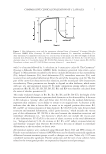
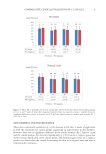
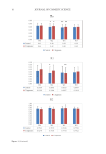
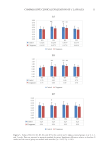
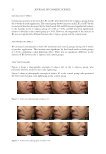
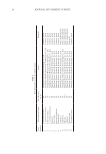
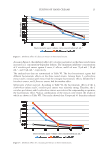
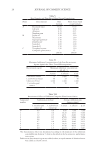
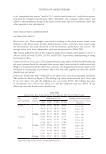
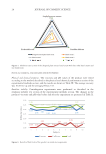
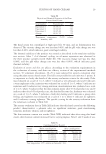
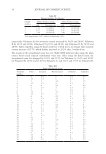
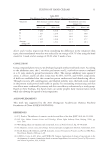
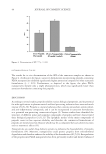
14 JOURNAL OF COSMETIC SCIENCE agents may also cause skin irritation, which aggravates pigment darkening (21,22). All subjects in this study used the same face cleanser and sunscreen to control for the effects of differing photoprotection. Furthermore, this study was conducted during the rainy season, thus reducing the amount of natural sun exposure. The best explanations for the worsening of pigmentation observed mainly in the control group are therefore either natural differences in individual treatment responses or the difference between the control and treatment products (i.e., C lappacea extract). Measurements of skin biomechanical properties taken using a Cutometer® (Courage + Khazaka Electronic GMBH, Köln, Germany) provide information on skin distensibility, viscoelasticity, and recovery. Numerous studies have characterized these properties in relation to health (9) and aging (22–26) and have assessed variation over time caused by active pharmaceutical, cosmetic, or topical products (27). Young, healthy skin is resilient (R1 i.e., can return to its original position following deformation), highly elastic (R2, R5, and R7), and exhibits minimal fatigue (R4) (11). In contrast, aging skin is less resilient (increased R1). Several studies have reported a negative correlation between age and skin elasticity parameters (R2, R5, and R7) and therefore recommend these parameters for evaluating skin aging (8,24,28). R2 and R7 are better for characterizing skin elasticity than R5 because they also account for the viscous part of the skin deformation (9). Ryu et al. (8) reported that R7 measurements from the cheek, upper arm (sun-exposed site), and back (nonexposed site) are significantly correlated with the age of healthy adults, suggesting that R7 is valuable for measuring changes in skin elasticity. In this study, C lappacea extract cream significantly enhanced skin resilience and elasticity after 4 weeks of treatment, as gains in skin resilience (R1) and gross elasticity (R2) were significant in the treatment group but not the control. However, there was no significant change in R7 in either group. Both groups showed a significant increase in R6 (Uv/Ue) relative to baseline after 2 weeks of treatment. According to previous research on the relationship between skin elasticity and skin moisture (29), the increased R6 in this study suggests improved epidermal hydration, which may be due to the hydrating effect of the tested products. The C lappacea extract cream was well tolerated by most subjects throughout the 4 weeks of application. Although some subjective irritation was reported following the first use of the products, this irritation was mild, transient, and not clinically evident. All subjects appreciated the organoleptic characteristics of the tested products. The results of this study suggest that the C lappacea extract cream restores both the epidermal and dermal components of skin, which is the desired effect of anti-aging products. This study was intentionally short (4 weeks) to demonstrate the rapidity of the treatment effects however, further studies using a longer treatment duration could help to determine the full effectiveness of C lappacea extract cream. CONCLUSIONS This study showed that skin cream containing C lappacea extract is effective for pigment reduction, enhanced epidermal hydration, improved skin resilience, and increased skin elasticity after 4 weeks of application. The product was well tolerated by all subjects in this study, who experienced no serious adverse events and were 100% satisfied with the treatment results.

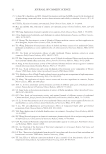
15 COMPARATIVE CLINICAL EVALUATION OF C LAPPACEA SUPPLEMENTARY MATERIALS Ingredients in the C lappacea extract cream: ethylhexyl methoxycinnamate, propylene glycol, octocrylene, isopropyl palmitate, glycerin, butyl methoxydibenzoylmethane, cetyl alcohol, Cl 77,891, cetearyl alcohol, ammonium acryloyldimethyltaurate/VP Copolymer, centella asiatica extract, aloe barbadensis leaf juice, ceteareth-20, diazolidinyl urea, citrus aurantium amara flower oil, fragrance, methylparaben, C lappacea extract, tocopheryl acetate, disodium ethylenediaminetetraacetic acid, propyl paraben, polysorbate 80, sodium benzoate, Cl 42,090, chlorphenesin, Cl 19,140, methylisothiazolinone, and deionized water. The control product was identical but excluded the C lappacea extract. AUTHOR CONTRIBUTIONS O.R. and W.P. conceived the project, designed the trial, performed all data collection, analyzed and interpreted the experimental results, and wrote the manuscript. M.T. contributed to experimental design, supported the clinical trial, helped interpret experimental results, and managed the research project. A.I. and T.K. contributed to experimental design, supported the clinical trial, helped interpret experimental results, managed the research project, and approved the final manuscript. ACKNOWLEDGMENTS The authors would like to thank the Thai Traditional Medical Knowledge Fund and Research and Development Institute, as well as Suan Sunandha Rajabhat University (Bangkok, Thailand), for financial support and assistance. The authors additionally thank everyone who cooperated and assisted with this study. REFERENCES (1) M.A. Farage, K.W. Miller, P. Elsner, H.I. Maibach, Characteristics of the aging skin, Adv. Wound. Care., 2, 5–10 (2013). (2) N.A. Vashi, M.B de Castro Maymone, R.V. Kundu, Aging differences in ethnic skin, J. Clin. Aesthet. Dermatol., 9, 31–38 (2016). (3) M. Norsaengsri, P. Chantaranothai, The tribe Centotheceae (Poaceae) in Thailand, Thai. For. Bull (Bot.)., 36, 52–60 (2008). (4) T. Kamoltham, S. Rungsimakan, K. Supan, and P. Rodsienglump, Chemical constituents of Centotheca lappacea (L.) Desv. Aerial parts, J. Thai. Trad. Alt. Med., 15, 14–29 (2017). (5) T. Kamoltham, J. Manosroi, C. Chankhampan, W. Manosroi, and A. Manosroi, In vitro anti-aging activities of Centotheca lappacea (L) desv. (Ya repair) extract, Chiang. Mai. J. Sci., 44(X): 1–12 (2017). (6) J. Tinlapat, K. Ingkaninan, S. Meethang, S. Munsing, and A. Hematulin, The radioprotective potential of Centotheca lappacea (L) desv. extract in human endothelial cell, J. Assoc. Med. Sci., 53, 55–61 (2020). (7) N. Mookratsameepath and N. Sirisoontornluk, Study and development of Centotheca Leppacea (L.) Desv. extract for cosmetic applications, A Special Project for the Degree of Doctor of Pharmacy, Faculty of Pharmacy, Mahidol University, 2015. (8) H. S. Ryu, Y. H. Joo, S. O. Kim, K. C. Park, and S. W. Youn, Influence of age and regional differences on skin elasticity as measured by the Cutometer, Skin. Res. Technol., 14, 354–358 (2008).
Purchased for the exclusive use of nofirst nolast (unknown)
From: SCC Media Library & Resource Center (library.scconline.org)