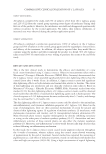
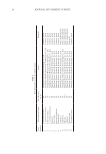
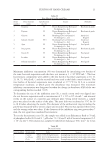
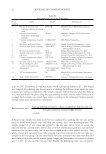
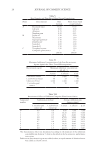
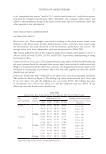
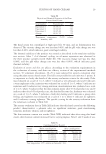
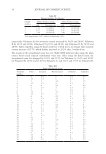
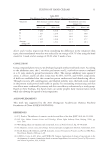
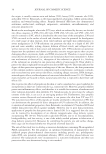
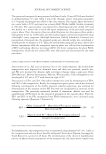
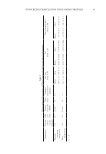
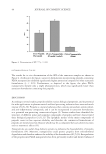
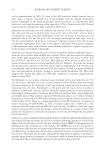
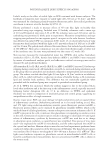
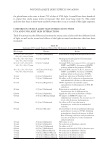
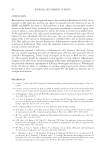
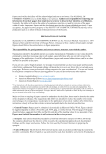
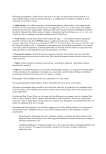
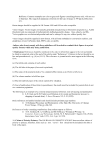
30 JOURNAL OF COSMETIC SCIENCE respectively, Volunteer A’s skin moisture content increased by 18.0% and 29.8%, Volunteer B by 19.7% and 29.9%, Volunteer C by 8.7% and 28.4%, and Volunteer D by 16.5% and 28.8%. Taken together, using the hand cream for 1 week led to an average skin moisture content increase of 15.7%, which further increased to 29.2% after 2 weeks of use. The results of the transdermal water loss test (Table XIII) indicated that using the plant extract hand cream reduced transdermal water loss. After using the hand cream, the transdermal water loss dropped by 10.2% and 31.5% for Volunteer A, 11.6% and 30.8% for Volunteer B, 16.0% and 23.6% for Volunteer C, and 21.1% and 27.7% for Volunteer D, Table XI Thermal Stability Test Resultsa Sample number Before thermal cycling After thermal cycling pH Viscosity (cp) pH Viscosity (cp) 1 7.44 10,306.11 7.47 10,297.68 2 7.61 10,309.65 7.57 10,301.56 3 7.54 10,305.90 7.48 10,302.40 a Test temperature: 25°C, relative air humidity: 46%. Table XII Sensory Evaluation Scores Volunteer number Odor Irritation Moisturization Freshness Tightness 1 4 4.5 5 4.5 4.5 2 4.5 4.5 5 4.5 5 3 4 4 4.5 4 4.5 4 3.5 3.5 4 3.5 4 5 4 4 4.5 4 4.5 6 3 3.5 4 3.5 3.5 7 4 5 5 4.5 5 8 3.5 4 4.5 3.5 4 9 3.5 3.5 4 3.5 4 10 4 4 4.5 4 4.5 11 3 3.5 4.5 3.5 4.5 12 4 4 4.5 4 4.5 13 3.5 3.5 4 3.5 4 14 3 3.5 4.5 3.5 4 15 4 4 4.5 4 4.5 16 3 3.5 4 3.5 4 17 3.5 3.5 4.5 3.5 3.5 18 4 4 5 4.5 4.5 19 3 3.5 4 3.5 3.5 20 4.5 5 5 4.5 5 21 3.5 4 4.5 4 4.5 22 4 4.5 5 4.5 4.5 23 3.5 3.5 4.5 3.5 4.5 24 4.5 5 5 4.5 5 25 3.5 3.5 4.5 3.5 3.5 26 4.5 5 5 4 4.5 27 4 4 5 4.5 4.5 28 3.5 3.5 4.5 4 4.5 29 3.5 4 5 4 4.5 30 4.5 4.5 5 4.5 4.5

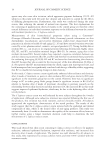
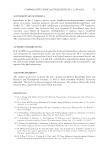
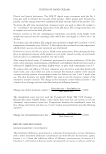
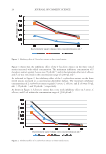
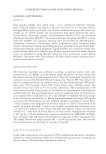
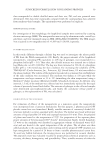
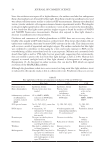
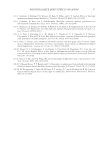
31 TESTING OF HAND CREAMS after 1 and 2 weeks, respectively. Even considering the differences in the volunteers’ skin types, their transdermal water loss was reduced by an average of 14.7% after using the hand cream for 1 week, and an average of 28.4% after 2 weeks of use. CONCLUSION Using compound plant extracts, we developed a purple antibacterial hand cream. According to the inhibition zone, the C reticulata peel extract and L erythrorhizon extract combined at a 2:1 ratio exerted a potent bacteriostatic effect. The average inhibitory rates against S aureus, C albicans, and E coli after 2 min were 92.46%, 92.33%, and 97.61%, respectively. A field test established that this cream has potent antibacterial and disinfecting effects. Through viscosity, pH, centrifugation, and thermal stability tests, the hand cream created in the present study proved itself stable in quality. Its outstanding moisturizing and skin care effects were confirmed by sensory and skin care efficacy evaluations by a study group. Based on these findings, this hand cream can satisfy people’s daily moisturization needs while also slowing the spread of microorganisms. ACKNOWLEDGMENTS This work was supported by the 2021 Zhongyuan Academician (Famous Teachers) Foundation of China (GDXX2020DYP010). REFERENCES (1) P. J. Pawlica, The influence of cosmetics on the bacterial flora of the skin, EJMT, 24(3), 44–52 (2019). (2) B.Y. Qiu, Modern Cosmetics Science and Technology. (China Light Industry Press, Beijing, 2016), pp. 1331–1387. (3) W.P. Zhang, Skin care emulsion and cream (end), Science of Daily Chemicals, 42, 54–58 (2019). (4) K. Sakamoto, Cosmetic science and technology: theoretical principles and applications (Elsevier, Amsterdam, 2017). (5) H.A.E. Benson, M.S. Roberts, and V.R. Leitesilva, Cosmetic Formulation: Principles and Practice (CRC Press, Boca Raton, Florida, 2019), pp. 1–28. (6) G.M.D.A. Costa, G.A.D. Alves, and P.M.B.G.M. Campos, Application of design of experiments in the development of cosmetic formulation based on natural ingredients, International Journal of Phytocosmetics and Natural Ingredients, 6(1), 4 (2019). Table XIII Skin Moisture Content and Percutaneous Moisture Loss Changes Volunteer Skin moisture content change (%) Transdermal water loss change (%) After 1 wk After 2 wk After 1 wk After 2 wk A +18.0 +29.8 −10.2 −31.5 B +19.7 +29.9 −11.6 −30.8 C +8.7 +28.4 −16.0 −23.6 D +16.5 +28.8 −21.1 −27.7 Average change (%) +15.7 +29.2 −14.7 −28.4
Purchased for the exclusive use of nofirst nolast (unknown)
From: SCC Media Library & Resource Center (library.scconline.org)