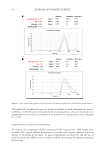
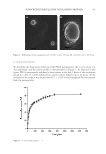
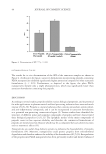
35 Address all correspondence to Reza Mahjub, r.mahjoub@umsha.ac.ir Does Encapsulation of Propolis Flavonoids into Poly-Lactide-Co-Glycolide Nanoparticles Enhance Sun Protection Factor of Propolis-Based Sunscreen Formulations? ASA CHAVOSHI, MEYSAM SOLEIMANI, MOJDEH MOHAMMADI, M.R. MOZAFARI AND REZA MAHJUB Department of Pharmaceutics, School of Pharmacy, Hamadan University of Medical Sciences, Hamadan, Iran (A.C., R.M.) Department of Pharmaceutical Biotechnology, School of Pharmacy, Hamadan University of Medical Sciences, Hamadan, Iran (M.S.) Department of Pharmacology and Toxicology, School of Pharmacy, Hamadan University of Medical Sciences, Hamadan, Iran (M.M.) Australasian Nanoscience and Nanotechnology Initiative (ANNI), Monash University LPO, Clayton, Australia (M.R.M.) Accepted for publication December 26, 2021. Synopsis Propolis is a natural substance and exerts the potency for absorption of ultraviolet radiation in a wide range of wavelengths. The aim of this study was to prepare a sunscreen formulation incorporating poly-lactide-co- glycolide nanoparticles encapsulating propolis flavonoids (PFs). The nanoparticles were prepared using oil- in-water emulsification and solvent evaporation technique. Their morphology was examined using scanning electron microscopy and the release profile of PF was determined in vitro. Finally, the prepared nanoparticles were incorporated into a sunscreen formulation and the appropriate sun protection factor (SPF) was calculated using in vitro method. The value was compared with the SPF values of the formulations containing either free PF or plain nanoparticles. The size, polydispersity index, zeta potential, entrapment efficiency percentage, and loading efficiency percentage of propolis-containing nanoparticles were 299 ± 14 nm, 0.381 ± 0.025, −15.4 ± 0.2 mV, 72 ± 2.3%, and 5.15 ± 0.41, respectively. Finally, it was observed from in vitro studies that sunscreen formulations incorporating nanoparticles exhibited higher SPF values compared to either free PFs or plain nanoparticles. INTRODUCTION Propolis, a dark-brown, viscous resin material produced by honeybees, is naturally used to cover the inside of the hive. Although the constituents of propolis are varied based on J. Cosmet. Sci., 73, 35–48 (January/February 2022)
Purchased for the exclusive use of nofirst nolast (unknown)
From: SCC Media Library & Resource Center (library.scconline.org)