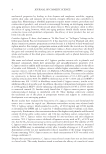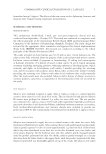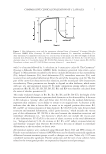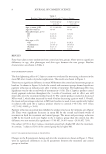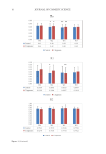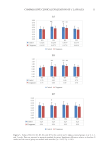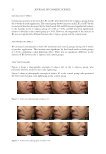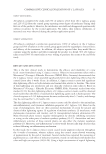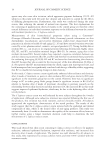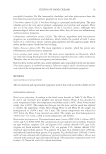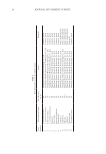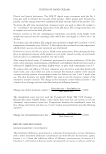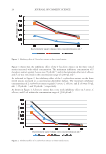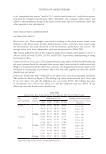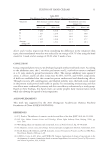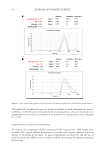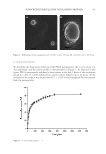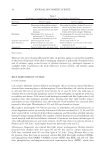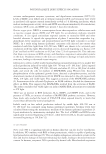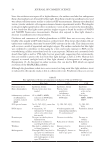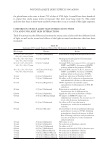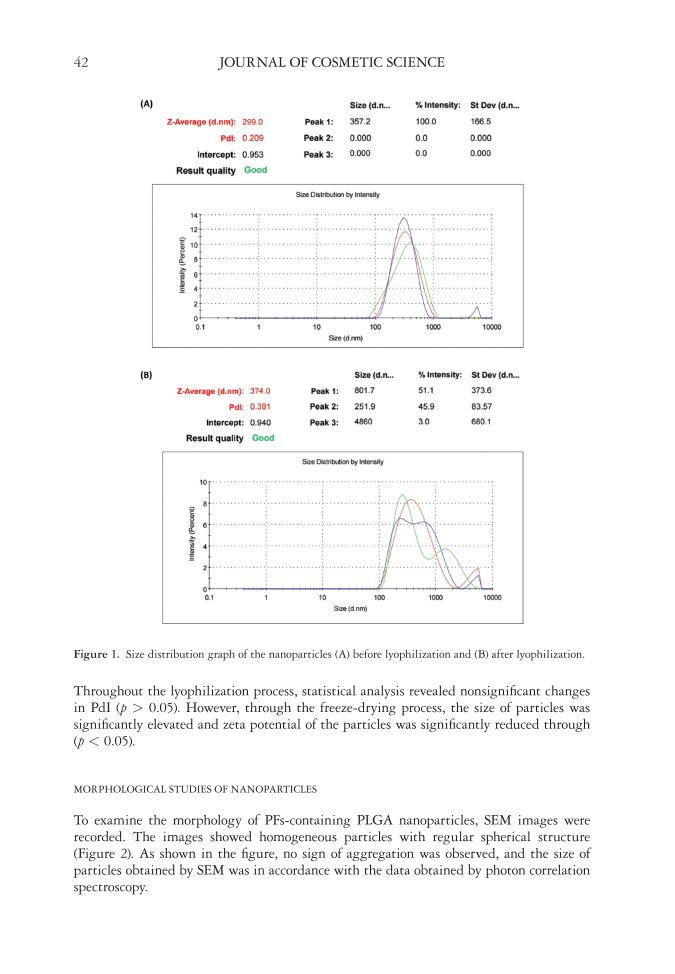
42 JOURNAL OF COSMETIC SCIENCE Throughout the lyophilization process, statistical analysis revealed nonsignificant changes in PdI (p 0.05). However, through the freeze-drying process, the size of particles was significantly elevated and zeta potential of the particles was significantly reduced through (p 0.05). MORPHOLOGICAL STUDIES OF NANOPARTICLES To examine the morphology of PFs-containing PLGA nanoparticles, SEM images were recorded. The images showed homogeneous particles with regular spherical structure (Figure 2). As shown in the figure, no sign of aggregation was observed, and the size of particles obtained by SEM was in accordance with the data obtained by photon correlation spectroscopy. Figure 1. Size distribution graph of the nanoparticles (A) before lyophilization and (B) after lyophilization.

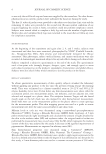
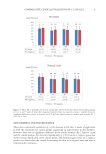
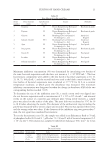
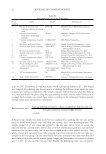
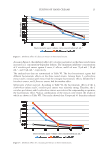
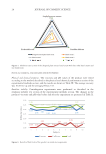
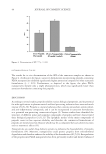
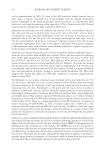
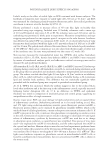
43 SUNSCREEN FORMULATION CONTAINING PROPOLIS IN VITRO RELEASE PROFILE To determine the drug release behavior of the PLGA nanoparticles, the in vitro release test was performed, and the release profile is demonstrated in Figure 3. As depicted in the figure, PLGA nanoparticles exhibited a burst release in the first 3 hours of the incubation period (i.e., 48.5 ± 3.41%), followed by a sustain release behavior up to 24 hours. At the end point of the study, it was showed that 83.7 ± 1.18% of total entrapped PFs was released from the nanoparticles. Figure 2. SEM images of the nanoparticles (A) ×4,000 1 cm = 450 nm, (B) ×20,000 1 cm = 100.6 nm. Figure 3. In vitro release profile n = 3.
Purchased for the exclusive use of nofirst nolast (unknown)
From: SCC Media Library & Resource Center (library.scconline.org)