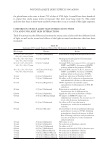
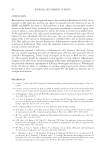
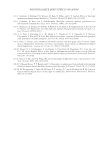
48 JOURNAL OF COSMETIC SCIENCE (33) V. T. Barbosa, J. K. C. Souza, V. Alvino, M. R. Meneghetti, P. P. Florez-Rodrigez, R. E. Moreira, G. V. B. Paulino, M. F. Landell, I. D. Basilio-Junior, T. G. do Nascimento, L. A. M. Grillo, and C. B. Dornelas, Biogenic synthesis of silver nanoparticles using Brazilian propolis, Biotechnol. Prog., 35, e2888 (2019). (34) F. Kazemi, A. Divasalar, A. A. Saboury, and A. Seyedarabi, Propolis nanoparticles prevent structural changes in human hemoglobin during glycation and fructation, Colloid. Surface. B, 177, 188–195 (2019). (35) G. T. Pinheiro Machado, M. B. Valeirinho, L. Mazzarino, L. C. Pinheiro Machado Filho, M. Maraschin, R. L. A. Cerri, and S. Kuhnen, Development of propolis nanoparticles for the treatment of bovine mastitis: in vitro studies on antimicrobial and cytotoxic activities, Canad. J. Anim. Sci., 99, 713–723 (2019). (36) S. Y. Vafaei, R. dinarvand, M. Esmaeili, R. Mahjub, and T. Toliyat, Controlled-release drug delivery system based on fluocinolone acetonide–cyclodextrin inclusion complex incorporated in multivesicular liposomes, Pharm. Dev. Technol., 20, 775–781 (2015). (37) M. Sahlan, D. Dienayati, D. Hamdi, S. Zahra, H. Hermansyah, and M. Chulasiri, Encapsulation process of propolis extract by casein micelle improves sunscreen activity, Makara J. Technol., 21, 1–6 (2017). (38) G. Aygul, F. Yerlikaya, S. Caban, I. Vural and Y. Capan, Formulation and in vitro evaluation of paclitaxel loaded nanoparticles, Hacettepe Üniversitesi Eczacılık Fakültesi Dergisi., 2013, 25–40 (2013). (39) S. Dermanet, Caffeic acid phenethyl ester loaded PLGA nanoparticles: effect of various process parameters on reaction yield, encapsulation efficiency, and particle size, J. Nanomatter., 2015, Article ID 341848, 12 Pages (2015). (40) W. Nan, L. Ding, H. Chen, F. U. Khan, L. Yu, X. Sui and X. Shi, Topical use of quercetin-loaded chitosan nanoparticles against ultraviolet B radiation, Front. Pharmacol., 9, 1–11 (2018).
49 Address all correspondence to Elisabeth Stevens, lisa.ajdukovich@outlook.com Potential Blue Light Effects on Aging Mechanisms Within Adult Human Skin, a Literature Review ELISABETH STEVENS James L. Winkle College of Pharmacy, University of Cincinnati, Cincinnati, Ohio, USA (E.S.) Accepted for publication: November 7, 2021. Synopsis Blue light is high energy visible light in the region of 400–500 nm in wavelength. There have been questions raised in recent years as to whether this can influence skin in manners like UV light, often centered on the heavy widespread use of mobile devices. Blue light impacts skin through mechanisms such as inflammatory cytokines, cellular viability, and melanogenesis. According to current research conducted on in vitro cells as well as in vivo skin, it seems that blue light can have an effect on skin that can manifest as extrinsic aging, but this may only occur at the shorter end of the blue light spectrum and at levels of exposure that are sourced from the sun. INTRODUCTION BLUE LIGHT Types of light are categorized by wavelength. Ultraviolet C (UVC) is between 200–280 nm, ultraviolet B (UVB) is 280–320 nm, and ultraviolet A (UVA) between 320–400 nm. Visible light is within the 400–700 nm range (1). Blue light wavelengths have been reported as anywhere from 400–500 nm. Blue light can penetrate even further into the dermis than UVA and UVB light. In the dermis, blue light can potentially be absorbed by hemoglobin, riboflavin and flavoproteins, and other porphyrin-containing enzymes as found in their absorption peaks, which are in the blue light region (2). In the epidermis, melanin can absorb blue light (3). Fluence is defined as the wattage delivered per unit area with which an object is irradiated. Sunlight delivers a fluence of total radiation of 136 mW/ cm2 (1). However, about 40% of sunlight is reflected toward its source. Artificial sources of light provide only a fraction of the exposure levels as compared to the sun as a source. Exposure to a computer screen 18 in away for 10 min can deliver irradiance of 0.6 mW/cm2 to skin surface (4). J. Cosmet. Sci., 73, 49–57 (January/February 2022)
Purchased for the exclusive use of nofirst nolast (unknown)
From: SCC Media Library & Resource Center (library.scconline.org)