149 Repairing Bleach-Damaged Hair
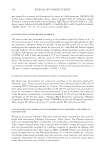
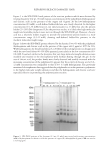
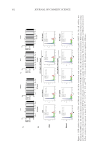
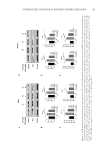
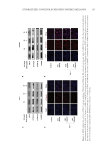
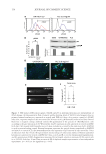
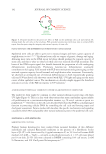
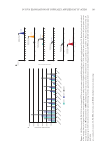
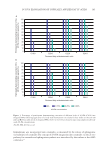
Figure 3 is the SDS-PAGE band pattern of the reaction products which were obtained by
treating lysozyme (0.4 wt.-%) with various concentrations of the polyphenols (hydroquinone
and chicoric acid) in the presence of the copper salt (4 ppm). At the low hydroquinone
concentration (0.9 mM), a well-defined ladder-like lane was clearly observed. In the higher
concentration (4.5–36 mM), however, not only lysozyme (ca. 14 kDa) but also the protein
ladder (25–210 kDa) disappeared. Like the previous results, it is likely that high molecular
weight and insoluble products were not run through the SDS-PAGE gel. However, chicoric
acid was a relatively milder reagent to provide the polymerized protein bands in a wide
concentration range (0.3–12 mM), showing well-defined ladder-like patterns in the
medium molecular weight-range.
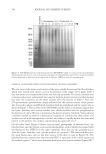
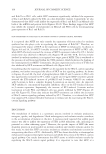
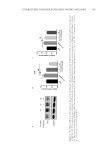
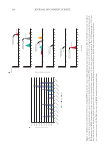
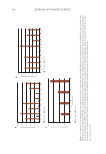
Figure 4 shows the SDS-PAGE pattern observed by the keratin (5 wt.-%) with the polyphenol
(hydroquinone and chicoric acid) in the presence of the copper salt (4 ppm) at 40°C for 24 h.
With hydroquinone, the broad band (about 6–120 kDa) of the starting keratin was disappeared
while the new band (about 80–350 kDa) appeared, particularly in the low concentration (9.0-
0.9 mM). It seemed, similar to the lysozyme, that very large molecular weight-substances were
insoluble and retained in the electrophoresis-wells without flowing through the gel. In the
case of chicoric acid, the product bands were clearly observed and steadily increased with the
increasing concentration of the polyphenol. It appears that the activity of chicoric acid at 6.0–
12 mM concentration was comparable to that of 0.9–4.5 mM hydroquinone. The previously
mentioned electrophoresis data suggested that the polyphenols act on the proteins to polymerize
to the higher molecular weight substances and that the hydroquinone and chicoric acid were
especially effective in promoting the polymerization reaction.
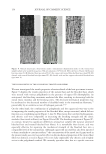
Figure 3. SDS-PAGE patterns of the lysozyme (0.4 wt.-%) which was treated with various concentrations
(mM) of hydroquinone or chicoric acid in the presence of copper (II) chlorophyllin (4 ppm). CBB was used as
a staining agent.
Figure 3 is the SDS-PAGE band pattern of the reaction products which were obtained by
treating lysozyme (0.4 wt.-%) with various concentrations of the polyphenols (hydroquinone
and chicoric acid) in the presence of the copper salt (4 ppm). At the low hydroquinone
concentration (0.9 mM), a well-defined ladder-like lane was clearly observed. In the higher
concentration (4.5–36 mM), however, not only lysozyme (ca. 14 kDa) but also the protein
ladder (25–210 kDa) disappeared. Like the previous results, it is likely that high molecular
weight and insoluble products were not run through the SDS-PAGE gel. However, chicoric
acid was a relatively milder reagent to provide the polymerized protein bands in a wide
concentration range (0.3–12 mM), showing well-defined ladder-like patterns in the
medium molecular weight-range.
Figure 4 shows the SDS-PAGE pattern observed by the keratin (5 wt.-%) with the polyphenol
(hydroquinone and chicoric acid) in the presence of the copper salt (4 ppm) at 40°C for 24 h.
With hydroquinone, the broad band (about 6–120 kDa) of the starting keratin was disappeared
while the new band (about 80–350 kDa) appeared, particularly in the low concentration (9.0-
0.9 mM). It seemed, similar to the lysozyme, that very large molecular weight-substances were
insoluble and retained in the electrophoresis-wells without flowing through the gel. In the
case of chicoric acid, the product bands were clearly observed and steadily increased with the
increasing concentration of the polyphenol. It appears that the activity of chicoric acid at 6.0–
12 mM concentration was comparable to that of 0.9–4.5 mM hydroquinone. The previously
mentioned electrophoresis data suggested that the polyphenols act on the proteins to polymerize
to the higher molecular weight substances and that the hydroquinone and chicoric acid were
especially effective in promoting the polymerization reaction.
Figure 3. SDS-PAGE patterns of the lysozyme (0.4 wt.-%) which was treated with various concentrations
(mM) of hydroquinone or chicoric acid in the presence of copper (II) chlorophyllin (4 ppm). CBB was used as
a staining agent.