183 POLYPODIUM LEUCOTOMOS EXTRACT
Fernblock® is a standardized hydrophilic extract from the leaves of P leucotomos that has
been developed to take advantage of the photoprotective properties of ferns by providing a
consistent phenolic content.38 It was obtained as lyophilized powder from Cantabria Labs
(Madrid, Spain). The extract was stored at room temperature (RT) and shielded from light,
following the provider’s instructions. Stock solutions were prepared in distilled water under
agitation at 25°–30°C. Defrosted for every assay, PLE was diluted into the culture medium
to the final desired concentrations. We first tried various concentrations from 0,8 to 2,4 mg/
ml and chose the minimal dose with a similar effect (0,8 mg/ml). In addition, we treated
cells for various lengths of time, from 5 to 10 days, with consistent results. Treatments
were extended up to 10 days for assays at low cell density (clonogenicity). Chosen time of
treatment was shorter for rapid responses or immunofluorescence on individual colonies, 5
to 8 days, depending on the growth pace of control cells.
UV IRRADIATION
UV irradiation was carried out with a UPV CL-1000 Series UV crosslinker (Krackeler
Scientific, Albany, NY) with fluorescent tubes of 312 nm shortwave ultraviolet B (UVB).
Keratinocytes plated in 60-mm dishes were irradiated in subconfluence conditions (70%
of the plate) at a (sublethal) dose of 25 mJ/cm2. At 14 hours before irradiation, culture
medium was replaced to achieve cell cycle consistency. To irradiate the plates, medium
was removed and replaced with tempered phosphate-buffered saline (PBS). Immediately
after irradiation, PBS was removed, and fresh culture medium was added to the plates.
Nonirradiated control cultures were subjected to the same procedure except for the UV
irradiation.
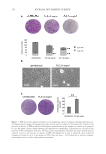
CLONOGENICITY ASSAY
For clonogenicity assays, primary keratinocytes were cultured in FAD medium at very low
density (2,500 cells per T6 well) in duplicate or triplicate samples. Mitomycin-inactivated
3T3-J2 fibroblasts were always plated as feeder layer. About 14 days later, cultures were
washed twice with PBS and fixed in 4% formaldehyde for 5 minutes at RT. After additional
rinses with PBS, the cultures were stained for 10–15 minutes at RT with Rhodanile blue,
as described before.39 With this mixture, keratinocyte colonies are dyed in pink, while
background feeders are stained in blue. Visible colonies (i.e., 0.4 mm in diameter,
approximately 25–30 cells) were scored on every dish.
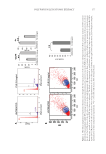
FLOW CYTOMETRY ANALYSIS
Primary human keratinocytes were analyzed for the cell cycle and differentiation by flow
cytometry as described.40 Briefly, cells were harvested and fixed in cold 70% ethanol
for 30 minutes at 4°C (for cell cycle, γH2AX, and keratin-16 analysis) or with 3,7%
paraformaldehyde in PBS for 15 minutes at RT (for involucrin analysis). For cell cycle
analyses, cells were incubated with 1 mg/ml propidium iodide (PI) (P3566, ThermoFisher
Scientific, Waltham, MA), 20 mg/ml RNAse (12091-021, ThermoFisher Scientific) for 16
hours at 4°C.
Fernblock® is a standardized hydrophilic extract from the leaves of P leucotomos that has
been developed to take advantage of the photoprotective properties of ferns by providing a
consistent phenolic content.38 It was obtained as lyophilized powder from Cantabria Labs
(Madrid, Spain). The extract was stored at room temperature (RT) and shielded from light,
following the provider’s instructions. Stock solutions were prepared in distilled water under
agitation at 25°–30°C. Defrosted for every assay, PLE was diluted into the culture medium
to the final desired concentrations. We first tried various concentrations from 0,8 to 2,4 mg/
ml and chose the minimal dose with a similar effect (0,8 mg/ml). In addition, we treated
cells for various lengths of time, from 5 to 10 days, with consistent results. Treatments
were extended up to 10 days for assays at low cell density (clonogenicity). Chosen time of
treatment was shorter for rapid responses or immunofluorescence on individual colonies, 5
to 8 days, depending on the growth pace of control cells.
UV IRRADIATION
UV irradiation was carried out with a UPV CL-1000 Series UV crosslinker (Krackeler
Scientific, Albany, NY) with fluorescent tubes of 312 nm shortwave ultraviolet B (UVB).
Keratinocytes plated in 60-mm dishes were irradiated in subconfluence conditions (70%
of the plate) at a (sublethal) dose of 25 mJ/cm2. At 14 hours before irradiation, culture
medium was replaced to achieve cell cycle consistency. To irradiate the plates, medium
was removed and replaced with tempered phosphate-buffered saline (PBS). Immediately
after irradiation, PBS was removed, and fresh culture medium was added to the plates.
Nonirradiated control cultures were subjected to the same procedure except for the UV
irradiation.
CLONOGENICITY ASSAY
For clonogenicity assays, primary keratinocytes were cultured in FAD medium at very low
density (2,500 cells per T6 well) in duplicate or triplicate samples. Mitomycin-inactivated
3T3-J2 fibroblasts were always plated as feeder layer. About 14 days later, cultures were
washed twice with PBS and fixed in 4% formaldehyde for 5 minutes at RT. After additional
rinses with PBS, the cultures were stained for 10–15 minutes at RT with Rhodanile blue,
as described before.39 With this mixture, keratinocyte colonies are dyed in pink, while
background feeders are stained in blue. Visible colonies (i.e., 0.4 mm in diameter,
approximately 25–30 cells) were scored on every dish.
FLOW CYTOMETRY ANALYSIS
Primary human keratinocytes were analyzed for the cell cycle and differentiation by flow
cytometry as described.40 Briefly, cells were harvested and fixed in cold 70% ethanol
for 30 minutes at 4°C (for cell cycle, γH2AX, and keratin-16 analysis) or with 3,7%
paraformaldehyde in PBS for 15 minutes at RT (for involucrin analysis). For cell cycle
analyses, cells were incubated with 1 mg/ml propidium iodide (PI) (P3566, ThermoFisher
Scientific, Waltham, MA), 20 mg/ml RNAse (12091-021, ThermoFisher Scientific) for 16
hours at 4°C.