173
J. Cosmet. Sci., 74.3, 173–187 (May/June 2023)
*Address all correspondence to Alberto Gandarillas, agandarillas@idival.org
Extract From the Leaves of Polypodium Leucotomos
Stimulates DNA Repair Signals γH2AX and P53 to Prolong
the Keratinocyte DNA Repair Phase of the Cell Cycle
ALBERTO GANDARILLAS, ANTONIO GUERRERO, ARANCHA DELGADO-RUBIN,
SALVADOR GONZÁLEZ, AZAHARA RODRÍGUEZ-LUNA AND LUCÍA SAN JUAN
Cell Cycle, Stem Cell Fate and Cancer Laboratory, Institute for Research Marqués de Valdecilla (IDIVAL),
Santander, Spain (A.Ga., L.S.J.)
INSERM, Occitanie Méditerranée, Montpellier, France (A.Ga.)
Innovation and Development, Cantabria Labs, Madrid, Spain (A.Gu., A.D.R., A.R.L.)
Department of Medicine and Medical Specialties, Alcalá de Henares University, Madrid, Spain (S.G.)
Faculty of Health Sciences, Universidad Loyola Andalucía, Seville, Spain (A.R.L.)
Accepted for publication August 02, 2023.
Synopsis
Polypodium leucotomos extract (PLE) has been extensively utilized by both topical and oral administration due
to its beneficial protective or repair effects on various cell types of the skin. Now, we have investigated the
direct function of PLE on the proliferative capacity and the cell cycle of freshly isolated keratinocytes from
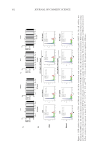
human skin. To note, PLE significantly induced the phosphorylation of histone H2AX, an early signal that
triggers the DNA repair machinery upon genetic damage, both in exponentially proliferating cells and upon
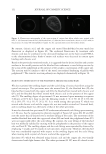
ultraviolet light irradiation. Interestingly, the induction of the signal was independent of actual DNA breaks,
as monitored by comet assays. PLE also induced p53, the “guardian of the genome” that halts cells in the G2
phase of the cell cycle to allow DNA repair. As a result, epidermal multipotent stem cells grew more slowly
but were more protected as they displayed a more powerful amplification after the PLE treatment. We discuss
a model of action of PLE on the keratinocyte cycle that might be common to other natural substances used,
or with a potential to be used, in skin cosmetics.
INTRODUCTION
The skin is the first barrier in the defense against ultraviolet (UV) radiation from sunlight.
Among other cellular damages, including the formation of oxygen and nitrogen reactive
species, inflammation or immunosuppression UV light causes genetic damage.1–3 These
alterations eventually contribute to aging and cancer. DNA damage and immunosuppression
are crucial factors in photocarcinogenesis, as they tilt the scales in favor of two central
hallmarks of cancer, DNA mutation and immune evasion.4 Not only is the epidermis
continuously exposed to UV radiation, but it undergoes continuous cell renewal, thus
J. Cosmet. Sci., 74.3, 173–187 (May/June 2023)
*Address all correspondence to Alberto Gandarillas, agandarillas@idival.org
Extract From the Leaves of Polypodium Leucotomos
Stimulates DNA Repair Signals γH2AX and P53 to Prolong
the Keratinocyte DNA Repair Phase of the Cell Cycle
ALBERTO GANDARILLAS, ANTONIO GUERRERO, ARANCHA DELGADO-RUBIN,
SALVADOR GONZÁLEZ, AZAHARA RODRÍGUEZ-LUNA AND LUCÍA SAN JUAN
Cell Cycle, Stem Cell Fate and Cancer Laboratory, Institute for Research Marqués de Valdecilla (IDIVAL),
Santander, Spain (A.Ga., L.S.J.)
INSERM, Occitanie Méditerranée, Montpellier, France (A.Ga.)
Innovation and Development, Cantabria Labs, Madrid, Spain (A.Gu., A.D.R., A.R.L.)
Department of Medicine and Medical Specialties, Alcalá de Henares University, Madrid, Spain (S.G.)
Faculty of Health Sciences, Universidad Loyola Andalucía, Seville, Spain (A.R.L.)
Accepted for publication August 02, 2023.
Synopsis
Polypodium leucotomos extract (PLE) has been extensively utilized by both topical and oral administration due
to its beneficial protective or repair effects on various cell types of the skin. Now, we have investigated the
direct function of PLE on the proliferative capacity and the cell cycle of freshly isolated keratinocytes from
human skin. To note, PLE significantly induced the phosphorylation of histone H2AX, an early signal that
triggers the DNA repair machinery upon genetic damage, both in exponentially proliferating cells and upon
ultraviolet light irradiation. Interestingly, the induction of the signal was independent of actual DNA breaks,
as monitored by comet assays. PLE also induced p53, the “guardian of the genome” that halts cells in the G2
phase of the cell cycle to allow DNA repair. As a result, epidermal multipotent stem cells grew more slowly
but were more protected as they displayed a more powerful amplification after the PLE treatment. We discuss
a model of action of PLE on the keratinocyte cycle that might be common to other natural substances used,
or with a potential to be used, in skin cosmetics.
INTRODUCTION
The skin is the first barrier in the defense against ultraviolet (UV) radiation from sunlight.
Among other cellular damages, including the formation of oxygen and nitrogen reactive
species, inflammation or immunosuppression UV light causes genetic damage.1–3 These
alterations eventually contribute to aging and cancer. DNA damage and immunosuppression
are crucial factors in photocarcinogenesis, as they tilt the scales in favor of two central
hallmarks of cancer, DNA mutation and immune evasion.4 Not only is the epidermis
continuously exposed to UV radiation, but it undergoes continuous cell renewal, thus