207 Polyphenol-metal Complex With Dopamine
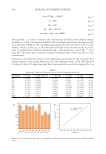
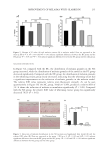
natural white hair. Among these four polyphenol materials, GA, PA, and Fe(II) had the
highest chelation rates, all of which were above 89%, while the chelation rate of CH and
CA was lower. CH had a chelation rate of only 69.43%, which showed that GA, PA, and
Fe(II) were better combinations. However, considering the toxicity of polyphenol materials,
GA was ultimately selected for the study of dyeing natural gray hair.
POLYPHENOL-METAL COMPLEX WITH DOPAMINE FOR DYEING NATURAL WHITE HAIR
Natural plant polyphenol GA and metal ferrous chloride tetrahydrate in solution undergo
a coordination reaction to form a polyphenol-metal complex with a black solution, which
is then prepared by adding dopamine to form a complex solution for dyeing commercial
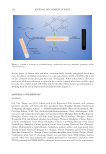
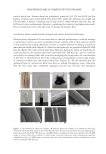
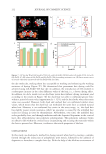
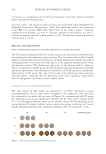
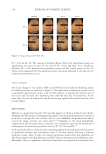
white hair and dyed black (Figure 3C). Based on this principle, we prepared GA-Fe(II)+DA
hair dye (Figure 3F) to dye natural white hair. However, during the study, we found that we
could not directly dye natural white hair with GA-Fe(II)+DA hair dye, and we could not
successfully dye natural white hair even after modifying the dyeing time, the concentration
of hair dye, or the pH of hair dye. Upon comparing scanning electron microscopy images
of commercial white hair and natural white hair (Figure 3G, H), we observed that the
epidermal layer of commercial white hair had no ordered overlapping scales, indicating
that the hair scales were completely damaged, and the hair structure was destroyed.
Figure 3. (A) Commercial white hair samples. (B) Natural white hair sample. (C) Commercial white hair
dyed with GA-Fe(II)+DA solution. (D) GA-Fe(II)+DA hair dye dyed natural white hair. (E) Ethanolamine
emulsion and (F) GA-Fe(II)+DA hair dye. (G) SEM image of commercial white hair (undyed) and (H) SEM
image of natural white hair (undyed). (I) SEM image of natural white hair with ethanolamine emulsion
unfolded hair scales. (J) SEM image of natural white hair with ethanolamine emulsion unfolded hair scales
dyed by GA-Fe(II)+DA hair dye.
natural white hair. Among these four polyphenol materials, GA, PA, and Fe(II) had the
highest chelation rates, all of which were above 89%, while the chelation rate of CH and
CA was lower. CH had a chelation rate of only 69.43%, which showed that GA, PA, and
Fe(II) were better combinations. However, considering the toxicity of polyphenol materials,
GA was ultimately selected for the study of dyeing natural gray hair.
POLYPHENOL-METAL COMPLEX WITH DOPAMINE FOR DYEING NATURAL WHITE HAIR
Natural plant polyphenol GA and metal ferrous chloride tetrahydrate in solution undergo
a coordination reaction to form a polyphenol-metal complex with a black solution, which
is then prepared by adding dopamine to form a complex solution for dyeing commercial
white hair and dyed black (Figure 3C). Based on this principle, we prepared GA-Fe(II)+DA
hair dye (Figure 3F) to dye natural white hair. However, during the study, we found that we
could not directly dye natural white hair with GA-Fe(II)+DA hair dye, and we could not
successfully dye natural white hair even after modifying the dyeing time, the concentration
of hair dye, or the pH of hair dye. Upon comparing scanning electron microscopy images
of commercial white hair and natural white hair (Figure 3G, H), we observed that the
epidermal layer of commercial white hair had no ordered overlapping scales, indicating
that the hair scales were completely damaged, and the hair structure was destroyed.
Figure 3. (A) Commercial white hair samples. (B) Natural white hair sample. (C) Commercial white hair
dyed with GA-Fe(II)+DA solution. (D) GA-Fe(II)+DA hair dye dyed natural white hair. (E) Ethanolamine
emulsion and (F) GA-Fe(II)+DA hair dye. (G) SEM image of commercial white hair (undyed) and (H) SEM
image of natural white hair (undyed). (I) SEM image of natural white hair with ethanolamine emulsion
unfolded hair scales. (J) SEM image of natural white hair with ethanolamine emulsion unfolded hair scales
dyed by GA-Fe(II)+DA hair dye.