225 ENDOLICHENIC FUNGI EXTRACTS
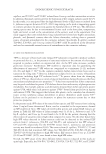
as a natural sunscreen ingredient. These findings are consistent with previous literature on
the photoprotective properties of lichen species and their compounds.
TYROSINASE INHIBITION ACTIVITY
Continuous exposure to UV rays is known to cause skin pigmentation. Therefore, tyrosinase
inhibitors are used in cosmetic products, especially in skin whitening products.57 Products
naturally containing tyrosinase are often preferred. The tyrosinase inhibitor activity of
lichen species has been proven by previous studies.58,59 However, studies on tyrosinase
inhibitor activities of ELF samples isolated from lichens are limited. Determining the
tyrosinase inhibitory activities of ELF samples is thought to have the potential to be used
in skin whitening products, especially in the cosmetic industry.
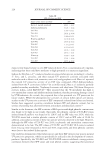
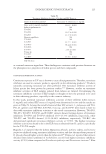
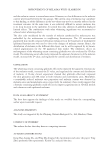
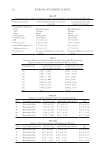
In this study, potential tyrosinase inhibitory activities of three different lichen extracts
(1 mg/mL) and isolated ELF extract (1 mg/mL) were determined in vitro and the results are
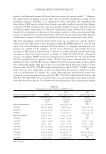
given in Table IV. Among the tested lichens and their ELF extracts, L. pulmonaria and T04-
P01, B. capillaris and T20-B02, T20-P26, Usnea sp., and T22-P07 were found to have no
detectable tyrosinase inhibitory activities at the tested concentration. However, T04-P03,
T04-P13, T20-P07, T20-P10, and T22-B07 extracts showed varying degrees of tyrosinase
inhibition. T04-P03 and T04-P13 exhibited 14.67–23.37% inhibition, respectively, while
T20-P07 and T20-P10 showed 33.22–38.44% inhibition, respectively. T22-B07 also
demonstrated significant tyrosinase inhibitory activity at 33.78%. The highest tyrosinase
inhibitor activity was found to be in the ELF extracts obtained from B. capillaris, specifically
for the T20-P10 sample.
Higuchi et al. reported that the lichens Hypogymnia physodes, Letharia vulpina, and Cetraria
juniperina exhibited strong tyrosinase inhibitory activity, and that the mycobiont partner of
H. physodes showed higher activity than the lichen itself.60 Verma et al. reported that extracts
obtained from lichen symbionts of Arthothelium awasthii had higher tyrosinase inhibitory
activity (67.2%) when compared to Heterodermia podocarpa and Parmotrema tinctorum.61 Kim
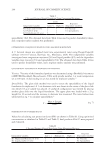
Table IV
Tyrosinase Inhibition Activity of Lichen and ELF Extracts
Name of the lichen and ELF Tyrosinase %inhibiton at 1 mg/mL
Kojic acid (1 mg/mL standard) 45.63 ± 0.003
Lobaria pulmonaria Nd
T04-P01 Nd
T04-P03 14.67 ± 0.006
T04-P13 23.37 ± 0.005
Bryoria capillaris Nd
T20-B02 Nd
T20-P07 33.22 ± 0.001
T20-P10 38.44 ± 0.001
T20-P26 Nd
T20-P27 2.49 ± 0.003
Usnea sp. Nd
T22-P07 Nd
T22-B07 33.78 ± 0.002
ND: No data
as a natural sunscreen ingredient. These findings are consistent with previous literature on
the photoprotective properties of lichen species and their compounds.
TYROSINASE INHIBITION ACTIVITY
Continuous exposure to UV rays is known to cause skin pigmentation. Therefore, tyrosinase
inhibitors are used in cosmetic products, especially in skin whitening products.57 Products
naturally containing tyrosinase are often preferred. The tyrosinase inhibitor activity of
lichen species has been proven by previous studies.58,59 However, studies on tyrosinase
inhibitor activities of ELF samples isolated from lichens are limited. Determining the
tyrosinase inhibitory activities of ELF samples is thought to have the potential to be used
in skin whitening products, especially in the cosmetic industry.
In this study, potential tyrosinase inhibitory activities of three different lichen extracts
(1 mg/mL) and isolated ELF extract (1 mg/mL) were determined in vitro and the results are
given in Table IV. Among the tested lichens and their ELF extracts, L. pulmonaria and T04-
P01, B. capillaris and T20-B02, T20-P26, Usnea sp., and T22-P07 were found to have no
detectable tyrosinase inhibitory activities at the tested concentration. However, T04-P03,
T04-P13, T20-P07, T20-P10, and T22-B07 extracts showed varying degrees of tyrosinase
inhibition. T04-P03 and T04-P13 exhibited 14.67–23.37% inhibition, respectively, while
T20-P07 and T20-P10 showed 33.22–38.44% inhibition, respectively. T22-B07 also
demonstrated significant tyrosinase inhibitory activity at 33.78%. The highest tyrosinase
inhibitor activity was found to be in the ELF extracts obtained from B. capillaris, specifically
for the T20-P10 sample.
Higuchi et al. reported that the lichens Hypogymnia physodes, Letharia vulpina, and Cetraria
juniperina exhibited strong tyrosinase inhibitory activity, and that the mycobiont partner of
H. physodes showed higher activity than the lichen itself.60 Verma et al. reported that extracts
obtained from lichen symbionts of Arthothelium awasthii had higher tyrosinase inhibitory
activity (67.2%) when compared to Heterodermia podocarpa and Parmotrema tinctorum.61 Kim
Table IV
Tyrosinase Inhibition Activity of Lichen and ELF Extracts
Name of the lichen and ELF Tyrosinase %inhibiton at 1 mg/mL
Kojic acid (1 mg/mL standard) 45.63 ± 0.003
Lobaria pulmonaria Nd
T04-P01 Nd
T04-P03 14.67 ± 0.006
T04-P13 23.37 ± 0.005
Bryoria capillaris Nd
T20-B02 Nd
T20-P07 33.22 ± 0.001
T20-P10 38.44 ± 0.001
T20-P26 Nd
T20-P27 2.49 ± 0.003
Usnea sp. Nd
T22-P07 Nd
T22-B07 33.78 ± 0.002
ND: No data