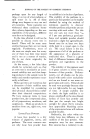
MECHANISMS AND EVALUATION OF ANTISEPTIC ACTIONS 299 mercurial suspension was intro- duced. In other words, these mer- curials were neutralized by thio- glycolate media and found also in animal tissues chemicals capable of neutralizing them and allowing bacterial growth to resume. At the same time it would not be fair to forget that complete bacteri- ostasis by an antiseptic which finds in tissues no neutralizing mechanism is equivalent in effect to sterility for that system. This means that in the last analysis a clear demon- stration by animal tests is the controlling criterion. It is, how- ever, economical and convenient to set up such screening tests as are here proposed. Answers to this paper from the three firms con- cerned did demonstrate antiseptic property for these mercurials, but we know of no conclusive evidence that any mercurial, at any con- centration, for any time of exposure will sterilize any bacterial culture. Few manufacturers will make any claims for effectiveness on spores, and Klarmann and Wright (5) demonstrated 24-hour survivals of several spore organisms exposed to 1% solution of quaternaries--when blood serum was used to neutralize the cationic. We now come to the recognized mechanisms by which adsorbed antiseptics may be rendered in- nocuous, and these are shown in Table 2. When one comes to the practical applications of these criteria, it appears there are at least three main groups to be considered. TABLE 2--MECHANISMS OF NEUTRALIZATION OF ANTISEPTICS 1. Insolubilization--mercurials plus sulfides or thio compounds 2. Complex formation--solubilization--cop- per plus ammonia 3. Desorption to another surface--phenol to charcoal, serum proteins 4. Oxidation-reduction reactions--iodine plus thiosulfate 5. Opposition of charge on colloidal parti- cles and ions--anionics rs. cationics 6. Displacement from bacteria by strongly adsorbed innocuous substances Many surgeons and bacteriologists hold the view that truly sterile techniques on and in tissues are practically impossible, and the best that can be done is to reduce the number and virulence of invading organisms to the degree at which the natural tissue defense mecha- nisms can overwhelm them. This is especially relevant to materials for use on denuded tissues, for which the antibiotics seem most appropriate. For achieving what Dr. Blank (6) has called "Degerm- ing the Cutaneous Surface," a compromise must be made, and iodine tincture still appears the most suitable reagent. It should be possible to sterilize glass, metallic surfaces, instruments, etc., but no reagent superior to formaldehyde in isopropanol is known to us. In all permissible cases heat sterilization by autoclaving or by anhydrous dry wall techniques is still the standard and final technique. It is to be emphasized that in vitro testing which relies only on dilution of the antiseptic-bacteria system is likely to give false appearances of sterility. Sterility can be demon-

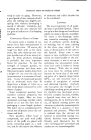
300 JOURNAL OF THE SOCIETY OF COSMETIC CHEMISTS strated by the application of such an analytical scheme as was pre- sented in our 1948 paper, and this outline is shown in Table 3. The prime purpose here is to encourage co-operation between bacteriologists and chemists in the finding and validation of effective neutralizers for popular antiseptics and classes of antiseptics. widely used in the evaluation of scrub techniques and materials. Briefly, this depends on scrubbing the hands by any given procedure, followed by a washing in sterile distilled water. Bacteriological counts of this last basin show that surgically clean hands still carry millions of organisms dispersible in distilled water. By such a TABLE 3--EVALUATION OF ANTISEPTICS AND NEUTRALIZERS Step Procedure Results Interpretation 1 Bacteria--medium 2 Bacteria--antiseptic 3 Bacteria--neutralizer 4 Bacteria--antiseptic, then neutralizer 5 Bacteria--neutralizer, then antiseptic Growth Viable culture, suitable medium No growth Inhibition OR death?? Growth Neutralizer is not antiseptic No growth Neutralizer is antiseptic--unsuitable Growth Antiseptic bacteriostatic, neutral- ized No growth .4ntiseptic killed bacteria or Neutralizer is not effective or Killed by antiseptic--neutralizer complex Growth Neutralizer effective against anti- septic and No killing by antiseptic--neutral- izer complex No growth Neutralizer is not effective No growth in No. 4 and growth in No. 5--neutralizer is effective against dissolved but not against adsorbed antiseptic Step No. 4 distinguishes between bactericidal and bacteriostatic effects SURGICAL CLEANSING AND ANTI- SEPTIC TREATMENT OF THE SKIN Within the last five years there has appeared a considerable amount of work on the evaluation of several materials and techniques for the preparation of the operative site, and especially for the pre-operative scrub by surgeons and nurses. In part this has utilized techniques of skin snips implanted, etc., but notable is the technique proposed by Dr. Price (7), which has been technique Dr. Price shows nothing commercially available that will add to the antiseptic effect of 70 per cent ethanol save only iodine. He and many others have demon- strated that residues of G-11 (hex- achlorophene) on the skin exert a continuing antiseptic effect, reduc- ing counts day after day to some- thing like 5 per cent of the counts obtained under the same conditions with the same soap without G-11. This continuing antiseptic action of G-11 is demonstrable on daily
Purchased for the exclusive use of nofirst nolast (unknown)
From: SCC Media Library & Resource Center (library.scconline.org)