A PHOTOMICROGRAPHIC TECHNIQUE FOR STUDYING HAIR SOILS AND DETERGENCY* By J. c. EtviN Proctor & Gamble Co., Cincinnati I7, Ohio TsE TASK OF washing human hair on the head presents many problems to the shampoo manu- facturer, and, more particularly, to the chemists who are responsible for the correct formulation of these products. Not the least of the problems arises from the hetero- geneous nature of the consumer of shampoos. She is far from a uni- form specimen and fairly well de- fies definition in terms of averages. Incidentally, the "she" is used advisably. We men must admit that whatever shampoo problems we contribute to the total picture are held in rather low esteem if any attention is paid to them at all. Let us consider for a moment the wide variety of jobs the skampoo is asked to dO. In the first place, there is considerable v. ariation in the hair itself from one person to 'another. It may be of a coarse, wiry texture or it may be quite fine it may be closely cropped as in some of the modern fashionable hair-dos or it may be long it may be thinly distributed over the scalp * Presented at the December 6, 1951, Meeting, New York City. or it may be very thick. Other variables are introduced by differ- ences in the functioning of the sweat and sebaceous glands of the scalp. The amount of perspiration evaporated from the scalp and hair, with the consequent deposition of solid materials, depends not only on the normal rate of perspiration of the individual, but also the type of activity engaged in and the climate in which such activities take place. The flow of sebaceous matter is similarly influenced by individual characteristics. The amount and type of external soil associated with hair can be attributed to the environment of the individual and her habits as far as shampooing is concerned. The girl in an air-conditioned office who habitually washes her hair once or twice a week presents a much easier job for the shampoo than the girl whose duties may find her doing much dirtier tasks even though she is just as fastidious in her personal cleanliness. The application of hairdressings and other grooming aids adds still other types of soil in some, but not all, cases. All of this merely means that a

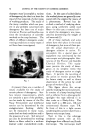
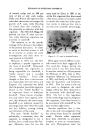
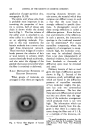
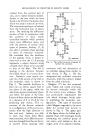
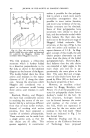
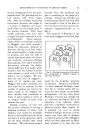
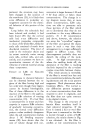
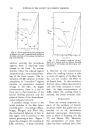
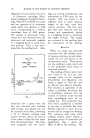
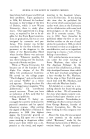
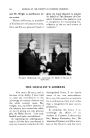
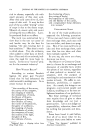
82 JOURNAL OF THE SOCIETY OF COSMETIC CHEMISTS shampoo must•ccomplish a variety ofdetergency jobs that is at least the equal of that expected of other types of washing products. The study of the many variables which are pres- ent in any problem concerned with detergency has been one of major interest at Procter and Gamble ever since the introduction of scientific methods to the soap business. The effects of different detergents under varying conditions on many types of soil have been investigated. Fig. 1 At present there are a number of means available fi•r the study of certain phases of detergency. Stir- fitce tension measurements, which are certainly a part of the problem, can be made by means of the Du Nuoy Tensiometer and interfacial tension can be determined by the stalagmometer. Sudsing ability can be measured in many ways, under both no-load conditions and in the presence of a soil. Soil removal can also be determined by washing fabrics or fibers soiled in a uniform manner under standardized condi- tions. In the case of soiled fabrics the washed pieces are generally com- pared with the original by means of a photometer. Powers has de- scribed a method of studying sham- poos using uniformly soiled wool fibers--in this case a natural soil-- in which the detergency was meas- ured by determining the weight of soil removed (1). All of these methods and some others have their place in the study of detergency, but none of them per- reit the actual observation of a detergent solution in action. To accomplish this a special piece of equipment was constructed by the microscopic and photographic labo- ratories of the Procter and Gamble Chemical Divisi(m. This equip- ment permits the study of deter- gency. in its simplest terms--the study of detergent action on single fibers. It permits the recording of the action on motion picture film fi•r future study as well its direct observation of the action by small groups of workers (Fig. 1). This figure shows the set-up used for making the motion pictures. It consists of a lamp housing fitted with a reflector from a photographic spotlight---the type referred to in that trade its a Dinky-Inky. The lamp itself is a 200-watt, 110-volt concentrated filament type T-8. In front of this is a light source condensing lens system taken from a Spencer microscope lamp. Next in line is the substage condenser system with an Iris diaphragm from a Bausch and Lomb microscope. The microscope itself
Purchased for the exclusive use of nofirst nolast (unknown)
From: SCC Media Library & Resource Center (library.scconline.org)